
Throughout history, covering your face with masks was often a sign of social status, cultural tradition, or ceremonial purpose. In Renaissance Europe, masks became fashionable among elites, symbolizing elegance and distinction. Masks also provided anonymity during events like Venice’s Carnival, encouraging social rebellion or critique. In many cultures, masks represented respect, modesty, or spiritual connection. Recognizing these customs helps you understand their deep symbolism; exploring further reveals how these practices shape social interactions even today.
Key Takeaways
- In Renaissance Europe, masks were fashionable accessories for social events, symbolizing status and elegance among elites.
- During Victorian times, lace masks added mystery and were used to signify modesty and propriety.
- In ancient African and Asian cultures, masks were integral to rituals, ceremonies, and performances, often requiring specific etiquette.
- Carnival traditions, like Venice’s masked festivals, embraced anonymity and rebellion, with social norms governing mask usage and removal.
- Historically, removing a mask often signified respect, humility, or the end of a ceremony, reflecting cultural and social customs.
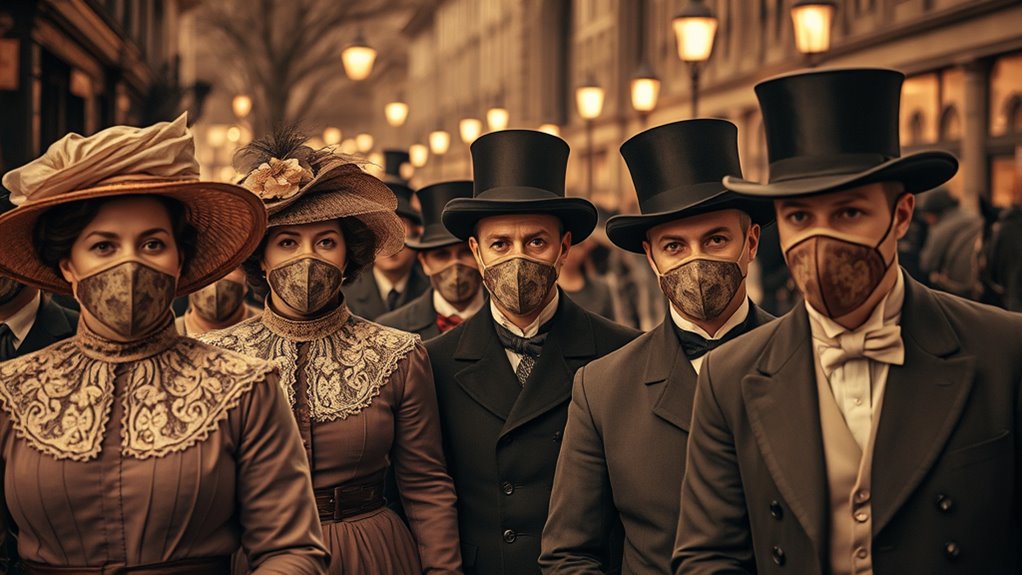
Throughout history, masks have served as more than just practical coverings; they have symbolized social status, cultural identity, and even political power. When you put on a mask, you’re not merely hiding your face—you’re participating in a rich tradition that communicates meaning beyond words. In many cultures, masks hold profound cultural significance, representing spirits, ancestors, or divine figures. For example, in African tribes, masks are used in rituals to connect with spiritual domains, conveying stories and traditions that have been passed down through generations. Similarly, in Asian cultures, masks are integral to theatrical performances like Noh and Kabuki, where they embody specific characters and emotions, reinforcing cultural values and history.
Fashion trends also play a vital role in the history of masks, shaping their design and societal perception. During the Renaissance, masks became fashionable accessories among the European elite, worn at masked balls to display wealth and sophistication. These ornate masks often featured intricate designs, feathers, and jewels, reflecting the opulence of the time. As fashion evolved, masks continued to symbolize elegance and social distinction, especially in formal events. In Victorian England, lace masks added an air of mystery and allure, aligning with the era’s fascination with secrecy and propriety. Additionally, the social significance of masks has influenced their design and usage, demonstrating how deeply masks are woven into societal norms and customs.
Throughout the centuries, the cultural significance of masks has often dictated their acceptance and use in society. In some periods, masks were seen as symbols of rebellion or social critique, such as during the Carnival of Venice, where anonymity allowed individuals to break free from societal constraints. Conversely, in more conservative eras, masks signified adherence to social norms or religious observances, where covering the face was an expression of modesty or piety.
You should understand that mask etiquette has traditionally been rooted in these cultural and social meanings. Wearing a mask was never just about concealment; it was about respecting the customs, symbols, and social cues associated with the practice. For example, in some societies, removing your mask at a specific moment signified respect or humility, while in others, the type of mask worn communicated your social rank or profession. Even today, the history of masks reminds us that covering the face can carry layers of significance—whether it’s about tradition, fashion, or social identity—that extend well beyond mere practicality.
Frequently Asked Questions
How Did Mask Etiquette Differ Across Various Cultures Historically?
You’ll find that mask etiquette varied widely across cultures, reflecting deep cultural symbolism and aesthetic significance. In Japan, masks conveyed social status and spiritual beliefs, while in Venice, they emphasized mystery and artistic expression. In some societies, masks symbolized protection or rituals, whereas others used them for aesthetic appeal. Understanding these differences helps you appreciate how masks serve as powerful cultural symbols, shaping social interactions and artistic traditions globally.
What Materials Were Traditionally Used for Masks in Different Eras?
You’ll find that traditionally, masks were crafted from textile crafts like silk, cotton, and wool, depending on the era and culture. In some societies, masks used materials like leather or ceramic for durability or symbolism. These materials often carried mask symbolism, representing social status, spiritual beliefs, or protective purposes. By choosing specific materials, cultures conveyed deeper meanings and reinforced the significance of mask-wearing in various rituals and ceremonies.
When Did Covering the Face Become Associated With Social Status?
You see, covering the face became linked to social hierarchy during the Renaissance and medieval periods, when masks held ceremonial significance. Nobles and royalty used elaborate masks to display their status and wealth, making face coverings a symbol of distinction. By wearing ornate or luxurious masks, you could visibly demonstrate your social rank, turning face coverings into powerful markers of societal hierarchy and prestige.
How Did Mask Etiquette Influence Social Interactions in Past Societies?
You notice that mask etiquette in past societies shaped social interactions through facial concealment and social signaling. Wearing masks often indicated your social status, profession, or moral character, influencing how others perceived you. Masks created boundaries, allowing you to communicate respect or authority silently. This social signaling through facial concealment helped maintain social order, establish hierarchies, and foster trust or distance depending on the context and cultural norms.
Were There Specific Rituals or Ceremonies Requiring Face Coverings Historically?
Yes, in many cultures, specific rituals or ceremonies required face coverings with deep cultural symbolism and ceremonial significance. You might have worn masks during religious festivals, rites of passage, or theatrical performances, where the masks represented spirits, ancestors, or societal roles. These coverings helped you connect with tradition, honor deities, or mark important life moments, emphasizing their importance through the powerful symbolism embedded in each face covering.
Conclusion
Just as the masked ball hid secrets behind elegant veils, masks throughout history have reflected society’s values and fears. By understanding these customs, you see that face coverings aren’t just modern precautions—they’re timeless symbols of respect, mystery, or protection. So, next time you wear a mask, remember you’re part of a long, storied tradition—like a hero stepping into a myth, your face becomes a canvas for history’s silent stories.