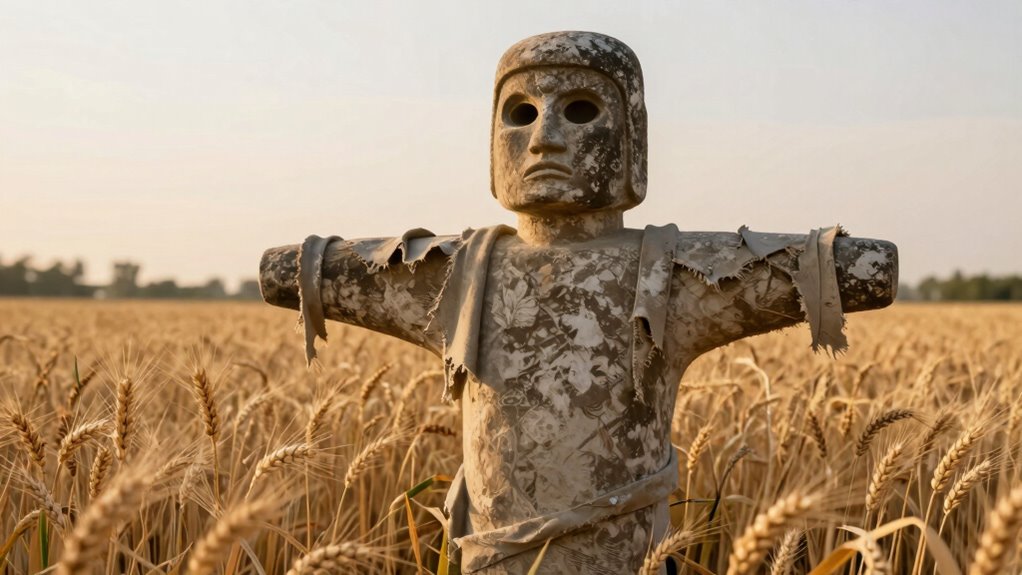

You might be surprised to learn that scarecrows date back thousands of years, with origins in ancient Egypt where figures made of straw and wood symbolized protection and fertility. These early figures were believed to ward off evil spirits and bring good harvests, often representing gods or spirits tied to growth. Over time, cultures like Greece and medieval Europe adopted similar symbols, transforming scarecrows from spiritual guardians into practical farming tools. If you keep exploring, you’ll discover how their mythic roots shaped their enduring cultural significance.
Key Takeaways
- Scarecrows originated in ancient Egypt as protective figures symbolizing fertility and warding off evil spirits.
- Similar symbolic practices appeared in Greece and Rome, representing deities or mythic heroes.
- Medieval Europe adopted anthropomorphic scarecrows as spiritual guardians linked to ancestors and divine protection.
- They evolved from mystical symbols to practical farming tools, retaining their cultural and spiritual significance.
- Today, scarecrows remain cultural icons, embodying protection, fertility, and human connection to the land across traditions.
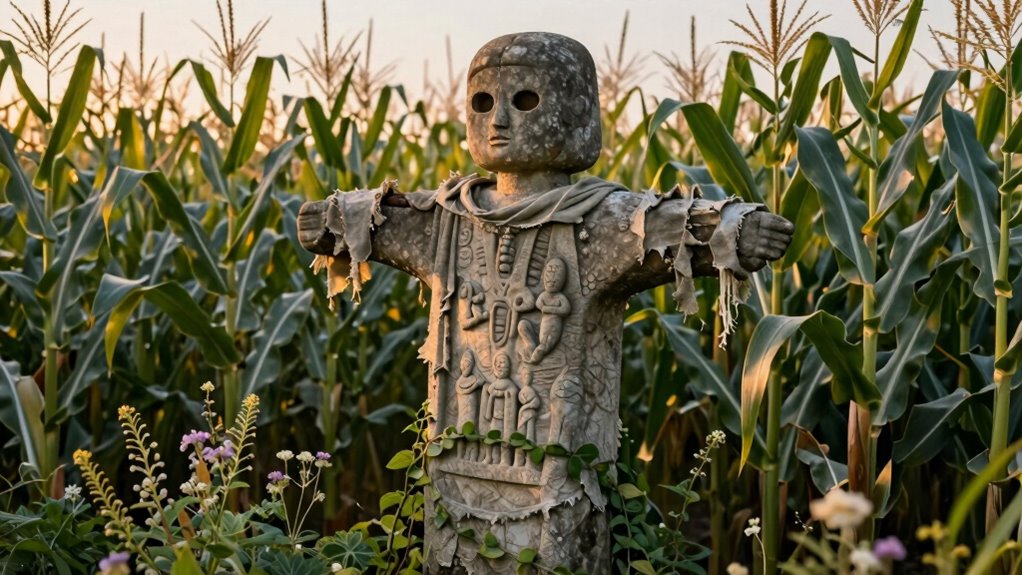
Have you ever wondered where scarecrows really come from? The origins of these straw-and-cloth figures stretch back thousands of years, and their story is woven into the myth evolution and cultural symbolism of early societies. Long before they became the familiar farmyard guardians, scarecrows held a much deeper significance. They weren’t just used to scare away birds—they embodied spiritual beliefs, protective charms, and even divine symbolism. Over time, their purpose shifted from mystical protectors to practical agricultural tools, but their roots reveal a fascinating blend of myth and tradition.
Scarecrows originate from ancient spiritual symbols embodying protection, fertility, and divine guardianship across civilizations.
In ancient civilizations, scarecrows appeared as symbols of protection and fertility. The earliest known examples date back to Egypt, where figures made of straw and wood stood in fields, believed to ward off evil spirits and bring good harvests. These figures weren’t simply functional; they were part of myth evolution, representing deities or spirits associated with growth and abundance. Similarly, in Greece and Rome, farmers crafted figures resembling gods or mythic heroes, believing their divine presence would safeguard crops from harm. These early scarecrows served as cultural symbols—embodying hopes for prosperity and safety, intertwined with local myths and spiritual beliefs.
As agricultural societies developed, the myth evolution of scarecrows continued, blending pagan rituals with local folklore. In Medieval Europe, scarecrows took on more anthropomorphic forms, often representing spirits or ancestors. People believed these figures could absorb negative energies or act as vessels for divine protection. They weren’t merely scare devices—they were imbued with cultural symbolism that reinforced community identity and spiritual beliefs. Over centuries, the image of the scarecrow became more standardized, yet its mythic importance persisted, reflecting a universal human desire to influence nature through symbolic acts.
Throughout history, scarecrows have also been linked to mythic stories of guardianship. In some cultures, they were thought to house spirits or serve as avatars for gods, acting as spiritual sentinels over the land. This myth evolution shows how humans used visual symbols to connect with unseen forces, transforming simple figures into powerful talismans. Even as their practical use grew more dominant with modern farming, the cultural symbolism persisted, reminding us of their ancient roots as protectors beyond mere pest deterrents.
Today, scarecrows remain a cultural icon, especially during harvest festivals and Halloween. Their presence still echoes their mythic past, symbolizing protection, fertility, and the human connection to the land. While we see them as rustic farm figures, understanding their myth evolution reveals a rich history—one that spans countless cultures, beliefs, and traditions. Their story isn’t just about scaring birds; it’s a reflection of humanity’s enduring desire to influence and protect the natural world through myth and symbolism.
As an affiliate, we earn on qualifying purchases.
Frequently Asked Questions
How Did Scarecrows Evolve Across Different Cultures?
You see, scarecrows evolved across different cultures by blending practical uses with mythical symbolism. In some societies, they represented protective spirits guarding crops, while others used artistic representations to ward off evil. Over time, these figures gained cultural significance, embodying myths and spiritual beliefs. As a result, scarecrows became more than just farming tools—they transformed into symbols woven into folklore and art, reflecting diverse cultural values and stories.
Were Scarecrows Used for Purposes Other Than Farming?
Yes, scarecrows served purposes beyond farming. In some cultures, they symbolized urban protection or spiritual guardianship, warding off evil spirits or negative energies. You might see scarecrow-like figures in festivals or rituals meant to invoke protection and good luck. Their presence extended into spiritual symbolism, representing a barrier against harm and a means of safeguarding communities, not just crops.
What Materials Were Historically Used to Make Scarecrows?
Did you know that traditional farming used a variety of materials for scarecrows, from old clothes and straw to wood and even clay? These materials were chosen for their availability and effectiveness. Historically, scarecrows served not just as a practical tool but also as cultural symbolism, reflecting local customs and beliefs. You’ll find that their diverse materials reveal a fascinating mix of functionality and cultural expression across different regions.
Are Scarecrows Featured in Ancient Myths or Legends?
You’ll find scarecrows in ancient myths and legends, where they symbolize mythical protection and ward off evil spirits. In some cultures, they serve as spiritual guardians, embodying protective forces during harvest festivals or rituals. These figures aren’t just practical; they carry deep symbolic meaning, representing hope, safeguarding crops, and invoking supernatural powers. Their presence in myths highlights their longstanding role as spiritual protectors across diverse traditions.
How Have Scarecrow Designs Changed Over Centuries?
You’d be amazed at how scarecrow designs have evolved over centuries, from simple straw figures to elaborate, colorful creations at harvest festivals. Once symbols of folklore folklore symbolism, they now feature masks, bright fabrics, and even electronic gadgets, reflecting cultural shifts. These changes help scare away pests more effectively and add festive cheer, transforming scarecrows from mere guardians of crops into vibrant folklore icons that celebrate community and tradition.
Conclusion
So, next time you see a scarecrow in a field, remember it’s not just a spooky figure meant to scare birds. It’s a centuries-old symbol of human ingenuity and survival, quietly standing guard over crops. Ironically, while we think they’re here to keep pests away, they’ve actually become part of our cultural folklore, reminding us that sometimes, the oldest tricks are the ones still standing tall—and a little bit spooky—long after their original purpose has faded.