
Movies about seances often hide the truth that behind the mystical displays are layers of deception, cultural meaning, and societal motivations that are usually ignored on screen. Mediums used clever tricks like mirrors and trapdoors, and their skills shaped the events’ impact. These rituals reflected hopes, fears, and societal anxieties, not just supernatural contact. If you explore further, you’ll uncover the fascinating stories and historical truths that movies tend to overlook.

Get decor and gifts delivered free with Prime
- Fast, free delivery on millions of items
- Prime Video, Amazon Music and more included
- Member-only deals all year
Key Takeaways
- Movies often ignore the cultural and societal contexts that shaped seances as rituals of comfort and societal commentary.
- The deception and illusion techniques used by mediums are frequently overlooked in cinematic portrayals.
- Films tend to depict seances as purely supernatural events, neglecting the role of trickery and stagecraft.
- The social and psychological motivations behind seances, such as grief and collective anxiety, are rarely acknowledged on screen.
- The influence and skills of mediums, vital to seance success, are often minimized or simplified in movies.
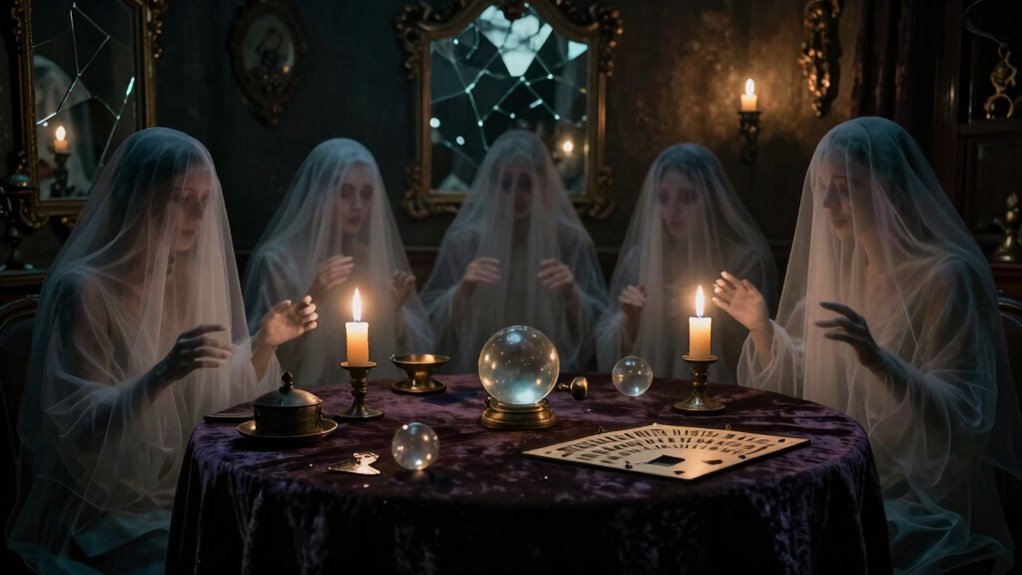
Have you ever wondered about the mysterious figures who shaped the history of spiritualism through seances? These individuals often seem like shadowy characters in stories, but their true motivations and methods are rarely fully explored. When movies depict seances, they tend to focus on ghostly apparitions or dramatic rituals, but they often omit the complex historical accuracy and cultural influences that shaped these events. Understanding these aspects helps reveal what really went on and why seances became such a compelling phenomenon.
Many films gloss over the fact that seances were deeply rooted in specific cultural contexts. For example, during the late 19th and early 20th centuries, spiritualism gained popularity partly because of societal shifts—people were seeking comfort after wars and losses, and cultural influences from Victorian beliefs about death and the afterlife played a big role. These influences colored how seances were conducted and perceived, often blending local customs with emerging spiritualist ideas. As a result, the way people engaged with seances was not just about communicating with spirits but also about addressing cultural anxieties and hopes. Movies tend to ignore this dimension, portraying seances as isolated phenomena rather than products of their cultural environment.
Seances reflected cultural anxieties, blending local customs with spiritualist ideas to address societal hopes and fears.
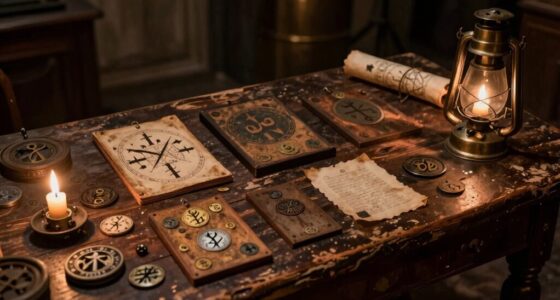
Furthermore, the importance of historical accuracy is often sacrificed in cinematic portrayals. Many films exaggerate or romanticize seances, suggesting they are purely mystical or supernatural events. In reality, a large number of seances involved clever tricks, such as concealed mirrors, hidden trapdoors, or the use of mediums skilled in illusion. These methods were often driven by the desire to entertain or persuade audiences, rather than genuine contact with spirits. Recognizing the role of deception and psychology provides a more nuanced understanding of why these events captivated audiences and how they influenced society. This distinction between illusion and deception is crucial to understanding the true nature of many historic seances.
In essence, movies tend to leave out the layers of historical accuracy and cultural influences that define seances. They focus on the spectacle, neglecting the social and cultural currents that shaped these practices. By exploring those aspects, you gain a clearer picture of how seances were more than just ghostly encounters—they were complex social rituals deeply embedded in the cultural fabric of their time. This deeper understanding reminds you that the legends we see on screen often oversimplify richer, more intricate histories, and that the true stories behind seances are just as fascinating as the myths they inspired. Recognizing the cultural context of these phenomena helps deepen appreciation for their historical significance and the societal needs they addressed. Additionally, understanding the psychological manipulation involved in some seances reveals how many of these events relied on human perception and suggestibility, further emphasizing their cultural and social significance. Exploring the role of mediums in seances highlights how their skills and backgrounds contributed to the deception and effectiveness of these rituals.
As an affiliate, we earn on qualifying purchases.
Frequently Asked Questions
Are Seances Scientifically Proven to Contact Spirits?
Seances aren’t scientifically proven to contact spirits. You should be aware of historical misconceptions that often surround these rituals, making them seem more credible than they are. Many cultures attach deep symbolism to seances, but scientific studies haven’t validated their claims. Instead, these practices are more about cultural beliefs and personal experiences than concrete evidence, so approach them with skepticism and an understanding of their symbolic significance rather than expecting verified contact with spirits.
What Are the Most Commonly Used Tools in Seances?
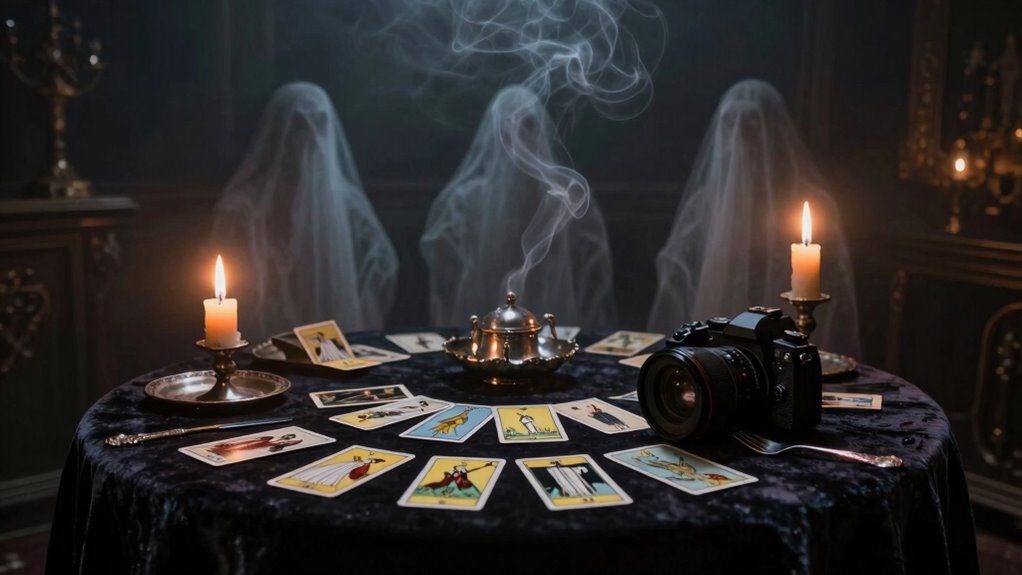
You’ll find that the most commonly used tools in seances are a planchette or Ouija board, candles, and a table, blending historical techniques with modern innovations. These tools serve as focal points to facilitate communication, often believed to help spirits connect with the living. While some rely on crystal balls or pendulums, others prefer electronic devices. Either way, these tools act as a bridge, making the intangible a little more tangible.
Do All Cultures Practice Seances Similarly?
Not all cultures practice seances similarly; there are significant cultural variations, influenced by local beliefs and traditions. Some cultures see seances as sacred rituals with deep spiritual significance, while others view them more casually or skeptically. The ritual significance varies widely, shaping how practitioners communicate with spirits or ancestors. These differences highlight how cultural context influences seance practices, making each tradition unique in its approach and purpose.
Can Seances Be Conducted Remotely or Online?
You can conduct seances remotely or online, much like virtual communication connecting distant friends. Imagine joining an online ritual where participants feel the presence of spirits through screens, bridging physical gaps. While some believe this lacks the energy of in-person seances, others find the digital space equally powerful. Advances in technology facilitate online rituals, making spiritual connection accessible no matter where you are, turning your device into a portal to the beyond.
What Safety Precautions Should Participants Take?
You should prioritize psychological safety and emotional preparedness when participating in remote seances. Guarantee everyone feels comfortable and understands they can stop at any time. Use a trusted platform with privacy features, and set clear boundaries beforehand. Avoid substances or distractions, and stay grounded. If anyone feels overwhelmed or uneasy, encourage them to step back. Maintaining open communication helps protect your emotional well-being during these experiences.
Conclusion
Remember, the devil’s in the details. Seances legends reveal parts of the story movies often leave out, offering a richer, more eerie perspective. By exploring these hidden truths, you deepen your understanding and appreciation for the supernatural. Don’t just take movies at face value—dig deeper and uncover what’s truly lurking beneath. After all, as they say, “Knowledge is power,” and in this case, it’s the key to revealing the secrets seances legends have been hiding all along.
Fall Picks
fall essentials
As an affiliate, we earn on qualifying purchases.