
The secret meaning of pentagrams in folklore connects to its ancient roots as a symbol of protection, harmony, and spiritual unity. Historically, it’s seen as a safeguard against evil, representing the balance of elements and human qualities like health and wisdom. It embodies divine power and cosmic order. While modern views often misinterpret it, understanding its origins reveals its true purpose as a symbol of universal harmony. Curious to uncover more about its fascinating history?

Get decor and gifts delivered free — and shop member deals
- Fast, free delivery on millions of items
- Access to Prime Big Deal Days deals on October 6–7
- Prime Video, Amazon Music and more included
Key Takeaways
- In folklore, pentagrams symbolize harmony, interconnectedness, and the balance between spiritual and material worlds.
- Historically, they served as protective symbols against evil spirits and negative energies.
- The five points represent elements (earth, air, fire, water, spirit) and human virtues like health and wisdom.
- Their geometric symmetry signifies stability, divine power, and sacred knowledge across many cultures.
- Modern misunderstandings often associate pentagrams with evil, but they primarily embody protection and cosmic harmony.
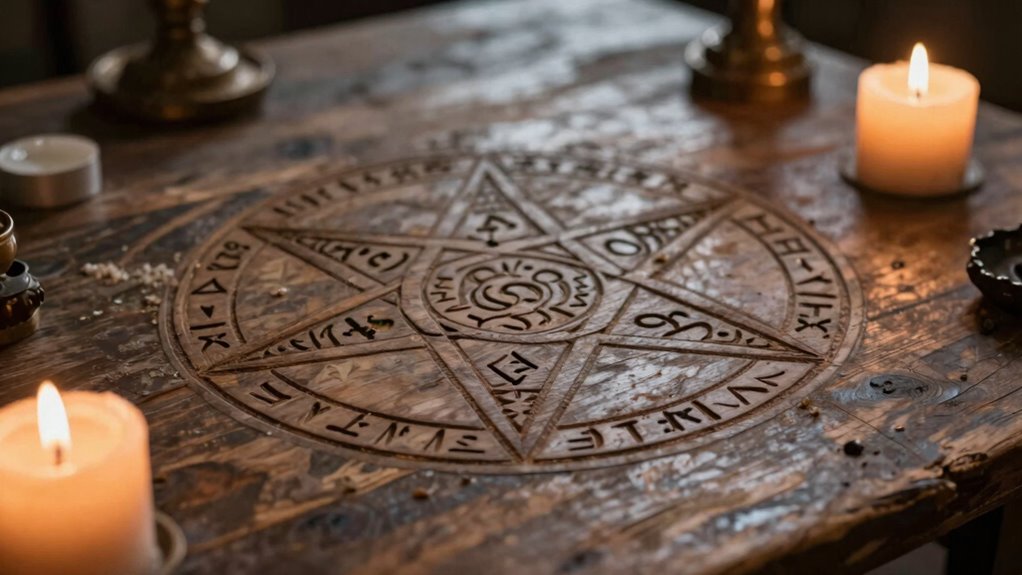
Throughout history, the pentagram has often been misunderstood, but its true meaning in folklore reveals much more than just a symbol of mystery or magic. Its historical origins trace back thousands of years, stretching across different cultures and civilizations. In ancient Mesopotamia, the pentagram was seen as a symbol of protection and balance. The Greeks associated it with health and harmony, often linking it to the five elements: earth, air, fire, water, and spirit. These origins highlight that the pentagram was initially a positive emblem, embodying concepts of unity and cosmic order.
The pentagram symbolizes protection, balance, and cosmic unity rooted in ancient civilizations and cultural traditions.
Cultural symbolism plays a significant role in how the pentagram has been perceived over centuries. In many traditions, it’s been regarded as a protective talisman, warding off evil spirits and negative energies. During the Middle Ages, people believed that the pentagram could serve as a safeguard against malevolent forces, often inscribed in homes or worn as jewelry. Its five points represent not just elements, but also human qualities such as health, strength, wisdom, love, and life itself. This deep symbolism emphasizes its role as a tool for balance and well-being.
You might think of the pentagram as a simple five-pointed star, but its meanings go far beyond that. In folklore, it symbolizes harmony between the spiritual and material worlds, reminding you of the interconnectedness of all things. Its geometric shape embodies symmetry and order, inspiring a sense of stability and protection. Many ancient cultures saw it as a divine sign—an emblem of divine protection, spiritual insight, and sacred knowledge. This is why, historically, the pentagram was often used in rituals and religious ceremonies as a symbol of divine power and protection. Additionally, its universal symbolism reflects the interconnectedness of natural forces, emphasizing how it has served as a reminder of harmony within the cosmos. Exploring the origins of the pentagram can provide insight into its evolving symbolism over time, often influenced by societal changes and cultural perceptions. Today, the pentagram continues to carry layered meanings rooted in its rich past. Its cultural symbolism has evolved, sometimes misunderstood as a symbol of evil in modern contexts, but at its core, it remains a universal sign of protection, balance, and harmony. Recognizing its historical origins helps you appreciate its true significance beyond popular myths. It’s not just a symbol of magic or rebellion but a representation of universal principles that have guided human understanding of the cosmos for millennia. The pentagram’s enduring presence in folklore underscores its importance as a symbol of spiritual unity, balance, and protection that transcends cultures and centuries.
pentagram protective talisman jewelry
As an affiliate, we earn on qualifying purchases.
As an affiliate, we earn on qualifying purchases.
Frequently Asked Questions
Are Pentagrams Always Associated With Evil or Satanic Practices?
No, pentagrams aren’t always linked to evil or satanic practices. You might see them as superstitious symbolism with different meanings across cultures. Modern misconceptions often associate them with negativity, but historically, they’ve symbolized protection, balance, and spirituality. In many traditions, a pentagram represents harmony between elements or divine protection, showing how its interpretation varies widely based on context, rather than being inherently evil.
How Ancient Are the Earliest Representations of Pentagrams in History?
You might think pentagrams are modern symbols, but their roots go deep into ancient symbolism. The earliest representations date back over 5,000 years, found in archaeological sites from ancient Mesopotamia and early civilizations. These symbols served spiritual, protective, or mystical purposes, showing their long-standing historical origins. Far from being solely evil, pentagrams have historically embodied complex meanings, reflecting humanity’s quest for understanding the universe and spiritual protection throughout history.
Do Different Cultures Interpret Pentagrams in Unique Ways?
Different cultures interpret pentagrams uniquely, reflecting their distinct cultural symbolism and historical variations. You’ll find in Western traditions, it often symbolizes protection or magic, while in Chinese culture, it can represent balance and harmony. In some Native American communities, it’s linked to spiritual guidance. These diverse interpretations highlight how pentagrams serve various symbolic purposes across cultures, shaped by their unique beliefs and historical contexts.
Can Pentagrams Be Used for Protective or Positive Purposes?
Did you know that over 2,000 years ago, pentagrams were used as symbols of protection and balance? You can definitely use pentagrams for protective or positive purposes, thanks to their symbolic significance and historical usage. Throughout history, they’ve represented harmony, health, and spiritual protection. When used intentionally, pentagrams can serve as powerful talismans, helping you focus your intentions and ward off negative energies, making them a meaningful tool for positivity.
What Are Common Misconceptions About Pentagrams in Modern Media?
You might think modern media portrays pentagrams as solely evil symbols, but that’s a misconception. Many people associate them with negative magic, yet their symbolic interpretations vary widely across cultures. In some traditions, pentagrams represent protection, balance, or the elements. Cultural symbolism influences these perceptions, so it is crucial to understand that pentagrams hold diverse meanings. Don’t let media distort their rich history—view them through a broader, more accurate perspective.
Conclusion
Now that you’ve uncovered the hidden symbolism behind pentagrams, you realize there’s more than meets the eye. These symbols hold secrets woven into folklore that could change how you see the world around you. But what if there’s even more to discover—stories and meanings that remain buried just beneath the surface? Keep your mind open, because the true depth of the pentagram’s mystery might just surprise you when you least expect it.
Halloween Picks
halloween
As an affiliate, we earn on qualifying purchases.