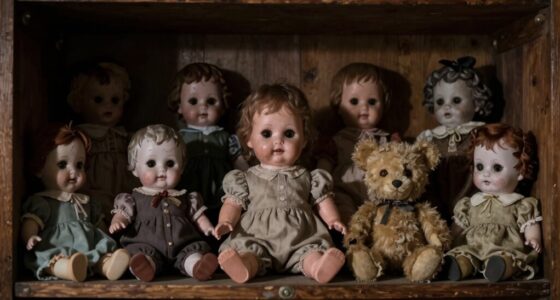
Sleep paralysis demons are actually vivid hallucinations caused by your brain trying to process fear during REM sleep paralysis. Different cultures interpret these frightening visions as spirits, ghosts, or evil entities, shaping their stories and beliefs. These perceptions are influenced by cultural ideas and personal fears, turning natural brain responses into supernatural encounters. If you want to uncover how these experiences are rooted in both brain science and folklore, there’s more to explore below.
Key Takeaways
- Sleep paralysis hallucinations are vivid, realistic visions caused by brain activity during REM sleep, not actual supernatural beings.
- Cultural beliefs shape the appearance of “sleep demons,” often depicting spirits or monsters from folklore.
- These hallucinations stem from the brain’s response to fear and helplessness during paralysis, creating terrifying entities.
- Different cultures interpret these experiences as spirits, ghosts, or demons, influencing their visual and emotional content.
- Understanding the neurological and cultural roots helps demystify sleep paralysis and reduces associated fear.
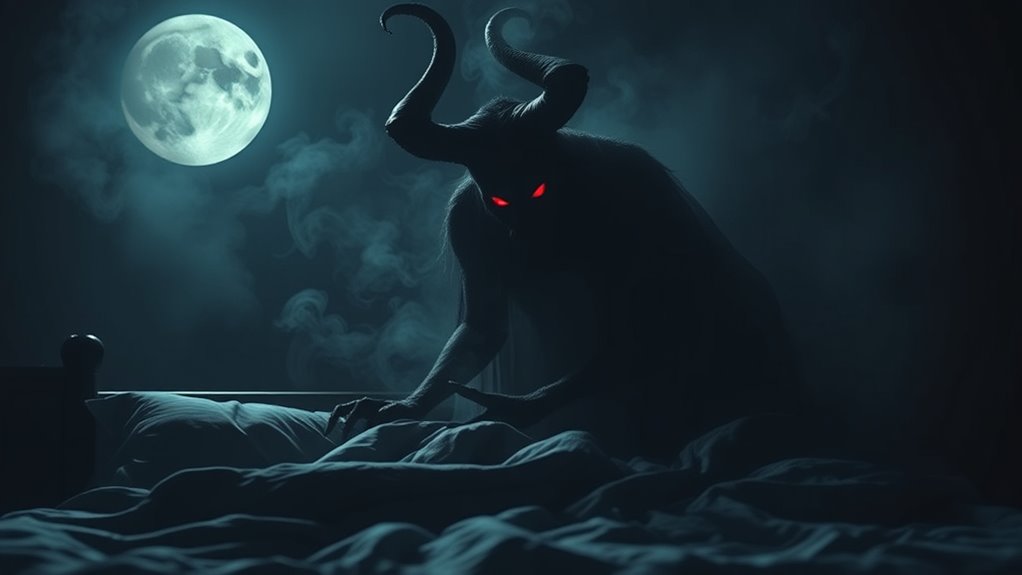
Many people have experienced the terrifying sensation of sleep paralysis, often accompanied by the feeling of a sinister presence or “demons” lurking in the darkness. During these episodes, your mind becomes a battleground where vivid nightmare hallucinations take shape. These hallucinations can be incredibly realistic, making you feel as if malevolent entities are pressing down on your chest or watching you in the shadows. It’s a primal fear, amplified by the hallucinations that distort your perception of reality. These visions aren’t random; they’re rooted in your brain’s attempt to process fear and helplessness during a state where your body is temporarily paralyzed. Understanding the neurological phenomenon behind these experiences can help reduce fear and promote a sense of control during episodes.
Sleep paralysis often brings terrifying hallucinations of sinister entities pressing or watching in the dark.
Across different cultures, these experiences have been interpreted in various ways. In some societies, sleep paralysis demons are seen as actual supernatural beings, spirits, or malevolent entities that come to torment the sleeper. For example, in Japanese folklore, they’re called “kanashibari” spirits, believed to be vengeful ghosts that latch onto the sleeper’s chest. Similarly, in Scandinavian traditions, these entities are viewed as trolls or evil spirits that sit on the chest, preventing movement and causing terror. These cultural interpretations serve to explain the terrifying hallucinations as confrontations with otherworldly beings, giving a narrative to what is, in reality, a neurological phenomenon.
However, science sheds light on the biological roots of these experiences. During sleep paralysis, your brain remains partially awake while your body stays in a state of REM atonia—a natural paralysis preventing you from acting out your dreams. This disconnect creates a perfect storm for nightmare hallucinations, where your mind fills the paralysis with frightening images and sensations. The presence of an ominous figure is a common hallucination, often representing your subconscious fears materialized in vivid, often terrifying forms. These hallucinations are influenced by cultural beliefs, which shape what you perceive and how you interpret them. If you’ve grown up hearing stories about demons or spirits visiting you in the night, your mind might incorporate those ideas into your hallucinations, making them seem more real and sinister.
Understanding the cultural and neurological roots of sleep paralysis demons helps demystify these frightening episodes. They’re not actual spirits or supernatural entities but the brain’s way of processing fear during a vulnerable state. Recognizing this can lessen the terror, helping you see these experiences as a natural part of sleep’s complex landscape. While the hallucinations feel real, they’re ultimately a product of your mind’s attempt to make sense of a terrifying, helpless moment.
Frequently Asked Questions
Are Sleep Paralysis Demons Unique to Specific Cultures?
No, sleep paralysis demons aren’t unique to specific cultures. You’ll find cultural variations in how different societies interpret these experiences, often rooted in folklore origins. For example, some cultures see them as spirits or witches, while others view them as alien encounters. These differences reflect local beliefs and traditions, showing how universal sleep paralysis is, but how uniquely it’s understood around the world.
Can Sleep Paralysis Be Prevented Through Lifestyle Changes?
Yes, you can reduce sleep paralysis episodes through lifestyle changes. Focus on improving your sleep hygiene by sticking to a consistent sleep schedule, creating a relaxing bedtime routine, and avoiding screens before bed. Managing stress is also vital; practice relaxation techniques like meditation or deep breathing. These habits help regulate your sleep cycles and minimize the chances of experiencing sleep paralysis, making your nights more restful and less frightening.
Do Sleep Paralysis Demons Have Any Scientific Explanations?
Sleep paralysis demons often seem real because of vivid hallucinations caused by sleep paralysis causes like disrupted REM sleep. Scientifically, these frightening visions stem from the brain’s incomplete shutdown of muscle activity during REM, creating a haunting scene. Cultural interpretations amplify this fear, turning strange sensations into malevolent spirits. You might feel a shadowy presence or weight on your chest, but understanding the science can help demystify the terror and bring relief.
Are There Any Long-Term Health Effects Associated With Sleep Paralysis?
Long-term health effects of sleep paralysis are rare but can include psychological impacts like anxiety and fear of sleeping. Some individuals may experience neurological impacts such as disrupted sleep patterns or increased stress levels. You might notice ongoing difficulty in falling asleep or recurring episodes that worsen over time. To protect your health, it is crucial to manage stress, maintain good sleep hygiene, and seek medical advice if episodes become frequent or severely distressing.
How Do Sleep Paralysis Demons Influence Modern Horror Media?
Sleep paralysis demons influence modern horror media by embodying supernatural folklore and tapping into cultural symbolism of fear and the unknown. You see them in movies, TV shows, and games as terrifying entities that evoke primal anxieties. Creators use these demons to heighten suspense and explore themes of helplessness, drawing on centuries-old stories that connect supernatural folklore to deep-seated cultural fears, making horror more immersive and psychologically impactful.
Conclusion
So next time you wake up paralyzed with that terrifying presence, remember, it might just be a coincidence of your mind’s design, not some supernatural demon. It’s funny how ancient stories of demons echo what science now explains as sleep paralysis. Maybe those tales served as warnings or explanations long ago, but now, you see the pattern. Sometimes, the line between myth and science blurs, reminding you that what seems like a demon could simply be your own brain’s mysterious workings.