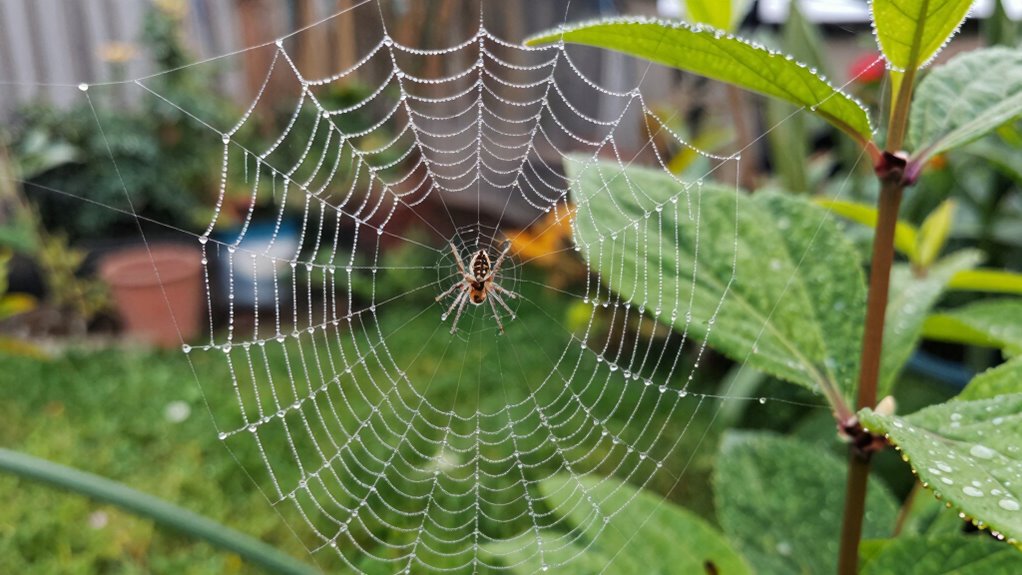

Spiders are placed everywhere because they symbolize interconnectedness, resilience, and natural balance, which resonate deeply within ecosystems and human spaces. Their webs, admired for geometric precision and strength, serve as visual cues of harmony and careful planning. Incorporating spiders evokes feelings of safety, resourcefulness, and patience, subtly shaping how we view resilience in our environment. Keep exploring, and you’ll discover even more about why their presence is both meaningful and effective.
Key Takeaways
- Spiders naturally inhabit diverse environments, making their presence a reflection of ecological balance and interconnected ecosystems.
- Their web designs symbolize order, resilience, and intricate planning, inspiring both cultural symbolism and artistic motifs.
- Incorporating spiders and webs into spaces enhances themes of protection, harmony, and resourcefulness.
- Web structures exemplify engineering marvels, demonstrating patience, precision, and complex natural design.
- The symbolic power of spiders evokes feelings of safety, persistence, and interconnectedness, reinforcing their widespread placement.
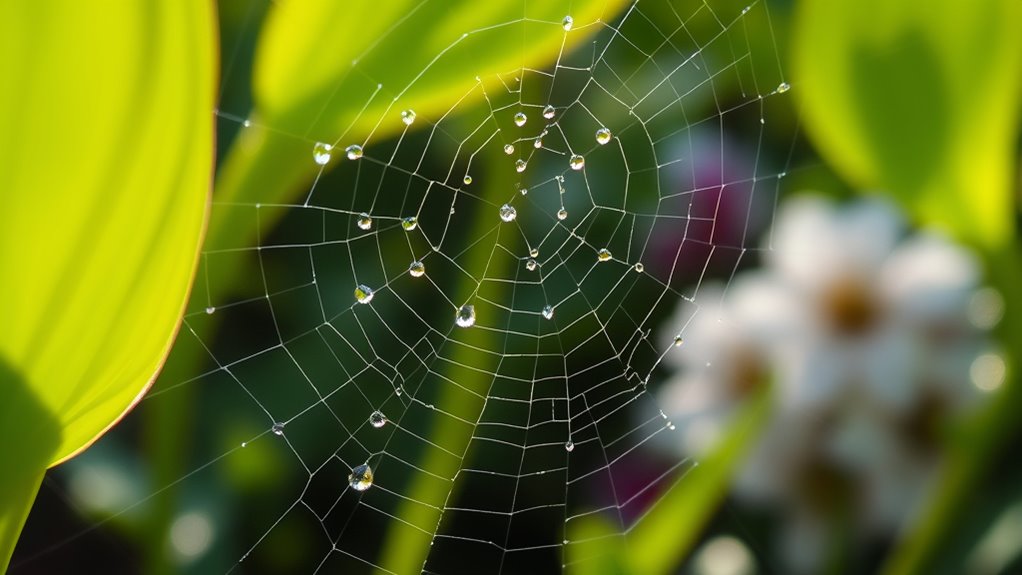
You might have noticed spiders appearing in unexpected places, but there’s a good reason behind their widespread presence. Spiders have a unique way of subtly weaving themselves into our environment, and understanding their significance can shed light on why we often see them everywhere. The answer lies partly in arachnid symbolism, which attributes various meanings to these creatures, and partly in their incredible ability to craft intricate spider web designs. Both elements contribute to how and why we incorporate spiders into our spaces, whether consciously or unconsciously. Additionally, their webs serve as a reminder of interconnectedness in nature, highlighting the complex relationships within ecosystems. Arachnid symbolism has deep roots in many cultures. Spiders are often seen as symbols of patience and creativity because of their meticulous web-building. Their webs aren’t just random structures; they’re masterpieces of engineering, representing interconnectedness and the delicate balance of life. When you see a spider spinning a web, it’s a reminder of the importance of persistence and the beauty of intricate planning. This symbolism resonates with humans on a subconscious level, making spiders powerful icons of safety, resourcefulness, and resilience. That’s why you might find spider imagery in art, textiles, or home décor—these symbols evoke a sense of protection and harmony.
The spider web design itself plays a pivotal role in their omnipresence. These webs are marvels of natural engineering, capable of capturing prey efficiently while also serving as a visual reminder of order and precision. The geometric perfection of a web, with its radiating spokes and concentric circles, appeals to our aesthetic sensibilities and subconscious appreciation for symmetry. Incorporating spider web motifs into decoration or architecture isn’t accidental; it’s an intentional choice rooted in their symbolic power. The web design acts as a visual cue, reminding us of interconnectedness and the importance of patience and perseverance. When you see a web, it’s often more than just a trap for insects—it’s a symbol of the intricate web of life, echoing themes of unity and resilience.
YATEASLU Halloween Interior Wall Decor – Halloween Spider Decoration, Scary Spiderweb Wall Sculpture for Grunge Style Room Decor
Halloween Wall Decor: Brighten up any wall with these spooky Halloween spider decorations! Featuring a creepy, intricate spiderweb…
As an affiliate, we earn on qualifying purchases.
As an affiliate, we earn on qualifying purchases.
Frequently Asked Questions
Do Spiders Pose Any Health Risks to Humans?
Spiders generally don’t pose significant health risks to you. Their venom is usually harmless to humans, causing only minor irritation if bitten. However, if you’re allergic to spider venom, you might experience allergy risks like swelling or difficulty breathing. Most bites are rare and not dangerous, especially if you avoid provoking them. Overall, spiders help control pests without putting your health at serious risk, making them beneficial neighbors.
How Do Spiders Affect Local Ecosystems?
Spiders crucially influence local ecosystems through their ecological roles, such as controlling insect populations. Their arachnid diversity ensures a balanced food web, benefiting plant health and reducing pest outbreaks. By preying on various insects, spiders help maintain ecological stability. You might not realize it, but their presence supports biodiversity and keeps ecosystems healthy, making them essential components in the natural environment.
Are All Spiders Beneficial in Pest Control?
Not all spiders are beneficial in pest control. Some spiders produce strong silk to trap prey efficiently, but their venom toxicity varies; many have harmless venom, while others can be more potent. You might find that certain species help reduce pests considerably, while others pose little benefit. Understanding the specific spider’s venom and silk strength helps determine whether they truly aid in controlling pests effectively.
Can Spider Presence Indicate Environmental Health?
Think of the environment as a symphony, and spiders are the delicate strings that keep it harmonious. Their presence can indicate healthy arachnid communication and balanced ecosystems, making them valuable indicators of environmental health. By supporting spider conservation, you help maintain this natural balance, as their decline might signal ecological issues. So, if you see spiders thriving, it’s a good sign your environment remains vibrant and resilient.
How Do Spiders Adapt to Different Habitats Worldwide?
You’ll find that spiders adapt to various habitats worldwide by developing specific traits suited to each web habitat. Their adaptive traits include diverse web designs, camouflage, and hunting strategies, allowing them to thrive in forests, deserts, or urban areas. These adaptations help them catch prey efficiently and avoid predators, ensuring their survival regardless of the environment. So, their ability to modify web structures and behavior makes them successful across many different habitats.

SaktopDeco 33 PCS Hanging Spider Decorations Spider Ornament Black Felt Spider Web Halloween Decorations for DIY House Decor
PRODUCT SIZE: You will receive 6 Spider webs (2 styles) and 27 Spiders (3 styles). 2 black ropes,…
As an affiliate, we earn on qualifying purchases.
As an affiliate, we earn on qualifying purchases.
Conclusion
You might be surprised to learn that over 80% of farms around the world use spiders to naturally control pests. By placing spiders everywhere, you harness their incredible hunting skills, reducing the need for harmful chemicals. This simple strategy not only protects the environment but also keeps your crops healthy and thriving. So, next time you see a spider, remember it’s working hard to help you grow better, safer food—proving nature’s genius in action.
Gothic Skull Embroidery Starter Kits for Beginners Adults, Halloween Stamped Cross Stitch Kit for Beginners Adults, Flowers Hand Embroidery Needlepoint Kit, 2 Embroidery Hoop (Attached Video Tutorial)
Halloween Embroidery Kits for Beginners: You will get 2pcs embroidery fabric with skull, flowers and moth pattern, 2pcs…
As an affiliate, we earn on qualifying purchases.
As an affiliate, we earn on qualifying purchases.
SaktopDeco 33 PCS Hanging Spider Decorations Spider Ornament Black Felt Spider Web Halloween Decorations for DIY House Decor
PRODUCT SIZE: You will receive 6 Spider webs (2 styles) and 27 Spiders (3 styles). 2 black ropes,…
As an affiliate, we earn on qualifying purchases.
As an affiliate, we earn on qualifying purchases.