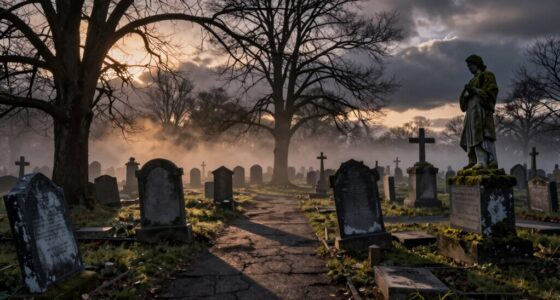
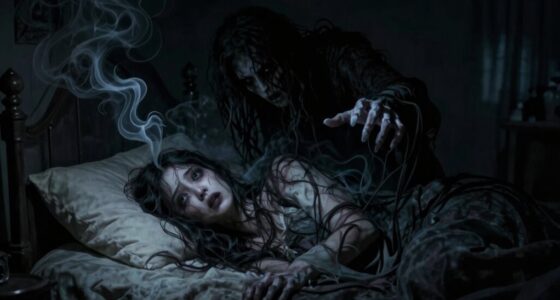
The Wild Hunt is Europe’s legendary ghostly parade of spectral hunters racing across the winter sky, linked to fears, myths, and environmental mysteries. It often features ghostly riders led by gods, spirits, or legendary heroes, reflecting ancient beliefs about death and the forces of nature. Over time, these stories morphed, blending pagan traditions with Christian warnings. Curious about how this spectral spectacle continues to shape culture? Keep exploring to uncover its deeper origins and meanings.
Key Takeaways
- The Wild Hunt is a legendary spectral procession associated with winter, featuring ghostly hunters and supernatural beings across Europe.
- Its origins blend pagan mythologies with folklore, often linked to gods like Odin or spirits of the dead.
- Variations across regions reflect local beliefs, such as Woden in Scandinavia or Herne the Hunter in Britain.
- Christian influences transformed it into cautionary tales, emphasizing morality and spiritual respect during winter.
- Symbolizing chaos versus order, the Hunt embodies societal fears and mystical beliefs about nature’s unpredictable forces.

Have you ever heard of the Wild Hunt, a legendary spectral procession that storms across the night sky? If so, you’re already familiar with one of Europe’s most captivating and enduring myths. Its origins are deeply rooted in ancient stories, with mythical origins that stretch back centuries. The Wild Hunt is often depicted as a ghostly cavalcade of hunters, spirits, or supernatural beings riding through the darkness, sometimes accompanied by howling wolves or thunderous sounds. These stories have traveled through time, adapting to different cultures and regions, which is why you’ll find a variety of cultural variations surrounding the legend. In some traditions, the Hunt is led by a god or a legendary hero, embodying forces of chaos or protection. In others, it’s a restless spirit or a symbol of death itself.
The mythical origins of the Wild Hunt are complex and layered, often blending pagan beliefs with later folklore. Many ancient communities saw it as a manifestation of the gods or spirits controlling the natural world, especially during the bleak winter months when darkness dominates. The imagery of hunters riding through the night was a way to explain mysterious sounds, strange lights, or the sudden appearance of spectral figures. As Christianity spread across Europe, these stories morphed into cautionary tales about the dangers of straying from moral paths or disrespecting the spiritual domain. Some legends warned that those who encountered the Hunt could be cursed or taken away forever, reinforcing social and religious norms.
Cultural variations add even more richness to the legend. In Northern Europe, particularly in Scandinavian and Germanic traditions, the Hunt is often associated with Odin or Woden, leading ghostly armies during the darker months. In Britain, stories of the Wild Hunt became linked with figures like Herne the Hunter or the headless horseman, emphasizing the haunting nature of winter spirits. In Eastern Europe, the Hunt might be connected with spirits of the dead or shapeshifting entities, reflecting local beliefs about death and the afterlife. Despite regional differences, the core idea remains the same: a spectral procession that embodies the chaos and mystery of winter nights. These myths serve as cultural mirrors, revealing how societies understood the supernatural and their environment, especially during the long, cold months when the veil between worlds seemed thinnest.
Furthermore, the legend of the Wild Hunt is often interpreted as a symbolic representation of chaos and order, illustrating the ongoing human struggle to comprehend and control the unpredictable forces of nature and spirit. In essence, the Wild Hunt isn’t just a spooky legend; it’s a reflection of human fears, hopes, and the mystical forces that ancient communities believed governed their world. Its mythical origins and cultural variations make it a timeless story, continually inspiring stories, art, and fears across Europe.

Irish Fairy Tales and Folklore
As an affiliate, we earn on qualifying purchases.
As an affiliate, we earn on qualifying purchases.
Frequently Asked Questions
What Are the Origins of the Wild Hunt Legends?
The origins of the Wild Hunt legends come from medieval folklore and pagan rituals. You might notice that these stories blend myth with cultural traditions, often depicting supernatural hunts led by ghostly figures or gods. These legends likely served to explain mysterious winter phenomena or to reinforce social norms during pagan times. Over centuries, they evolved, reflecting fears and beliefs about the supernatural, nature, and the changing seasons.
How Does the Wild Hunt Appear in Modern Culture?
Like a shadow stretching across modern skies, the Wild Hunt appears in pop culture and media, blending medieval folklore into today’s stories. You’ll see it in movies, TV shows, and video games, where it’s often depicted as a spectral chase or ominous force. These portrayals keep the legend alive, enthralling audiences and linking ancient myths to contemporary entertainment, making the wild hunt a timeless symbol of mystery and the supernatural.
Are There Regional Differences in Wild Hunt Stories Across Europe?
You’ll notice regional folklore shapes Wild Hunt stories differently across Europe. In northern areas, it’s often linked to winter and seasonal variations, emphasizing ghostly chases through snow-covered forests. In contrast, southern tales might focus on spirits or deities associated with fertility or harvest cycles. These differences reflect local beliefs, climate, and cultural history, giving each region a unique take on the spectral parade and its meaning during seasonal changes.
What Psychological or Societal Functions Do These Legends Serve?
You might see legends of the Wild Hunt as frightening, but they serve essential roles. These stories teach moral lessons, warning against hubris or disrespect to nature. They also foster social cohesion, uniting communities through shared fears and values. By confronting supernatural fears in tales, you reinforce societal bonds and moral codes, helping you and your community navigate life’s uncertainties with a sense of order and collective strength.
Has the Wild Hunt Ever Been Linked to Real Historical Events?
Yes, the Wild Hunt has been linked to real historical events through medieval folklore and ancient rituals. Some interpretations suggest it reflects societal fears during times of crisis, like wars or plagues, symbolizing chaos or divine punishment. Others believe it echoes ancient rituals meant to ward off evil spirits or guarantee seasonal fertility. These connections help you see how legends can encode collective memories of significant historical upheavals.

LYLPYHDP Ghillie Suit, Kids Adult 3D Leafy Camouflage Clothing, Camo suit for Turkey Hunting, Hunting Suit for Outdoor Game and Halloween
❤MATERIAL – High quality 100% polyester lining and 100% polypropylene "string". Material: Made of tough and durable polyester.
As an affiliate, we earn on qualifying purchases.
As an affiliate, we earn on qualifying purchases.
Conclusion
Now that you understand the origins, the legends, and the fears surrounding The Wild Hunt, you see how it’s more than just a spooky story. It’s a reflection of fears, a symbol of change, and a reminder of nature’s wild power. You realize that The Wild Hunt isn’t just a ghostly procession, but a mirror of human emotion, a whisper of history, and a call to respect the mysterious, the unpredictable, and the unknown.

ABYSTYLE Studio Hunter X Hunter Gon SFC Collectible PVC Figure Statue Anime Manga Figurine Home Room Office Décor Gift
High-quality dimensions
As an affiliate, we earn on qualifying purchases.
As an affiliate, we earn on qualifying purchases.

Ghostly Winter Tales: A Fourth Collection of Classic Ghost Stories for Christmas (Black Heath Gothic, Sensation and Supernatural)
As an affiliate, we earn on qualifying purchases.
As an affiliate, we earn on qualifying purchases.