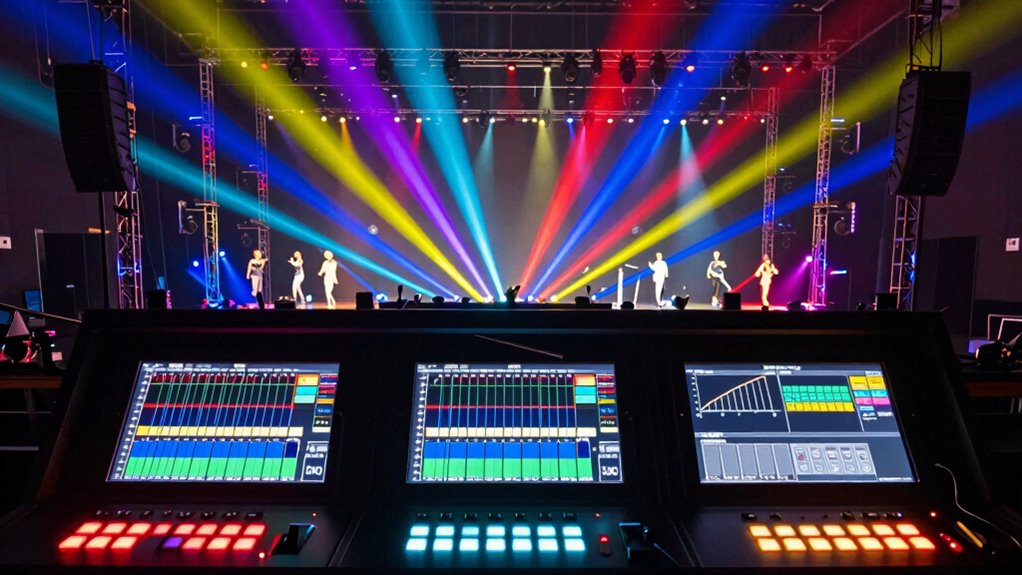

A DMX universe is like a control group for up to 512 channels of lighting and effects, making it easier for you to manage complex setups without getting overwhelmed. It connects your console to fixtures using a single data line, often in a daisy-chain, so all your lights work together smoothly. Proper organization guarantees reliable signals and quick troubleshooting. Keep going to discover how understanding universes helps create stunning, seamless lighting displays with confidence.

Get decor and gifts delivered free with Prime
- Fast, free delivery on millions of items
- Prime Video, Amazon Music and more included
- Member-only deals all year
Key Takeaways
- A DMX universe is a single group of 512 channels used to control lighting fixtures and effects.
- It simplifies wiring by using one data line, often daisy-chained through multiple fixtures.
- For larger setups, multiple universes are used, each with its own unique address.
- Proper organization of signals prevents interference, ensures reliability, and makes troubleshooting easier.
- DMX universes enable complex lighting designs to be managed smoothly and confidently.
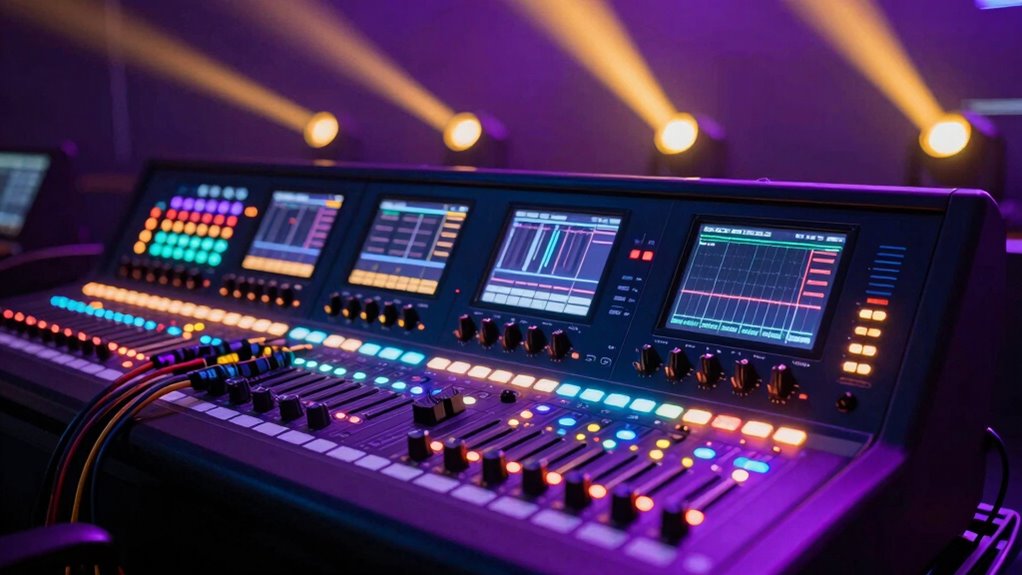
A DMX universe is the fundamental building block for controlling lighting and stage effects in live productions. Think of it as a dedicated channel group that manages a specific set of fixtures or effects within your show. When you’re working with multiple lights, each one needs to receive signals that tell it what to do—whether to brighten, change color, or create movement. That’s where the concept of a DMX universe comes in. It simplifies this process by acting as a self-contained system that handles signal distribution efficiently. Instead of juggling dozens of individual connections, you send your control signals into the universe, and it ensures each fixture gets the right instructions.
Lighting control at this level relies heavily on signal distribution. The DMX protocol uses a single data line—often a daisy-chain setup—making it straightforward to connect multiple fixtures in a series. When you operate your lighting console, it sends out signals that travel through this data line, reaching every device within the universe. This setup allows you to coordinate complex effects across many fixtures without confusion or lag. If you’re controlling a large number of lights, you might need to split your control into multiple universes, each with its own set of fixtures, to avoid overloading the system. This division keeps signal distribution clean and reliable, preventing interference or signal degradation. Proper signal organization is essential for maintaining system reliability.
DMX uses a single data line to connect multiple fixtures, ensuring smooth, reliable signal distribution without lag or interference.
Understanding how a DMX universe functions helps you grasp the limits of your system. Each universe can handle up to 512 channels of data—meaning you can control 512 individual parameters like intensity, color, or position. If your setup exceeds that, you’ll need to set up additional universes, each with its own unique address**, which is essential for maintaining organized control. This modular approach makes scaling your lighting system manageable and adaptable to different venues or productions. Plus, knowing that your lighting control relies on a well-organized signal distribution ensures you can troubleshoot problems quickly when they arise. Proper signal organization is crucial for system reliability and troubleshooting. Additionally, understanding the DMX protocol** helps you optimize your setup for maximum efficiency and stability.
In essence, a DMX universe is the backbone that connects your control console to your fixtures. It streamlines signal distribution, prevents chaos, and allows you to execute complex lighting designs smoothly. By understanding this core concept, you gain confidence in designing your lighting setup, knowing that each fixture receives precise commands within its own universe. Whether you’re running a small theater or a large concert, recognizing how DMX universes work helps you keep everything running seamlessly, without the tech headache.
As an affiliate, we earn on qualifying purchases.
Frequently Asked Questions
How Many Fixtures Can One DMX Universe Control Simultaneously?
A single DMX universe can control up to 512 fixtures simultaneously, thanks to its lighting protocol. You can manage multiple fixtures by assigning each a unique fixture address, ensuring proper fixture addressing. This setup lets you coordinate complex lighting designs without overlaps or conflicts. Remember, maintaining correct fixture addressing and understanding lighting protocols helps you maximize your control within each universe, making your lighting setup efficient and flexible.
Can DMX Universes Be Expanded Beyond 512 Channels?
Yes, DMX universes can be expanded beyond 512 channels by using multiple universes. The DMX protocol organizes lighting fixtures into a lighting hierarchy, allowing you to link several universes together, effectively increasing your control capacity. You’ll need a DMX splitter or controller capable of managing multiple universes, ensuring your lighting setup remains seamless and synchronized across all fixtures, even as you extend beyond the standard 512 channels.
What Is the Difference Between a DMX Universe and a DMX Network?
A DMX universe is a single lighting protocol signal that controls up to 512 channels, while a DMX network connects multiple universes, allowing you to expand your lighting setup. Think of the universe as a single signal line, and the network as the entire system of interconnected universes. The network manages signal distribution efficiently, ensuring your lighting fixtures communicate seamlessly across larger shows or installations.
Are DMX Universes Compatible With Wireless Lighting Systems?
You might worry about wireless integration with DMX universes, but yes, they can work together. Many wireless lighting systems are compatible with DMX universes, allowing you to control lights remotely. However, be mindful of signal interference, which can disrupt communication. To guarantee smooth operation, choose reliable wireless solutions and use proper shielding or frequency management, making your setup flexible without sacrificing performance.
How Do I Troubleshoot a Non-Responsive Fixture in a DMX Universe?
You should start by checking the fixture addressing to guarantee it’s correctly set within the DMX universe. Next, inspect for signal interference, as it can disrupt communication. Try relocating your fixture or reducing other wireless devices nearby. Power cycle the fixture and verify all DMX connections are secure. If it still doesn’t respond, test it with a different DMX controller or address to identify if the issue lies with the fixture itself.
Conclusion
Think of DMX universes as the heartbeat of your light show, each pulse carrying the rhythm of your creative vision. When you understand how they connect and flow, you become the conductor, guiding a symphony of colors and shadows. Like a lighthouse guiding ships through darkness, mastering universes illuminates your path, turning complex technology into a dance of artistry. Embrace the symbolism, and let your lights tell stories beyond words.
Halloween Picks
halloween
As an affiliate, we earn on qualifying purchases.