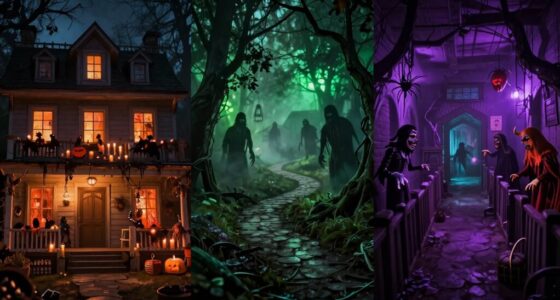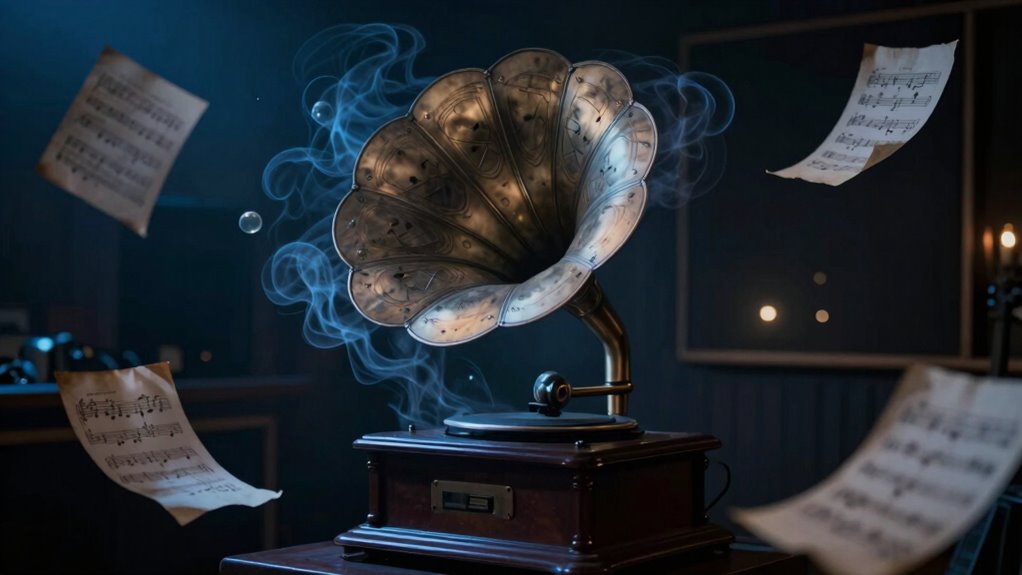

Haunted music uses ghostly echoes, spectral whispers, and unsettling distortions to immerse you in an eerie atmosphere that blurs reality and the supernatural. These sounds evoke feelings of unease, curiosity, and vulnerability, making you feel as if unseen presences surround you. They manipulate your perception, tapping into primal fears and heightening suspense. If you keep listening, you’ll discover how these sound techniques intensify the haunting experience and stir your deepest emotions.
Key Takeaways
- Ghostly echoes create an immersive atmosphere that suggests unseen supernatural activity, heightening listener curiosity and unease.
- Spectral whispers evoke feelings of being watched or spoken to, intensifying fears of the unknown.
- Distortion and reverberation mimic natural decay, making environments feel aged and haunted.
- Layered ghost sounds manipulate perception, creating a psychological sense of vulnerability and mystery.
- These sounds tap into primal fears, blurring reality and making listeners feel transported into supernatural realms.
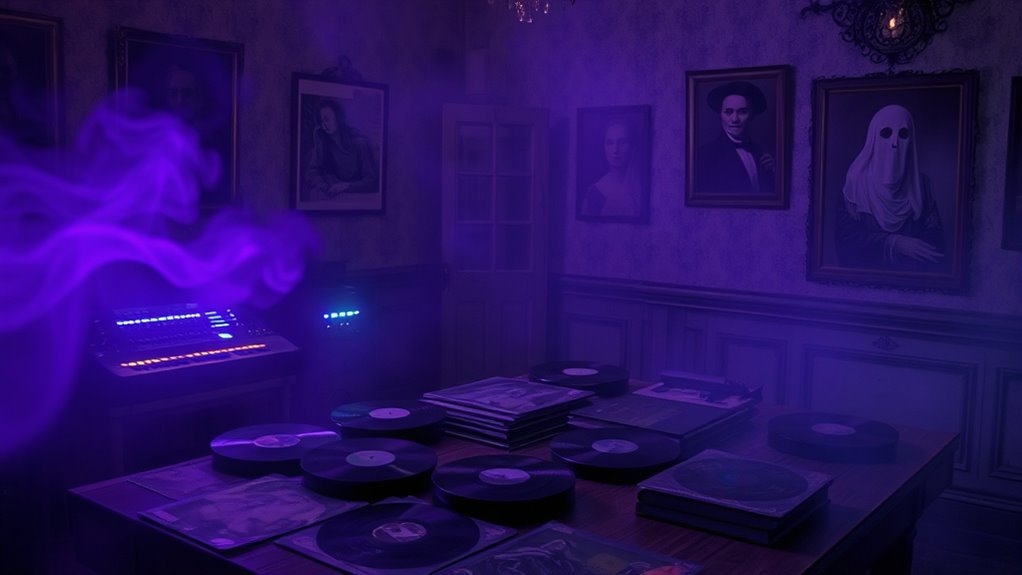
Have you ever heard strange, unexplainable music echoing in an empty room or abandoned building? It’s as if the space itself is alive with sound, yet no one is there to make it. This phenomenon often features ghostly echoes—distant, distorted melodies that linger just beyond your grasp—and spectral whispers that seem to drift through the air. These sounds aren’t just random noises; they’re carefully crafted elements designed to evoke specific feelings and reactions. When you encounter haunted music that uses ghostly echoes, it’s meant to stir your subconscious, pulling you into a domain where the line between the living and the dead blurs.
The use of spectral whispers in haunted music taps into our innate fear of the unknown. These faint voices, barely audible, create a sense of unseen presence, making you feel as if you’re being watched or spoken to by spirits. They hint at stories from the past, secrets long buried, or warnings from beyond. When layered with ghostly echoes, spectral whispers amplify the sense of mystery, making the environment feel alive with unseen activity. This combination plays tricks on your mind, convincing you that these sounds are real and that something supernatural is nearby. It’s a deliberate technique that heightens your emotional response, often leading to feelings of unease, curiosity, or even dread.
The goal of incorporating ghostly echoes and spectral whispers in haunted music isn’t just to scare you—it’s to immerse you in an experience. These sounds tap into your primal fears, like loneliness and vulnerability, making the experience feel intensely personal. When you hear these echoes bouncing around an empty hallway or echoing through a dilapidated house, your mind begins to fill in the gaps, imagining what might be lurking just out of sight. The distortion and reverberation of these sounds mimic the natural decay of old, haunted spaces, which adds to their authenticity and eeriness. The effect is subtle but profound: you start to feel as if the environment itself is alive with spirits, whispering their stories directly into your ears.
In essence, haunted music uses ghostly echoes and spectral whispers to manipulate your perception. These sounds evoke a sense of mystery and supernatural presence that’s hard to ignore. They play on your fears and curiosity, creating an atmosphere that feels both real and surreal. When you encounter this type of music, you’re not just listening—you’re experiencing a carefully orchestrated portal into the unknown, where every ghostly echo and whisper invites you to step closer to the mysteries that lie beyond our understanding.
Furthermore, understanding the psychological effects of these sounds helps explain why they are so effective at creating an immersive experience that blurs the line between reality and imagination.

Remote-Controlled Horror Sound Machine, Various Horror Sound Effects and Ambient Music, Scary Toy, Office Prank, Gag Gift, Pocket-Sized April Fool's Gift, Christmas Gift (18 Voices)
【Horror Sound Machine】Just press a button to emit customizable ghostly wails and spooky ambient sounds within 100 feet!…
As an affiliate, we earn on qualifying purchases.
As an affiliate, we earn on qualifying purchases.
Frequently Asked Questions
How Do Haunted Music Sounds Influence Listener Emotions?
Haunted music sounds influence your emotions by triggering auditory hallucinations that make you feel as if you’re hearing spirits or whispers, creating a sense of unease. These sounds manipulate your emotions by tapping into fear and curiosity, making you more vulnerable to emotional manipulation. As you listen, your mind reacts to eerie tones and distorted noises, intensifying feelings of suspense or dread, deepening your emotional engagement with the music.
Can Haunted Music Cause Real Psychological Effects?
Yes, haunted music can cause real psychological effects. You might feel anxious, uneasy, or even experience temporary changes in your mood due to the psychology impacts of sound symbolism. The eerie sounds trigger subconscious associations, amplifying your emotional response. These effects happen because your brain interprets certain sounds as threatening or mysterious, activating your fight-or-flight response and making the experience feel intensely real even if you know it’s just music.
Are There Cultural Differences in Haunted Music Sounds?
Yes, there are cultural differences in haunted music sounds. You’ll notice regional variations in how sounds like eerie melodies or ghostly whispers are used, reflecting local cultural symbolism. For example, certain scales or instruments evoke specific emotions tied to regional folklore. These variations make haunted music resonate differently across cultures, enhancing its haunting effect and creating a more authentic, culturally rich experience that taps into shared beliefs and fears.
What Are the Most Common Instruments Used in Haunted Music?
Think of haunted music as a shadowy forest, where certain instruments carve eerie paths. You’ll often hear dissonant strings, like violins and cellos, weaving unsettling orchestral textures. Whispering wind-like sounds come from flutes and woodwinds, while ominous tones are amplified by bass drums and low-pitched percussion. This strategic instrument selection creates an immersive atmosphere, making you feel the ghostly presence lurking just beyond your perception, heightening suspense and fear.
How Do Sound Frequencies Affect Our Perception of Haunted Music?
Sound frequencies markedly influence how you perceive haunted music through frequency manipulation and auditory illusions. Lower frequencies can create a sense of unease or dread, while higher frequencies evoke tension. By skillfully manipulating these frequencies, composers craft auditory illusions that make sounds seem to shift or echo, intensifying the haunting atmosphere. This manipulation tricks your brain into perceiving supernatural elements, making the music feel more eerie and immersive.

Spectral Whispers Ascend
As an affiliate, we earn on qualifying purchases.
As an affiliate, we earn on qualifying purchases.
Conclusion
So, next time you listen to haunted music, remember those three eerie sounds—dissonant strings, low drones, and distant whispers—that craft a chilling atmosphere. They tap into your subconscious, stirring feelings of fear and curiosity, much like ghost stories told around a campfire. It’s almost like a spell from a Gothic novel, pulling you into a ghostly domain. Keep your wits about you; these sounds are masters of psychological trickery, shaping your experience in the most spectral way.
Ghostly Soundscapes of the Forest
As an affiliate, we earn on qualifying purchases.
As an affiliate, we earn on qualifying purchases.

Gemmy Haunted Mansion Scene with Music and Synchronized Light Show, 5.5 ft Tall, Blue
66.14×96.06×27.6
As an affiliate, we earn on qualifying purchases.
As an affiliate, we earn on qualifying purchases.