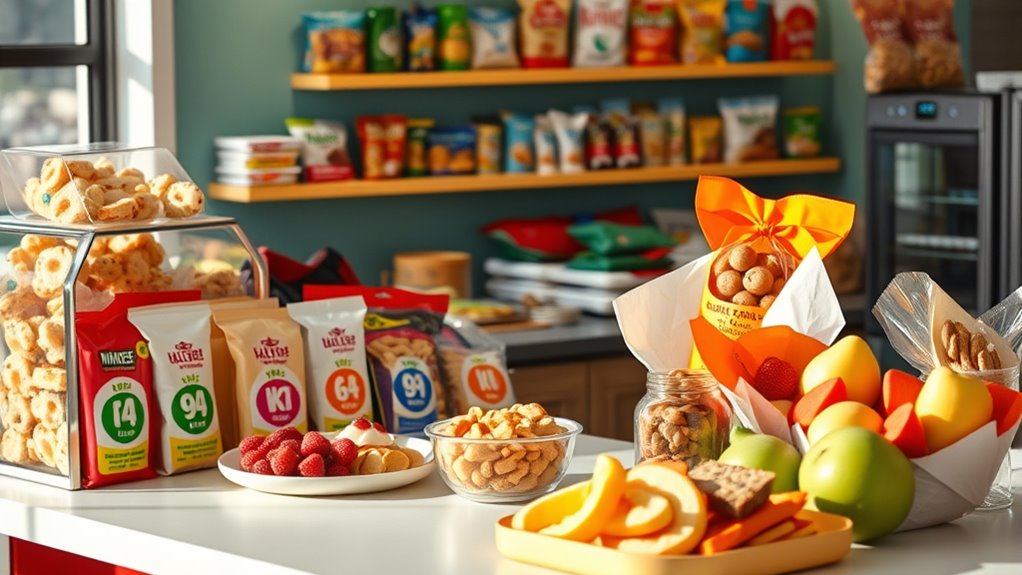

When searching for allergy-friendly treats, always check labels for “nut-free” or “gluten-free” certifications and read ingredient lists carefully to avoid sneaky allergens. At allergy stations, pay close attention to signage and watch for staff to change gloves or utensils, reducing cross-contact. You can also swap ingredients, like using plant-based milks or gluten-free flours, to enjoy safe treats without sacrificing taste. Keep exploring for more tips to enjoy treats safely.
Key Takeaways
- Look for labels stating “nut-free,” “gluten-free,” or “processed in a nut-free facility” to ensure allergy safety.
- Carefully read ingredient lists and seek staff assistance at allergy-friendly stations for clear allergen information.
- Use designated tools and follow signage to prevent cross-contamination at allergy-safe treat stations.
- Substitute ingredients like plant-based milks, gluten-free flours, and egg replacers to create allergy-friendly treats.
- Choose reputable brands with clear allergy labels and certifications to reduce the risk of allergen exposure.
Recognizing Safe and Label-Accurate Treats
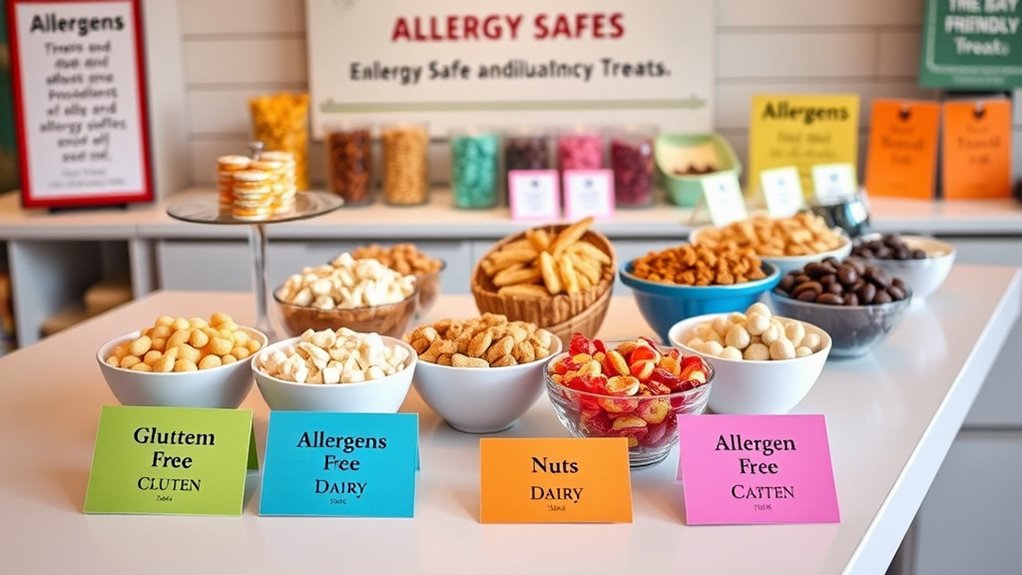
When choosing allergy-friendly treats, it is vital to look for products that are clearly labeled as safe for your specific allergies. If you have a nut allergy, check for labels that state “nut-free” or “processed in a nut-free facility” to avoid cross-contact. For those requiring gluten-free options, guarantee the packaging explicitly says “gluten-free” and carries recognized certification to prevent accidental ingestion. Always read ingredient lists carefully, as allergens can sometimes be hidden or listed under unfamiliar names. Trust labels from reputable brands that specialize in allergy-safe products, and avoid products that lack clear allergy information. Being vigilant about label accuracy helps you confidently select treats that are both safe and enjoyable, reducing the risk of allergic reactions. Additionally, understanding labeling standards can empower you to make more informed choices and ensure product safety.
Making the Most of Allergy-Friendly Stations

To get the most out of allergy-friendly stations, start by carefully reading all signage and instructions provided. This helps you identify nut allergy awareness cues and locate safe options. Pay attention to labels indicating gluten free options, ensuring you choose treats that match your dietary needs. Observe how staff or volunteers manage the station—some may change gloves or utensils between treats, reducing cross-contact risks. Use designated tools to serve yourself, avoiding contamination. If unsure about ingredients, don’t hesitate to ask staff for clarification. Keep an eye out for clearly marked allergy-friendly treats to minimize confusion. Additionally, understanding the cookie categories used at the station can help you make safer choices. By being vigilant and informed, you can confidently enjoy the station’s offerings while prioritizing your safety and well-being.
Substituting Ingredients for Safe Indulgence

Substituting ingredients is an effective way to enjoy treats safely without sacrificing flavor or texture. By making homemade allergy swaps, you can reduce cross contamination risks and create delicious, allergy-friendly options. Here are some tips:
- Use plant-based milks like almond or oat milk instead of dairy to avoid cross contact with dairy allergens.
- Swap traditional wheat flour with gluten-free alternatives such as rice or almond flour for better allergy control.
- Replace eggs with mashed bananas or flaxseed meal in baking to eliminate common allergens while maintaining moisture.
These simple swaps help you customize treats to your needs, ensuring safety without compromising taste. Incorporating them into your recipes makes indulgence both enjoyable and safe for everyone involved.
Frequently Asked Questions
How Can I Identify Hidden Allergens on Treat Labels?
To identify hidden allergens on treat labels, always read the ingredients carefully and look for any mention of hidden ingredients or allergen derivatives. Be cautious of cross contamination warnings, which indicate potential allergen presence. If you’re unsure, contact the manufacturer directly for clarification. Remember, even small traces can cause reactions, so when in doubt, choose safer options or avoid treats with ambiguous labels to protect yourself.
Are There Specific Certifications to Look for on Allergy-Friendly Products?
You should look for specific certifications like gluten free certifications and nut free labels on allergy-friendly products. These labels indicate the product has been tested and meets safety standards for allergens. Always check for trusted symbols from recognized organizations, and read the packaging carefully. Certified products give you confidence that they’re safe for your allergies, making snack time less stressful and more enjoyable.
What Should I Do if I Have Multiple Food Allergies?
If you have multiple food allergies, you should create a personalized allergy management plan and always carry emergency medications like epinephrine. For example, Sarah, with peanut, tree nut, and dairy allergies, labels her foods clearly and researches safe options before eating out. Staying prepared and informed helps you avoid cross-contact and manage reactions swiftly, ensuring your safety and confidence in steering social situations and food choices.
Can Allergy-Friendly Treats Be Safely Shared With Others?
Yes, allergy-friendly treats can be safely shared with others if you follow proper precautions. You should clearly communicate about allergen-free options and verify there’s no risk of allergen cross contact. Consider using designated community sharing stations and separate utensils to prevent cross contact. Always double-check labels and ingredients, and inform everyone about the specific allergies involved. This way, you can enjoy sharing treats safely and inclusively.
How Do I Store Allergy-Safe Treats to Maintain Their Safety?
To keep allergy-safe treats safe, you should use proper storage methods. Store them in airtight containers, clearly labeled, to prevent cross contamination. Keep treats separate from other foods, especially common allergens, and avoid sharing storage spaces. Regularly clean shelves and containers to reduce residue. By following these steps, you help guarantee the treats remain safe and allergen-free, giving peace of mind to everyone with allergies.
Conclusion
By paying close attention to labels, utilizing allergy-friendly stations, and swapping ingredients, you create a worry-free treat experience. Picture yourself reaching for a sweet bite, knowing it’s safe and free from allergens, with the scent of fresh ingredients filling the air. Every safe choice becomes a small victory, turning your indulgence into a confident, joyful moment. With these tips, you can savor every treat, feeling secure and satisfied at every sweet turn.