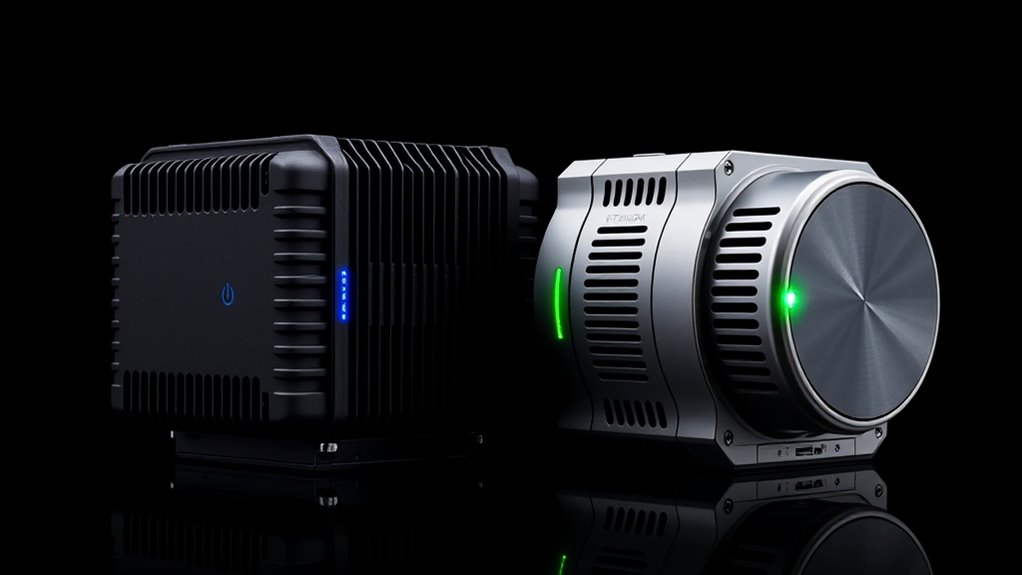

For serious deep sky imaging in 2026, choosing the right cooled CMOS camera can dramatically improve your results. The SVBONY SV405CC stands out for its high sensitivity and fast data transfer, making it ideal for capturing intricate nebulae and galaxies. Meanwhile, the SVBONY SV605CC offers a high-resolution sensor with dual-band nebula filtering, perfect for astrophotographers working in light-polluted areas. Both models excel at reducing noise via effective cooling, but they cater to different user needs: one prioritizes versatility and speed, while the other emphasizes high sensitivity and contrast. Understanding these tradeoffs will help you select the best fit for your deep sky projects.

Get decor and gifts delivered free — and shop member deals
- Fast, free delivery on millions of items
- Access to Prime Big Deal Days deals on October 6–7
- Prime Video, Amazon Music and more included
Complete the kit


Key Takeaways
- The SV405CC offers higher resolution and faster frame rates, suitable for detailed deep sky imaging.
- The SV605CC’s dual-band nebula filter enhances contrast, ideal for light-polluted environments.
- Both cameras feature effective cooling systems that significantly reduce sensor noise during long exposures.
- Compatibility and setup complexity vary; advanced features may challenge beginners.
- Choosing between them depends on whether you prioritize resolution and speed or sensitivity and contrast.
| SVBONY SV405CC Astrophotography Camera, Cooled Telescope Eyepiece IMX294 |  | Best Overall Deep Sky Camera for Resolution and Speed | Sensor: IMX294, 4/3″ back-illuminated | Pixel Size: 4.63μm | Resolution: 4144×2822 | VIEW ON AMAZON | See Our Full Breakdown |
| SVBONY SV605CC Cooled Astrophotography Camera with 9MP IMX533 Sensor and 2″ Dual-Band Nebula Filter |  | Best for Contrast and Light Pollution Environments | Sensor: IMX533, 1-inch CMOS | Resolution: 3008×3008 | Pixel Size: 3.76μm | VIEW ON AMAZON | See Our Full Breakdown |
| cooled cmos astro cameras for deep sky imaging | Sensor | Pixel Size | Resolution | Cooling |
|---|---|---|---|---|
| SVBONY SV405CC Astrophotograph | IMX294, 4/3" back-illuminated | 4.63μm | 4144×2822 | Two-stage TEC, reduces temperature by 30°C below ambient |
| SVBONY SV605CC Cooled Astropho | IMX533, 1-inch CMOS | 3.76μm | 3008×3008 | TEC secondary refrigeration, cools to 30°C below ambient |
More Details on Our Top Picks
SVBONY SV405CC Astrophotography Camera, Cooled Telescope Eyepiece IMX294
The SVBONY SV405CC stands out for its high-resolution IMX294 sensor, which captures fine details in deep sky objects. Its two-stage TEC cooling system reduces sensor temperature by 30°C, effectively lowering noise during long exposures. Compared with the SV605CC, it offers a faster frame rate and broader software compatibility, making it a versatile choice for dedicated astrophotographers. However, its advanced features may be intimidating for newcomers, and it requires a compatible mount setup. Overall, this camera balances resolution, speed, and cooling effectiveness, making it the best choice for those seeking detailed, fast imaging with minimal noise.
Pros:- High-sensitivity IMX294 sensor captures fine detail
- Effective cooling reduces thermal noise for long exposures
- Fast USB 3.0 data transfer enables quick imaging sessions
- Wide compatibility with Windows, Linux, Mac OS
Cons:- Requires a robust mount and setup
- Learning curve for advanced features and software integration
Best for: Intermediate to advanced astrophotographers seeking high-resolution deep sky images with fast processing.
Not ideal for: Beginners or those with limited setup options, as it demands familiarity with astrophotography software and hardware.
- Sensor:IMX294, 4/3″ back-illuminated
- Pixel Size:4.63μm
- Resolution:4144×2822
- Full Well Capacity:63ke-
- ADC Output:14-bit
- Cooling:Two-stage TEC, reduces temperature by 30°C below ambient
Our verdict“This camera is ideal for those needing high resolution and speed, with excellent noise reduction, but may challenge beginners due to its complexity.”
SVBONY SV605CC Cooled Astrophotography Camera with 9MP IMX533 Sensor and 2″ Dual-Band Nebula Filter
The SVBONY SV605CC offers a 9MP IMX533 sensor, providing high sensitivity and excellent low-light performance. Its dual-layer TEC cooling system maintains a sensor temperature 30°C below ambient, significantly reducing noise. The inclusion of a 2-inch dual-band nebula filter enhances contrast, especially in light-polluted skies, making this camera an excellent choice for astrophotographers who often shoot from urban or suburban locations. While its resolution is slightly lower than the SV405CC, its superior contrast enhancement and sensitivity make it ideal for capturing faint nebulae and galaxies. The setup process can be complex for beginners, and the camera’s lightweight design requires compatible accessories for stable mounting. Overall, it’s a focused option for those prioritizing deep-sky contrast over raw speed.
Pros:- High quantum efficiency (80%) improves imaging of faint objects
- Dual-band nebula filter enhances contrast and detail
- Effective cooling minimizes thermal noise
- Compact, lightweight design for portability
Cons:- Setup can be complex for newcomers
- Limited to deep sky imaging only
Best for: Astrophotographers working in light-polluted environments needing high contrast and sensitivity.
Not ideal for: Beginners or planetary imagers, as it is optimized specifically for deep sky objects and requires additional filters and accessories.
- Sensor:IMX533, 1-inch CMOS
- Resolution:3008×3008
- Pixel Size:3.76μm
- Cooling:TEC secondary refrigeration, cools to 30°C below ambient
- Filter:SV220 2″ dual-band nebula filter (OIII and H-Alpha)
- Weight:50g
Our verdict“This camera excels in enhancing contrast and sensitivity in challenging environments, making it perfect for dedicated deep sky astrophotographers who want to maximize detail and reduce noise.”

How We Picked
Our selection process focused on cooled CMOS astro cameras that excel in deep sky imaging, prioritizing sensor quality, cooling efficiency, data transfer speed, and software compatibility. We compared models with proven performance in capturing faint nebulae and galaxies, considering user reviews, technical specifications, and value for money. Cameras had to feature effective cooling to minimize noise, be compatible with common software, and suit a range of astrophotography setups. We also evaluated ease of use for beginners versus advanced users, ensuring our picks address different experience levels and imaging goals.
| cooled cmos astro cameras for deep sky imaging | Sensor | Cooling |
|---|---|---|
| SVBONY SV405CC Astrophotograph | IMX294, 4/3" back-illuminated | Two-stage TEC, reduces temperature by 30°C below ambient |
| SVBONY SV605CC Cooled Astropho | IMX533, 1-inch CMOS | TEC secondary refrigeration, cools to 30°C below ambient |
Factors to Consider When Choosing Cooled Cmos Astro Cameras For Deep Sky Imaging
Selecting the right cooled CMOS astro camera for deep sky imaging involves balancing several factors. Key considerations include sensor sensitivity, cooling efficiency, resolution, and compatibility with your existing equipment. Your choice should align with your imaging environment—whether you need high speed and resolution for detailed galaxy imaging or enhanced contrast and low noise for urban nebula captures. Understanding each camera’s strengths and limitations helps tailor your investment to your specific astrophotography goals.Sensor Sensitivity and Resolution
The core of any astrophotography camera is its sensor. Higher resolution sensors capture more detail, which is essential for large, detailed deep sky objects, but they often require more processing power and storage. Sensitivity, or quantum efficiency, impacts how well the camera detects faint objects; higher sensitivity means shorter exposure times and better results in light-polluted areas. Balance these two based on your target objects and environment.
Cooling System Performance
Effective cooling is vital for reducing thermal noise during long exposures. Two-stage TEC cooling typically lowers sensor temperature by about 30°C below ambient, which significantly improves image clarity. Consider how much cooling capacity is needed for your typical exposure times and whether the cooling system is reliable and easy to maintain. Overly complex or fragile cooling setups can add frustration to your workflow.
Compatibility and Ease of Use
Ensure the camera is compatible with your current telescope mount, computer, and software. Some cameras require specific drivers or software, which can influence your overall experience. Beginners should look for models with straightforward setup procedures and good documentation, while experienced users might prioritize advanced features and customization options. Reliability and customer support also play roles in making your final decision.
Size, Weight, and Accessories
The physical dimensions and weight can affect mounting options and portability. Lighter, more compact cameras are easier to handle, especially for those who travel or use smaller telescopes. Additionally, check whether the camera includes or supports necessary accessories like filters, adapters, or power supplies, which can influence overall cost and convenience.
Frequently Asked Questions
What is cooled CMOS technology, and why is it important for deep sky imaging?
Cooled CMOS technology involves reducing the sensor’s temperature during operation, which minimizes thermal noise that naturally occurs in image sensors. This reduction is crucial for deep sky imaging because it allows for longer exposure times without the images becoming grainy or noisy, resulting in clearer, more detailed astrophotos of faint objects like nebulae and distant galaxies.
How does sensor size affect deep sky astrophotography?
Sensor size influences the field of view and light-gathering capability of a camera. Larger sensors, such as 4/3″ or full-frame, capture more light and provide wider fields of view, which are beneficial for imaging large objects or capturing more of the night sky in a single frame. Smaller sensors are more compact and may require additional optics to achieve desired framing, but they often have faster readout speeds and lower costs.
Is high resolution always better for deep sky astrophotography?
Not necessarily. While higher resolution sensors can capture more detail, they also generate larger image files and may demand more processing power. For many deep sky objects, especially in light-polluted areas, a balance between resolution and sensitivity is more important. Excessively high resolution can also make tracking and guiding more challenging, so selecting a resolution suited to your equipment and target objects is advisable.
Can these cameras be used for planetary imaging as well?
Both the SV405CC and SV605CC are primarily designed for deep sky imaging. Their sensors and cooling systems are optimized for capturing faint objects over long exposures. While they can be used for planetary imaging, dedicated planetary cameras often have higher frame rates and different sensors suited for short exposures and high-speed imaging. If planetary imaging is a priority, specialized planetary cameras may be a better fit.
What should I consider if I am a beginner choosing a cooled CMOS astro camera?
Beginners should focus on ease of use, software compatibility, and reliable cooling performance. Cameras with straightforward setup, comprehensive documentation, and good community support can reduce frustration. Avoid models with overly complex features or demanding hardware requirements until you gain more experience. Investing in a camera that balances performance and user-friendliness helps develop your skills without unnecessary hurdles.
Conclusion
For newcomers or casual deep sky observers, the SVBONY SV405CC offers a user-friendly, high-resolution option that balances ease of use with excellent image quality. Intermediate to advanced astrophotographers seeking maximum detail and speed will find the SV405CC’s capabilities compelling, although it demands a more complex setup. Conversely, those working in light-polluted areas or prioritizing contrast and low noise should consider the SVBONY SV605CC, which excels at revealing faint nebulae with enhanced contrast thanks to its dual-band filter. Ultimately, your choice depends on your experience level, target objects, and observing environment—each camera offers distinct advantages tailored to different imaging priorities.
Fall Picks
fall essentials
As an affiliate, we earn on qualifying purchases.