For most prop makers, I’d start with the Creality K2 Plus Combo: its large-format approach and bundled multicolor system offer room for ambitious parts and decorative details. The QIDI Max4 Combo stands out for enclosed printing and a heated chamber, while the Creality Ender 5 Max prioritizes a 400 mm cube build volume for oversized sections. The main tradeoffs are usable part size versus print time, material capability versus setup complexity, and a larger machine versus the space it occupies. A big build area can reduce seams, but it does not remove the need to split parts that exceed the printer’s actual build limits. Read on for how all 13 options compare and which one best fits your prop workflow.

Get decor and gifts delivered free with Prime
- Fast, free delivery on millions of items
- Prime Video, Amazon Music and more included
- Member-only deals all year
Complete the kit


Key Takeaways
- The K2 Plus Combo is the strongest all-around match for prop makers who want substantial build capacity alongside a multicolor workflow; buyers focused only on maximum part dimensions may prefer the Ender 5 Max.
- Build volume is not the whole story. The Ender 5 Max offers a 400 × 400 × 400 mm volume, while the QIDI Max4’s 390 × 390 × 340 mm volume pairs a heated chamber with an enclosed design.
- Multicolor and multi-tool systems solve different problems. The K2, K2 Plus, Kobra, and SPARKX combos target color changes, while the FLASHFORGE Creator 5 Pro’s four toolheads offer a distinct multi-tool approach.
- Oversized continuous prints call for a specialist. The IdeaFormer IR3 V2’s conveyor-belt format suits long parts, but it is a different workflow from a conventional enclosed printer.
- Several picks trade maximum size for other priorities. The Prusa CORE One L focuses on an enclosed CoreXY platform, the Snapmaker Artisan adds a broader machine platform, and the Ender 3 V3 Plus is a more modestly sized option.
| Creality K2 Plus Combo 3D Printer |  | Best Overall for Multicolor Props | Build volume: 350 × 350 × 350 mm | Maximum print speed: 600 mm/s | Maximum nozzle temperature: 350°C | VIEW ON AMAZON | See Our Full Breakdown |
| QIDI Max4 Combo 3D Printer |  | Best for Extra-Wide Props and Engineering Materials | Build volume: 390 × 390 × 340 mm | Heated chamber: Up to 65°C | Maximum print speed: 800 mm/s | VIEW ON AMAZON | See Our Full Breakdown |
| FLASHFORGE Creator 5 Pro 4-Toolhead 3D Printer |  | Best for Multi-Material Prop Details | Toolheads: Four independent toolheads | Toolhead change time: 7 seconds | Maximum chamber temperature: 65°C | VIEW ON AMAZON | See Our Full Breakdown |
| Prusa Original CORE One L High-Speed Large-Format Enclosed CoreXY 3D Printer |  | Best for Reliable Engineering-Grade Prop Printing | Build volume: 11.8 × 11.8 × 12.99 in | Heated chamber: Up to 60°C | Frame and motion: Steel-frame CoreXY | VIEW ON AMAZON | See Our Full Breakdown |
| Anycubic Kobra S1 Max Combo Large Format FDM 3D Printer |  | Best for Expandable Color Options | Build volume: 350 × 350 × 350 mm | Maximum print speed: 600 mm/s | Enclosure and chamber: Enclosed CoreXY; heated to 65°C | VIEW ON AMAZON | See Our Full Breakdown |
| Creality Ender 5 Max CoreXY 3D Printer, 400 × 400 × 400 mm Build Volume |  | Best Overall for Oversized Props | Build volume: 400 × 400 × 400 mm | Maximum printing speed: 700 mm/s | Motion system: CoreXY | VIEW ON AMAZON | See Our Full Breakdown |
| Creality SPARKX i7 Autofill Combo 3D Printer |  | Best for Unattended Replenishment | Build volume: 260 × 260 × 255 mm | Maximum print speed: 500 mm/s | Filament reload: Automatic backup-spool switching | VIEW ON AMAZON | See Our Full Breakdown |
| Snapmaker Artisan 3D Printer (3D Printing Module Only) |  | Best for Dual-Extrusion Prop Work | Build volume: 400 × 400 × 400 mm | Extrusion: Dual extrusion | Control interface: 7-inch touchscreen | VIEW ON AMAZON | See Our Full Breakdown |
| Creality Ender 3 V3 Plus High-Speed 3D Printer |  | Best Mid-Size Speed Pick | Build volume: 300 × 300 × 330 mm | Maximum printing speed: 600 mm/s | Maximum acceleration: 20,000 mm/s² | VIEW ON AMAZON | See Our Full Breakdown |
| Creality K2 Combo 3D Printer with CFS Multicolor System |  | Best for Multicolor Detail | Build volume: 260 × 260 × 260 mm | Printing speed: 600 mm/s | Multicolor capability: Up to 16 colors with four CFS units | VIEW ON AMAZON | See Our Full Breakdown |
| Anycubic Kobra 3 Max Combo Large-Format 3D Printer |  | Best for Oversized Multicolor Props | Build volume: 420 × 420 × 500 mm | Maximum printing speed: 600 mm/s | Acceleration: 20,000 mm/s² | VIEW ON AMAZON | See Our Full Breakdown |
| Creality K2 SE CoreXY 3D Printer | 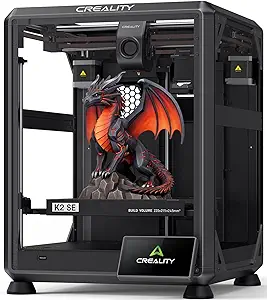 | Best for Smaller Prop Components | Printer type: CoreXY 3D printer | Build volume: 220 × 215 × 245 mm | Maximum print speed: 500 mm/s | VIEW ON AMAZON | See Our Full Breakdown |
| IdeaFormer IR3 V2 Conveyor Belt 3D Printer |  | Best for Continuous Long-Part Production | Build area: 250 × 250 × ∞ mm | Maximum print speed: 400 mm/s | Firmware: Klipper | VIEW ON AMAZON | See Our Full Breakdown |
| large format 3d printer for prop | Build volume | Maximum print speed |
|---|---|---|
| Creality K2 Plus Combo 3D Prin | 350 × 350 × 350 mm | 600 mm/s |
| QIDI Max4 Combo 3D Printer | 390 × 390 × 340 mm | 800 mm/s |
| FLASHFORGE Creator 5 Pro 4-Too | — | 600 mm/s |
| Prusa Original CORE One L High | 11.8 × 11.8 × 12.99 in | — |
| Anycubic Kobra S1 Max Combo La | 350 × 350 × 350 mm | 600 mm/s |
| Creality Ender 5 Max CoreXY 3D | 400 × 400 × 400 mm | — |
| Creality SPARKX i7 Autofill Co | 260 × 260 × 255 mm | 500 mm/s |
| Snapmaker Artisan 3D Printer | 400 × 400 × 400 mm | — |
| Creality Ender 3 V3 Plus High- | 300 × 300 × 330 mm | — |
| Creality K2 Combo 3D Printer w | 260 × 260 × 260 mm | — |
| Anycubic Kobra 3 Max Combo Lar | 420 × 420 × 500 mm | — |
| Creality K2 SE CoreXY 3D Print | 220 × 215 × 245 mm | 500 mm/s |
| IdeaFormer IR3 V2 Conveyor Bel | — | 400 mm/s |
More Details on Our Top Picks
Creality K2 Plus Combo 3D Printer
The Creality K2 Plus Combo balances prop-sized parts with a ready-made multicolor workflow. Its 350 mm cubic build volume fits many helmets, armor sections, and display pieces in fewer parts than smaller-format machines, while four CFS units can switch filaments for colored details without manual changes. Compared with the QIDI Max4 Combo, it gives up some build width and a heated chamber, but adds an integrated four-unit filament system and dual AI cameras for print monitoring. The 600 mm/s maximum speed can help with large projects, though speed alone does not guarantee a clean finish on visible prop surfaces. At 70.4 pounds, it is a substantial fixture, and the multicolor setup adds maintenance and tuning demands.
Pros:- 350 mm cubic build area accommodates large prop sections and batch jobs.
- Four CFS units automate filament selection and multicolor changes.
- Dual AI cameras and sensor monitoring support print oversight and automated leveling.
- 350°C nozzle supports ASA, PPA, and other listed engineering filaments.
Cons:- At 70.4 pounds, it is difficult to relocate once installed.
- The multi-unit filament system adds setup and maintenance complexity.
- No heated chamber temperature is specified, limiting direct comparison for warp-prone materials.
Best for: Cosplay makers and prop shops that want to print large sections and automate multicolor filament changes on one machine.
Not ideal for: Makers who need the widest possible build area or routinely print warping-prone engineering materials in a heated chamber; the QIDI Max4 Combo is better suited to those needs.
- Build volume:350 × 350 × 350 mm
- Maximum print speed:600 mm/s
- Maximum nozzle temperature:350°C
- Multi-color system:Four CFS units
- Filament compatibility:ASA, PPA, engineering filaments
- Monitoring:Dual AI cameras and 18 sensors
- Dimensions:16.1 × 15.4 × 18.7 in
- Weight:70.4 lb
Our verdict“Choose the K2 Plus Combo if you want a large prop printer with integrated multicolor automation and can accommodate its weight and setup demands.”
QIDI Max4 Combo 3D Printer
For props where fewer split sections matter most, the QIDI Max4 Combo offers the largest stated XY footprint in this group: 390 × 390 mm. That extra width can reduce seams on broad armor panels and sculptural set pieces compared with the 350 mm Creality K2 Plus Combo and Anycubic Kobra S1 Max Combo. Its 65°C active chamber, hardened-steel nozzle, and 40 mm³/s hotend flow rate also make it the more material-focused choice for ABS, PC, and carbon-fiber-filled filaments. Maximum speed reaches 800 mm/s, but large prop surfaces still call for sensible settings when finish quality matters. The tradeoff is workspace: this is a large machine, and the Polar Cooler needed for some high-temperature materials is sold separately. Its optional QIDI BOX adds color capability rather than making it a built-in feature.
Pros:- 390 × 390 mm XY build area gives broad prop parts more room than the 350 mm K2 Plus and Kobra S1 Max.
- 65°C active chamber supports more consistent printing with ABS, PC, and other warp-prone materials.
- Hardened-steel nozzle and 40 mm³/s hotend flow suit abrasive filaments and high-throughput printing.
- AI camera can pause a print when it detects a failure.
Cons:- Large footprint can be difficult to fit in a home workshop.
- Polar Cooler is sold separately for some high-temperature material workflows.
- Multicolor printing requires the optional QIDI BOX expansion.
Best for: Prop builders making wide armor, costume, or set pieces who prioritize fewer print splits and need an actively heated chamber for demanding materials.
Not ideal for: Small-workshop users or buyers seeking built-in multicolor printing; the machine takes substantial space, and its QIDI BOX is an optional expansion.
- Build volume:390 × 390 × 340 mm
- Heated chamber:Up to 65°C
- Maximum print speed:800 mm/s
- Maximum acceleration:30,000 mm/s²
- Hotend flow rate:40 mm³/s
- Nozzle:Hardened steel
- Listed materials:PLA, ABS, carbon-fiber-reinforced nylon, PC, PPS-CF
- Color expansion:Optional QIDI BOX, up to 16 colors
Our verdict“Pick the Max4 Combo for wide, technically demanding prop parts, provided you have room for it and accept that color printing needs an add-on.”
FLASHFORGE Creator 5 Pro 4-Toolhead 3D Printer
The Creator 5 Pro takes a different route to multicolor props: four independent toolheads switch in seven seconds, reducing the purge waste that can come with filament-swapping systems such as the Creality K2 Plus Combo. That setup is especially useful for props with separate support, accent, or material requirements. Its enclosed CoreXY frame and chamber rated up to 65°C support ABS, PC, and PA, while HEPA 13 and activated-carbon filtration add a practical layer for enclosed-workshop use. The key compromise for large-format prop work is that no build volume is provided in the supplied specifications, so I cannot rank its part capacity against the 350 mm and 390 mm machines here. The 600 mm/s maximum is a headline ceiling, not a guarantee of finish-ready speed, and calibration still matters.
Pros:- Four independent toolheads reduce filament purge waste in multicolor and multi-material jobs.
- Seven-second toolhead changer limits downtime between tool changes.
- 65°C chamber supports listed materials including ABS, PC, and PA.
- HEPA 13 and activated-carbon filtration, camera, and remote controls add monitoring and filtration features.
Cons:- Build volume is not stated in the supplied product data, making prop capacity hard to compare.
- Maximum speed may require careful calibration to maintain clean surface quality.
- Its enclosed format still needs a dedicated workspace despite weighing less than several larger machines.
Best for: Prop makers who regularly combine colors or materials in a single job and value lower purge waste, filtration, and an enclosed build environment.
Not ideal for: Buyers choosing primarily by maximum prop size; the supplied product data does not state a build volume, unlike the QIDI Max4 Combo and K2 Plus Combo.
- Toolheads:Four independent toolheads
- Toolhead change time:7 seconds
- Maximum chamber temperature:65°C
- Maximum print speed:600 mm/s
- Motion system:CoreXY
- Filtration:HEPA 13 and activated carbon
- Supported materials:ABS, PC, PA
- Dimensions and weight:16 × 14 × 18 in; 39 lb
Our verdict“Choose the Creator 5 Pro for toolhead-based, lower-waste multicolor or multi-material prop work, but verify its build volume before buying for oversized parts.”
Prusa Original CORE One L High-Speed Large-Format Enclosed CoreXY 3D Printer
The Prusa CORE One L is the measured choice for builders who would rather prioritize a stable, heated environment than built-in color automation. Its 11.8 × 11.8 × 12.99-inch build volume accommodates substantial cosplay pieces and architectural props, while the actively heated 60°C chamber is designed to reduce warping with ASA, ABS, PC, and nylon. Compared with the QIDI Max4 Combo, its stated build dimensions are smaller, but the CORE One L emphasizes quick setup, automated leveling, a rigid steel CoreXY frame, and offline operation. Those choices suit repeatable production more than remote, connected monitoring or decorative multicolor output. At 68.4 pounds and with a 25-inch height, it also calls for a permanent, roomy location.
Pros:- Actively heated 60°C chamber helps limit warping with ASA, ABS, PC, and nylon.
- Build volume fits many large cosplay and architectural parts without splitting.
- Automated leveling and quick setup reduce preparation before a job.
- Rigid steel CoreXY frame supports stable high-speed printing.
Cons:- Its stated build area is smaller than the QIDI Max4 Combo’s 390 × 390 mm XY footprint.
- At 68.4 pounds and 25 inches tall, it needs a sturdy, spacious location.
- Limited cloud connectivity restricts remote monitoring options.
Best for: Cosplay and prop makers who print engineering-grade materials and value an enclosed, actively heated machine with offline operation and quick setup.
Not ideal for: Buyers who need the widest build area or built-in multicolor printing; the QIDI Max4 Combo offers a larger stated XY footprint, while this product data lists no color system.
- Build volume:11.8 × 11.8 × 12.99 in
- Heated chamber:Up to 60°C
- Frame and motion:Steel-frame CoreXY
- Leveling:Automated
- Listed materials:ASA, ABS, PC, nylon
- Dimensions:18.5 × 20.5 × 25 in
- Weight:68.4 lb
- Connectivity:Offline operation; limited cloud connectivity
Our verdict“Choose the CORE One L if reliable enclosed printing of engineering-grade prop parts matters more than maximum width or remote connectivity.”
Anycubic Kobra S1 Max Combo Large Format FDM 3D Printer
The Anycubic Kobra S1 Max Combo suits prop makers who want color capability now, with room to expand later. It prints four colors natively and can reach 16 with ACE 2 Pro modules, while its 350 mm cubic build volume matches the Creality K2 Plus Combo rather than the wider QIDI Max4 Combo. A 65°C heated chamber and 350°C hotend give it a broad listed material range, including ABS and ASA, and the hardened-steel gears support abrasive filament use. LeviQ 3.0 leveling, runout detection, and power-loss recovery help reduce avoidable interruptions during long prop jobs. The tradeoff is bulk: at 78.8 pounds, it is the heaviest pick here, and adding color modules and chamber heating makes setup more involved.
Pros:- 350 × 350 × 350 mm build volume supports large prop parts and batch printing.
- Native four-color printing can expand to 16 colors with ACE 2 Pro modules.
- 65°C heated chamber and 350°C hotend support a broad range of listed filaments.
- Auto-leveling, filament runout detection, and power-loss recovery support longer jobs.
Cons:- At 78.8 pounds, it is difficult to move or reposition.
- Multi-color modules and chamber heating add setup complexity.
- Its 350 mm width is less accommodating for broad parts than the QIDI Max4 Combo.
Best for: Cosplay builders who want a 350 mm cubic enclosed printer with native four-color output and a path to larger multicolor projects.
Not ideal for: Makers with limited bench space or anyone needing the widest single-piece parts; the QIDI Max4 Combo has a larger XY build area, and this Anycubic is particularly heavy.
- Build volume:350 × 350 × 350 mm
- Maximum print speed:600 mm/s
- Enclosure and chamber:Enclosed CoreXY; heated to 65°C
- Maximum hotend temperature:350°C
- Filament compatibility:PLA, PETG, TPU, ABS, ASA, PVA
- Multi-color capability:Four colors native; expandable to 16 with ACE 2 Pro
- Extruder:Hardened-steel gears; titanium-alloy throat tube
- Dimensions and weight:21 × 23 × 19 in; 78.8 lb
Our verdict“Pick the Kobra S1 Max Combo if expandable multicolor printing is a priority and you have room for a heavy, enclosed 350 mm machine.”
Creality Ender 5 Max CoreXY 3D Printer, 400 × 400 × 400 mm Build Volume
For props where splitting a model into sections would add assembly and finishing work, the Ender 5 Max’s 400 × 400 × 400 mm build volume is its clearest advantage. Its CoreXY motion and rated speeds up to 700 mm/s are aimed at moving large jobs along quickly, while the all-metal frame gives the machine a substantial foundation. Automatic 64-point leveling and Z-offset reduce setup steps, and WLAN multi-printer control suits a workshop running more than one machine. Compared with the Snapmaker Artisan, it offers the same stated build volume but emphasizes speed and print-farm control rather than dual extrusion. The tradeoffs are physical and practical: it needs considerable workspace, and its 1000 W heated bed can draw substantial power. I’d choose it for big single-piece props, not a cramped hobby desk.
Pros:- 400 × 400 × 400 mm build volume accommodates many oversized prop parts without sectioning.
- CoreXY motion and a stated maximum speed of 700 mm/s support faster production workflows.
- 64-point automatic leveling and automatic Z-offset reduce manual calibration.
- WLAN multi-printer control is useful for coordinated workshop or print-farm operation.
Cons:- The large machine needs substantial workspace and a suitable bench.
- The 1000 W heated bed may place a meaningful demand on the electrical setup.
- Its stated maximum speed does not by itself indicate how quickly detailed, large prop jobs will finish.
Best for: Prop makers who need to print large single-piece shells, costume components, or batches of oversized parts and have room for a full-size printer.
Not ideal for: Apartment makers or occasional users with limited bench space, or buyers who need a lower-power setup and do not need a 400 mm build area.
- Build volume:400 × 400 × 400 mm
- Maximum printing speed:700 mm/s
- Motion system:CoreXY
- Frame:Die-cast aluminum, all-metal
- Bed leveling:64-point automatic leveling with automatic Z-offset
- Extruder:Direct-drive dual-gear with hardened gears
- Heated bed power:1000 W
- Connectivity:WLAN multi-printer control
- Supported materials:PLA, PETG, ABS, ASA, PA, and more
Our verdict“Choose the Ender 5 Max if maximum build volume and workshop throughput matter more than footprint and power draw.”
Creality SPARKX i7 Autofill Combo 3D Printer
The SPARKX i7 is the least suited here to truly oversized props, but its automatic backup-spool switching solves a different workshop problem: keeping a single-color job going when a spool runs out. That can be handy for long prop sections or repeated parts, especially alongside AI camera monitoring and automatic bed leveling. Its 260 × 260 × 255 mm build area is far smaller than the 400 mm beds on the Ender 5 Max and Snapmaker Artisan, so large helmets, armor panels, or set pieces will need more segmentation. It also prints at a stated maximum of 500 mm/s and supports common materials including PLA, PETG, and TPU. The optional CFS Lite system is required for multi-color printing, so I’d treat this as a convenience-focused smaller printer, not a large-format prop centerpiece.
Pros:- Automatically switches to a backup spool for continued single-color printing.
- AI camera offers remote monitoring, failure detection, and time-lapse recording.
- Automatic bed leveling and pre-assembled design simplify getting started.
- Wi-Fi connectivity and a stated maximum speed of 500 mm/s support convenient day-to-day use.
Cons:- The 260 × 260 × 255 mm build area limits the size of prop parts that fit in one print.
- Multi-color printing requires the optional CFS Lite system.
- The listed supported materials focus on common filaments rather than establishing broad engineering-material capability.
Best for: Makers printing medium-sized prop components or repeat parts who value spool-runout protection and remote monitoring more than a large build area.
Not ideal for: Prop builders who want to print large shells or costume pieces in fewer sections; its 260 × 260 × 255 mm build volume is substantially smaller than the Ender 5 Max or Artisan.
- Build volume:260 × 260 × 255 mm
- Maximum print speed:500 mm/s
- Filament reload:Automatic backup-spool switching
- Monitoring:AI camera with failure detection and time-lapse recording
- Bed leveling:Automatic
- Connectivity:Wi-Fi
- Supported materials:PLA, PETG, TPU, and other common materials
- Build plate:Flexible PEI
- Product dimensions:16.6 × 17.9 × 18.5 inches
Our verdict“Pick the SPARKX i7 for monitored, uninterrupted printing of medium-sized components, not for large one-piece props.”
Snapmaker Artisan 3D Printer (3D Printing Module Only)
The Artisan pairs a 400 × 400 × 400 mm build volume with dual extrusion, making it a distinctive choice when a prop needs a second material—for example, support material that can be removed from complex shapes. Its steel linear rails and die-cast base are intended to give the large machine a rigid platform, while the 7-inch touchscreen and quick-swap toolhead design make operation and maintenance more approachable. Compared with the Ender 5 Max, it gives up the latter’s stated 700 mm/s maximum speed and WLAN multi-printer control, but adds dual extrusion and a broader modular ecosystem. That ecosystem should not be mistaken for included capability: this listing is for the 3D printing module only, with laser and CNC modules sold separately. At nearly 80 pounds and roughly two feet across, it also calls for a dedicated, stable location.
Pros:- 400 × 400 × 400 mm build volume supports substantial prop components.
- Dual extrusion enables multi-material printing and can simplify support removal.
- Steel linear rails and a die-cast base plate provide a rigid machine structure.
- 7-inch touchscreen and quick-swap toolhead design support straightforward control and maintenance.
Cons:- This listing includes only the 3D printing module; laser and CNC modules are sold separately.
- At 79.8 pounds, it is heavy to move and needs a sturdy, dedicated location.
- Unlike the Ender 5 Max, the supplied data does not state a maximum printing speed.
Best for: Prop makers who need a large print area plus dual extrusion for multi-material parts or easier support removal, and can accommodate a heavy machine.
Not ideal for: Buyers seeking a lightweight or compact printer, or anyone expecting this listing to include the laser engraving and CNC modules.
- Build volume:400 × 400 × 400 mm
- Extrusion:Dual extrusion
- Control interface:7-inch touchscreen
- Frame:Steel guiderails, die-cast base plate
- Supported materials:PLA, ABS, PETG, TPU, Nylon
- Product dimensions:24.41 × 22.83 × 24.96 inches
- Item weight:79.8 pounds
- Listing configuration:3D printing module only
Our verdict“Choose the Artisan if dual extrusion and a large build area justify its weight and the module-only listing.”
Creality Ender 3 V3 Plus High-Speed 3D Printer
For prop makers who want more room than a standard desktop printer without committing to a 400 mm machine, the Ender 3 V3 Plus offers a 300 × 300 × 330 mm build volume. Its CoreXZ motion, dual Y-axis motors, reinforced frame, and stated maximum speed of 600 mm/s target quicker production while keeping the listed footprint and weight below the Snapmaker Artisan. That makes it a practical middle ground for costume components, masks, and joined prop sections, though it will not fit as many large parts in one piece as the Artisan or Ender 5 Max. Automatic calibration reduces setup work, and the quick-swap tri-metal nozzle has a hardened steel tip. The supplied description does not identify supported filament types, which leaves material planning less clear than it is for the Ender 5 Max. I’d favor it when mid-size capacity matters more than maximum scale.
Pros:- 300 × 300 × 330 mm build volume fits many medium-sized prop components.
- CoreXZ motion and a stated maximum speed of 600 mm/s support faster printing workflows.
- Reinforced frame and dual Y-axis motors are designed to improve stability.
- Automatic calibration and a quick-swap tri-metal nozzle simplify routine setup and nozzle changes.
Cons:- Its build area is smaller than the 400 × 400 × 400 mm Ender 5 Max and Snapmaker Artisan.
- The product data does not specify supported filament types.
- Large props may still need splitting into multiple sections for printing.
Best for: Prop makers who need a larger-than-compact build area and fast motion in a machine smaller and lighter than the 400 mm options.
Not ideal for: Builders focused on life-size, single-piece props or buyers who need confirmed material compatibility before choosing a printer.
- Build volume:300 × 300 × 330 mm
- Maximum printing speed:600 mm/s
- Maximum acceleration:20,000 mm/s²
- Motion system:CoreXZ
- Extruder:Direct drive
- Nozzle:Tri-metal with hardened steel tip
- Dimensions:17 × 14 × 19 inches
- Weight:30.6 pounds
Our verdict“Choose the Ender 3 V3 Plus if you want a fast, mid-size prop printer and can accept less capacity than the 400 mm models.”
Creality K2 Combo 3D Printer with CFS Multicolor System
The K2 Combo is better suited to colorful prop details and smaller components than to printing large shells: its 260 × 260 × 260 mm build volume is much smaller than the Ender 5 Max or Snapmaker Artisan. Its CFS system enables multicolor printing, with up to 16 colors available when four CFS units are connected. That can reduce the need to paint small accents, emblems, or display pieces after printing, though the full color capacity depends on additional CFS units. A stated maximum speed of 600 mm/s, smart auto-leveling, AI camera, and 95% pre-assembly make it a convenience-oriented alternative to the larger, more hands-on choices. The direct-drive extruder and listed material support cover several common filaments. I would pick it for color capability and simpler setup, not for minimizing seams on oversized props.
Pros:- CFS supports multicolor printing, with up to 16 colors when four units are connected.
- 95% pre-assembly and smart auto-leveling reduce setup demands.
- AI camera supports print-failure detection.
- Step-servo motors and balanced fans support the stated silent-mode operation.
Cons:- The 260 × 260 × 260 mm build volume limits the size of one-piece prop parts.
- Full 16-color capability requires four CFS units.
- AI camera and advanced functions may take time for beginners to learn.
Best for: Prop makers who prioritize printed-in color for smaller accessories, badges, and display pieces, and want a mostly pre-assembled machine.
Not ideal for: Makers whose main goal is printing large prop sections in one piece; its 260 mm build dimensions are well below the 400 mm models in this batch.
- Build volume:260 × 260 × 260 mm
- Printing speed:600 mm/s
- Multicolor capability:Up to 16 colors with four CFS units
- Assembly level:95% pre-assembled
- Extruder type:Next-generation direct drive
- Supported materials:PLA, PETG, ABS, PLA-CF, PET
- Key features:Smart auto-leveling, AI camera, silent mode
Our verdict“Choose the K2 Combo for multicolor smaller prop work and easier setup, but look to the Ender 5 Max or Artisan for substantially larger parts.”
Anycubic Kobra 3 Max Combo Large-Format 3D Printer
For props that need to print as fewer, larger sections, the 420 × 420 × 500 mm build volume is the main reason to choose this model. It has more room than the Creality K2 SE, whose compact build area is better suited to smaller components, while multicolor printing can reduce the need to paint simple color details by hand. A 300°C all-metal hotend and support for PLA, PETG, and TPU give prop makers useful material flexibility, and runout detection plus print resume can help protect long jobs from common interruptions. The tradeoff is its substantial footprint, which calls for a dedicated workspace. Its 600 mm/s maximum speed is a capability rather than a guarantee of equally fast, clean results on every large prop, so buyers should plan around model geometry and finish quality.
Pros:- 420 × 420 × 500 mm build volume accommodates oversized prop sections or multiple smaller parts.
- Multicolor printing can reduce manual work on designs with distinct color regions.
- Filament runout detection and print resume offer safeguards during extended jobs.
- Supports PLA, PETG, and TPU for rigid parts and more flexible prop components.
Cons:- Large-format footprint needs substantial workspace.
- The 600 mm/s maximum speed does not mean every large, detailed prop can be printed cleanly at that rate.
- The supplied data does not specify the multicolor system’s capacity or workflow details.
Best for: Prop makers who want to print large costume pieces, set details, or multiple components together and have room for a full-size machine.
Not ideal for: Apartment makers or hobbyists with limited bench space, and buyers whose main need is continuous long-part production rather than a large conventional build area.
- Build volume:420 × 420 × 500 mm
- Maximum printing speed:600 mm/s
- Acceleration:20,000 mm/s²
- Hotend temperature:300°C
- Standard nozzle:0.4 mm
- Build plate:Dual-sided PEI spring steel
- Features:Multicolor printing, vibration compensation, filament runout detection, offline printing, print resume
- Supported filaments:PLA, PETG, TPU
Our verdict“Choose the Kobra 3 Max Combo if oversized, multicolor prop parts matter more than a compact footprint or conveyor-style production.”
Creality K2 SE CoreXY 3D Printer
The K2 SE makes more sense for prop details and modular parts than for printing a helmet or large armor panel in one piece: its 220 × 215 × 245 mm build volume is notably smaller than the Anycubic Kobra 3 Max Combo. In exchange, its rigid die-cast aluminum frame, direct-drive extruder, and automatic bed leveling suit buyers who value a compact, straightforward setup for repeated component prints. The 500 mm/s speed ceiling is useful for quick iteration, while hardened steel dual-drive gears and a quick-swap nozzle add practical flexibility. Multicolor printing is possible only with the separately sold Creality CFS, so it is not the most direct choice for color-varied props. Compared with the IdeaFormer IR3 V2, it also lacks an infinite Z axis for continuous long-part output.
Pros:- Compact 220 × 215 × 245 mm build area suits small prop components and workshop spaces.
- Die-cast aluminum frame provides a rigid platform for fast printing.
- Automatic bed leveling and a quick-swap nozzle simplify setup and maintenance.
- Direct drive and hardened steel dual-drive gears support a practical range of printing tasks.
Cons:- Build volume is restrictive for large props and requires splitting bigger models into sections.
- Multicolor printing requires the separately sold Creality CFS.
- Maximum speed does not remove the time needed for assembly, sanding, and finishing multi-part props.
Best for: Makers with limited workspace who print small prop fittings, accessories, and modular pieces and want a fast CoreXY machine with automatic leveling.
Not ideal for: Builders who need to print large costume shells in fewer sections or want multicolor printing without buying an additional system.
- Printer type:CoreXY 3D printer
- Build volume:220 × 215 × 245 mm
- Maximum print speed:500 mm/s
- Maximum acceleration:20,000 mm/s²
- Frame:Die-cast aluminum alloy
- Extruder:Direct drive
- Bed leveling:Automatic
- Multicolor compatibility:Creality CFS, sold separately
- Operating system:Creality OS
Our verdict“Pick the K2 SE for quick, smaller prop parts in a compact workspace, not for large one-piece prints or ready-to-use multicolor output.”
IdeaFormer IR3 V2 Conveyor Belt 3D Printer
The IR3 V2 takes a different route from the Anycubic Kobra 3 Max Combo: instead of a tall, fixed build volume for oversized individual prints, its conveyor belt and infinite Z axis are designed to keep producing parts beyond a conventional bed’s length. That can suit repeated prop elements, long decorative strips, or batch work where consistent orientation fits the design. Auto-leveling and Klipper firmware add useful setup and motion features, and support for PLA, PETG, ABS, TPU, ASA, and PP gives it broader listed material compatibility than the Kobra 3 Max Combo. The compromise is workflow-specific: conveyor-belt printing can require different model orientation and setup habits, and the 250 × 250 mm build area still limits width. For a single oversized helmet or broad armor shell, a large fixed-bed machine is the clearer fit.
Pros:- Infinite Z axis supports long prints and repeated production without a conventional height limit.
- 250 × 250 mm belt area offers room for many smaller prop components.
- Auto-leveling can simplify initial setup.
- Listed filament support includes PLA, PETG, ABS, TPU, ASA, and PP.
Cons:- Conveyor-belt format may require changes to model orientation and printing workflow.
- The 250 mm belt width limits broad prop panels and other wide designs.
- Its 400 mm/s maximum speed is lower than the listed ceilings for the Kobra 3 Max Combo and K2 SE.
Best for: Small prop studios and makers producing repeated parts or long models that fit the 250 × 250 mm belt width and suit conveyor-style printing.
Not ideal for: Cosplayers printing wide, one-piece costume shells or buyers who want a conventional fixed-bed workflow with minimal adjustment.
- Build area:250 × 250 × ∞ mm
- Maximum print speed:400 mm/s
- Firmware:Klipper
- Build surface:PEI-coated metal conveyor belt
- Auto-leveling:Yes
- Supported filaments:PLA, PETG, ABS, TPU, ASA, PP
- Dimensions:20.47 × 30.71 × 12.6 inches
- Weight:44 pounds
Our verdict“Choose the IR3 V2 when continuous long-part or batch production fits your prop work; choose a large fixed-bed printer for wide, individual pieces.”

How We Picked
I ranked these printers for actual prop-making needs, not by build volume alone. The main factors were the usable build area for helmets, armor sections, set pieces, and long components; the ability to print materials suited to a project; and how the machine’s enclosure, motion system, and feed setup may affect repeatability. I also weighed workflow fit: color changes and multiple toolheads can help with visual detailing, while a roomy single-tool machine may make more sense for large parts that will be sanded and painted.
The K2 Plus Combo leads as a balanced choice, while the Ender 5 Max ranks strongly for sheer cubic build space and the QIDI Max4 for chamber control. Other machines place lower when their strength is more specialized, their build volume is less suited to full-size prop sections, or their added functions may not benefit a typical prop workflow. I treated the listed specifications as selection criteria, not proof of finished-part quality; nozzle choice, slicer settings, material, supports, and post-processing all affect results.
Factors to Consider When Choosing Large Format 3d Printer For Props
Choosing a large-format printer for props means matching the machine to the parts you plan to make, not simply buying the biggest frame. I’d work through these five factors before deciding.
Measure the Parts You Actually Need to Print
Start with the largest single section you expect to print, then compare its dimensions with the printer’s usable build volume. A helmet may fit by height but fail on width or depth, especially when the part must sit at an angle with supports. Allow room for a brim, support structures, and any geometry that extends beyond the main shell. Dividing a prop into sections is often sensible, but every seam adds alignment, filling, sanding, and bonding work. A larger bed is most valuable when it removes joins from parts that would otherwise be difficult to finish cleanly. Don’t pay for unused volume if your designs are already modular.
Decide Whether Chamber Control Matters for Your Materials
Large parts can be more prone to warping and uneven cooling than small test prints, so material choice and temperature control deserve attention. An enclosed printer with a heated chamber may make certain engineering plastics more practical, but it does not make every filament a good choice for props. Many display pieces are printed in easier-to-handle materials and then primed, filled, and painted. Before buying for a specialty material, check the printer’s full temperature limits, hotend compatibility, bed surface, and ventilation needs. A heated chamber can add capability, but it can also narrow the sensible material choices and increase workflow demands. Match the machine to the filament you will regularly use, rather than an occasional theoretical project.
Choose Between Color Changes and Multiple Toolheads
Multicolor printing can put distinct colors directly into a prop, which helps for decorative parts and prototypes where paint is not the goal. It can also add purge waste, print time, and more steps when changing filament. A multi-toolhead machine offers a different route for handling separate materials or colors, but tool changes and calibration bring their own complexity. For screen-ready props that will be sanded and painted, a single-color print may be faster and easier to finish. Think about whether color needs to be built into the part or applied after printing. If most of your work gets a full paint job, prioritize reliable large-part production over color features.
Plan for Floor Space, Access, and Routine Upkeep
A large printer needs more than a footprint: allow access to doors, panels, filament paths, and the build plate. Measure the route into your workspace, including stairs and doorways, before a machine arrives. A printer that fits on paper can still be awkward to service if it is pushed into a tight corner or placed where a large bed cannot be reached. Consider noise, ventilation, power, and how you will store filament near the machine. Added automation can reduce some routine steps, but it does not remove nozzle cleaning, bed care, calibration, or troubleshooting. Choose a layout you can maintain comfortably, especially if long prop prints will run often.
Compare Standard Beds with Conveyor-Belt Workflows
A conventional build plate is a straightforward fit for helmets, masks, armor panels, and other parts whose dimensions must fit within a fixed box. A conveyor-belt design changes the equation by allowing long prints to extend beyond the usual bed length, which can suit repeated or elongated components. That format may require different slicing habits, part orientation, and support planning, so it is not automatically a better choice for every oversized prop. Ask whether your limiting dimension is length or whether you need a large footprint in all directions. If your designs are mostly bulky shapes, a standard large-format machine may be easier to use. If long, continuous parts dominate your work, the belt-style workflow has a clearer purpose.
Frequently Asked Questions
Can a 400 mm build volume print a full-size helmet in one piece?
Possibly, but the printer’s nominal volume does not guarantee that a particular helmet will fit. Check the model’s width, height, and depth after orienting it for printing, then leave room for supports and a brim. The helmet’s geometry may also make a one-piece print impractical even when its bounding box fits. A large single print can take longer and be harder to recover if it fails late. For many makers, splitting at natural seams gives better control over orientation and finishing.
Should I choose a heated-chamber printer for cosplay props?
Choose a heated chamber when your regular material and part-size needs benefit from controlled enclosure temperatures, not simply because the feature sounds advanced. Many cosplay props are made from filaments that do not require a heated chamber, then finished with sanding and paint. A chamber can matter more for materials that are prone to warping on large parts, but those materials may also call for ventilation and additional printer setup. The QIDI Max4 is the lineup’s clearest chamber-focused option. If your work is mostly painted display props, build volume and dependable large-print workflow may matter more.
Is a multicolor printer useful if I paint my props?
It can still help with prototypes, color-coded parts, and pieces that should retain printed color, but it may add time and filament waste. A painted prop often gains less from automatic color changes because surface preparation can cover the printed finish anyway. Consider whether color separation is important before sanding or whether you mainly need accurate shapes and clean seams. If paint is part of nearly every project, a simpler single-color workflow may be more productive. Multicolor capability is easiest to justify when it changes the final look or reduces assembly work.
When does a conveyor-belt 3D printer make more sense than a larger standard printer?
A conveyor-belt machine is worth a closer look when your main challenge is printing parts that are long in one direction, or producing repeated elongated pieces. It does not offer the same kind of all-around build space as a large cubic printer, so it may be a poor match for bulky helmets or broad armor sections. The belt workflow also changes part orientation and slicing decisions, which can affect surface finish and support needs. Compare the shape of your typical prop parts with the machine’s usable printing area, not just a headline length. For mixed prop work, a conventional bed is often the more flexible starting point.
Should I buy the biggest printer I can fit in my workshop?
Not automatically: larger machines can reduce seams, but they also take more space and make failed long prints more costly in time and material. First list the parts you genuinely need to print in one piece and identify which dimension limits you most often. If only a few projects exceed a smaller printer’s capacity, splitting them may be less trouble than maintaining a much larger machine year-round. Leave room for service access and the full movement of doors or beds, not just the printer’s base. Spend on capacity that changes your workflow, rather than volume you may rarely use.
Conclusion
For a balanced prop-making setup, I’d choose the Creality K2 Plus Combo as best overall; it pairs large-format ambitions with a multicolor workflow. The Creality Ender 5 Max is my best value-style pick for buyers who prioritize a 400 mm cube, while the QIDI Max4 Combo is the best premium-leaning choice for chamber-focused material needs. Beginners should look first at the Creality Ender 3 V3 Plus if their props can be printed in smaller sections and they want to avoid starting with the largest machine in the lineup. For specific needs, choose the FLASHFORGE Creator 5 Pro for its four-toolhead approach, the IdeaFormer IR3 V2 for long conveyor-belt prints, or the Snapmaker Artisan if its broader machine platform suits your workshop. The right pick is the one that fits your most common part shapes and finishing process, not the one with the longest feature list.
Fall Picks
fall essentials
As an affiliate, we earn on qualifying purchases.