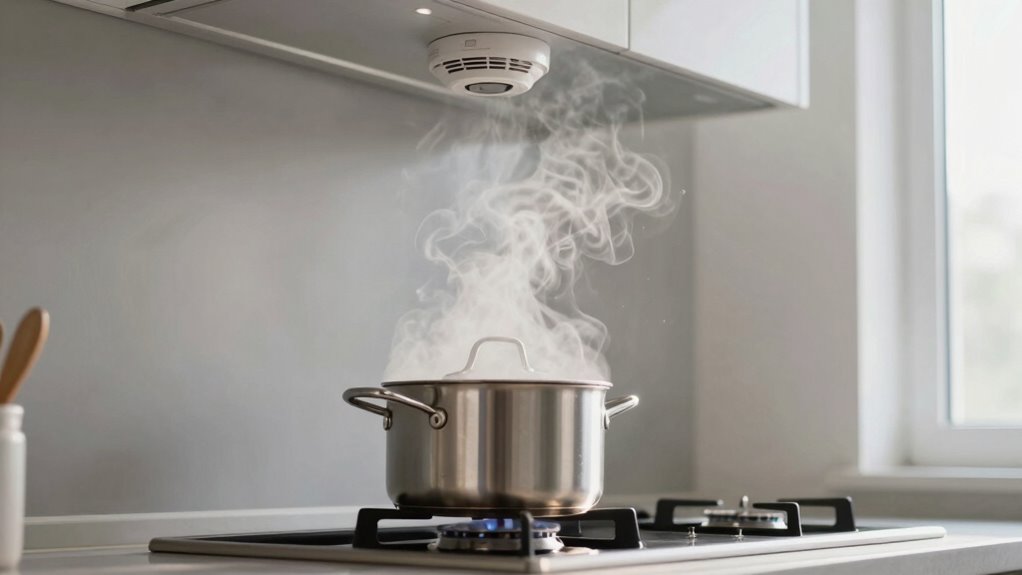

To prevent fog from setting off your smoke alarms, keep humidity levels low by ventilating your space. Open windows slightly or use exhaust fans to improve airflow and reduce moisture buildup near detectors. Regularly clean your alarms and test them monthly to guarantee proper function. Consider relocating alarms away from high-humidity areas or investing in models with humidity sensors. Maintaining a dry, well-ventilated environment can help you avoid false alarms during foggy conditions—discover how to perfect your setup with simple steps.
Listen free for 30 days with Audible
Thousands of audiobooks and originals — cancel anytime.
As an affiliate, we earn on qualifying purchases.
Key Takeaways
- Improve ventilation by opening windows or using exhaust fans during foggy conditions.
- Use dehumidifiers to reduce indoor humidity levels that may trigger false alarms.
- Relocate smoke detectors away from areas prone to fog or high humidity, such as kitchens or bathrooms.
- Regularly clean and test smoke alarms to prevent false triggers caused by dust or moisture.
- Consider installing modern smoke detectors with humidity sensors for better moisture resistance.
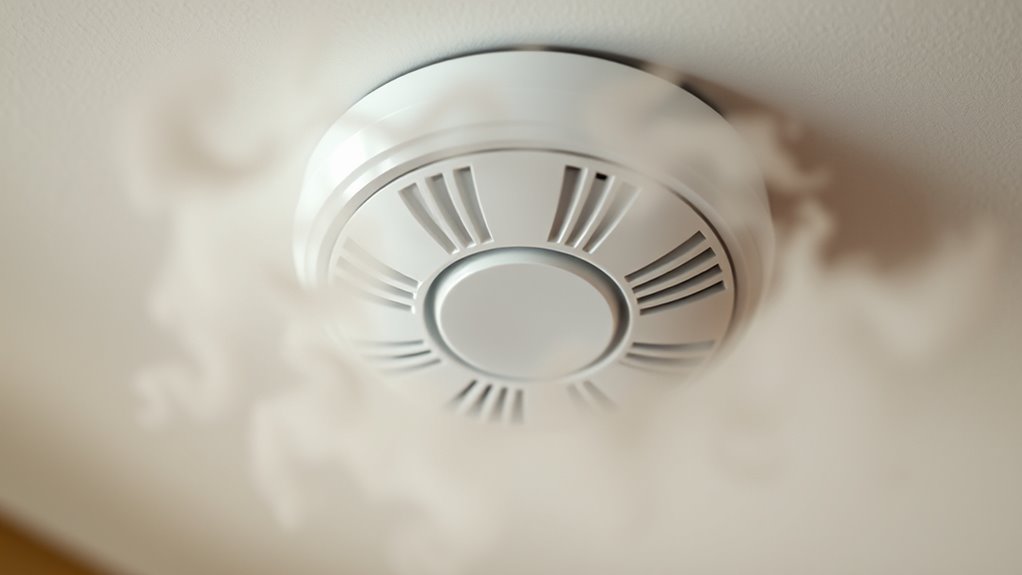
Driving in fog can be dangerous, but simple precautions can greatly improve your safety. When it comes to preventing your smoke alarms from going off unnecessarily during foggy conditions, understanding how to manage the environment and maintain your detectors is essential. Fog can introduce excess moisture into your home, which may trigger smoke alarms even when there’s no fire. Implementing effective ventilation strategies helps reduce humidity levels, preventing false alarms and guaranteeing your detectors work properly when needed.
One of the easiest ways to minimize false alarms caused by fog or high humidity is to improve air circulation in your home. Opening windows slightly or running exhaust fans can help reduce indoor moisture. Using dehumidifiers in damp areas further controls humidity levels, which is especially useful during foggy days or seasons. Proper ventilation ensures that moisture doesn’t accumulate near smoke detectors, decreasing the likelihood of false triggers. Remember, smoke alarms rely on sensing particles in the air, so keeping the air dry and well-ventilated is vital for their correct operation.
Improve air circulation with windows and exhaust fans to prevent false smoke alarm triggers during foggy days.
Alongside ventilation strategies, regular smoke detector maintenance plays an essential role in avoiding false alarms. Test your alarms monthly to confirm they’re functioning properly. This simple step ensures that the alarm’s circuitry and sensors are in good shape, reducing chances of false triggers caused by dust, insects, or moisture buildup. When testing, press the test button until the alarm sounds, and if it doesn’t, replace the batteries or the entire unit. Cleaning your smoke detectors with a soft brush or vacuum helps remove dust or cobwebs that could interfere with their sensitivity. These maintenance steps keep your alarms reliable and ready to alert you in an emergency.
If your smoke alarms are located in areas prone to high humidity or fog influence, consider relocating them to spots less affected by moisture. Installing smoke detectors on higher ceilings or in well-ventilated areas can make a difference. Additionally, some modern smoke alarms come with humidity sensors or are designed to resist false alarms from moisture, making them a good investment. Always follow the manufacturer’s instructions for placement and maintenance, as this will optimize their performance and longevity.
To further protect your home, consider using a dedicated humidity control system that helps maintain consistent moisture levels and reduces the risk of false alarms caused by environmental factors.
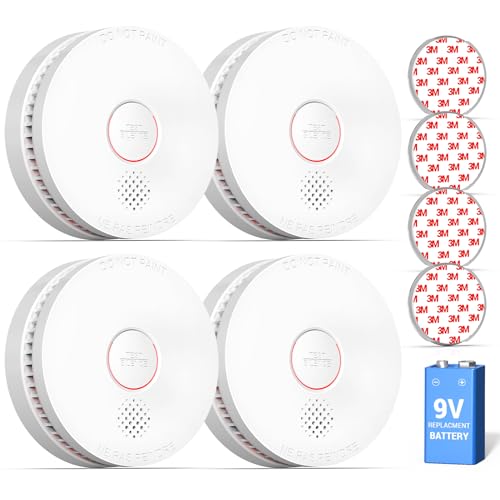
SITERWELL Smoke Detector, 10 Year Product Life Fire Alarm
- Long-lasting 10-year lifespan: Uses replaceable 9V battery for 10 years
- Sensitive photoelectric detection: Detects slow smoldering fires effectively
- Easy test and mute functions: Includes test button and silent operation
As an affiliate, we earn on qualifying purchases.
As an affiliate, we earn on qualifying purchases.
Frequently Asked Questions
Can Certain Types of Fog Be Less Likely to Trigger Alarms?
Yes, certain types of fog are less likely to trigger alarms. Humid air and misty conditions with low particulate content tend to be less sensitive, reducing false alarms. If you experience fog that’s primarily water vapor without smoke particles, your alarms are less likely to go off. Maintaining good ventilation and avoiding thick misty conditions near fire detectors can also help prevent unnecessary triggers, ensuring your alarms stay reliable when needed.
Are There Specific Smoke Alarm Models Resistant to Fog Interference?
If you want a smoke alarm resistant to fog interference, consider models with photoelectric sensors, like the Kidde Smoke & Carbon Monoxide Detector. In a case where fog triggers alarms, proper sensor placement—away from vents or high humidity areas—helps reduce false alerts. Regular alarm maintenance, including cleaning and testing, guarantees your device stays reliable and less prone to fog interference. Choose wisely, and keep your home safe.
How Often Should Fog Alarm Sensors Be Tested for Reliability?
You should test your fog alarm sensors monthly to guarantee reliability. Regular sensor calibration is essential for accurate detection, so follow the manufacturer’s instructions during maintenance. When testing, use the designated test button and observe if the alarm responds correctly. If it doesn’t, perform necessary alarm maintenance or consider replacing the sensor. Consistent testing and calibration help prevent false alarms caused by fog interference, keeping you safe and your alarm functioning properly.
What Are the Long-Term Effects of Frequent Fog Exposure on Alarms?
Like a weary knight facing endless storms, your alarm’s sensors endure the test of time with frequent fog exposure. Over time, humidity effects can cause sensor degradation, reducing reliability. Continuous fog can corrode sensitive parts, making alarms less responsive and increasing false alarms. To protect your safety, regularly inspect and replace alarms as needed, ensuring they remain vigilant despite the fog’s relentless assault.
Is Professional Installation Necessary for Fog-Resistant Smoke Alarms?
You don’t necessarily need a professional for fog-resistant smoke alarm installation, but it’s recommended for ideal installation safety. Proper placement and secure mounting help ensure the alarm functions correctly and reduces false alarms. Regular alarm maintenance, like testing and battery checks, is essential. If you’re unsure about installation, consult a professional to guarantee your smoke alarm is properly set up, providing reliable protection and peace of mind.
Conclusion
Now that you know the simple tips to prevent fog from setting off your smoke alarms, you might think the problem’s solved. But what if there’s an unexpected situation where fog appears just when you least expect it? Stay alert and prepared—sometimes, the tiniest oversight can make all the difference. Keep these tricks in mind, and you’ll be ready to handle even the sneakiest fog. Are you truly safe from surprises? The answer might surprise you.
Flea & tick season Picks
flea and tick prevention
As an affiliate, we earn on qualifying purchases.