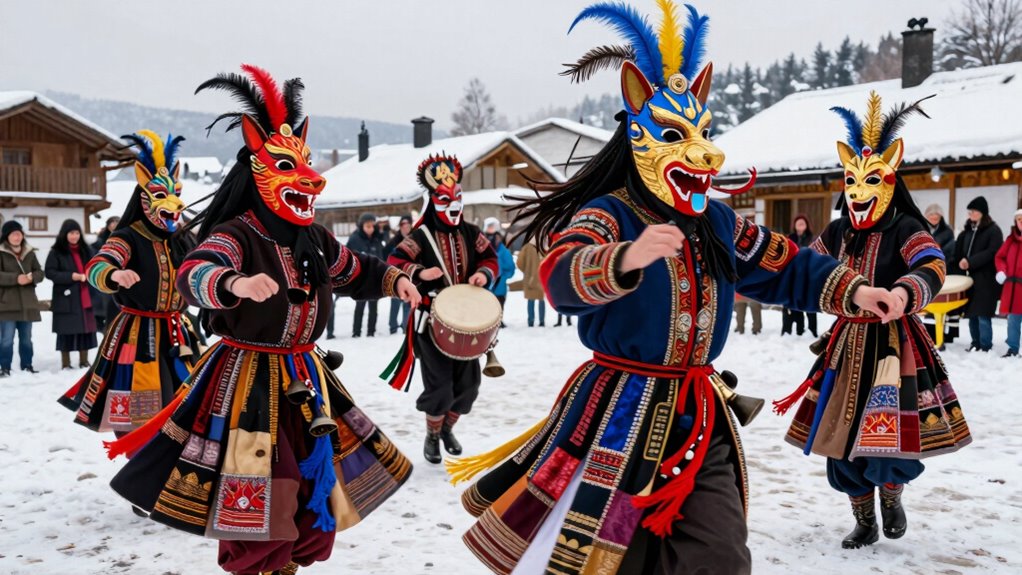
Kukeri in Bulgaria are lively, colorful dancers dressed in elaborate costumes and masks that symbolize mythical monsters. These performances take place during New Year and pre-Lenten seasons, with the aim of scaring away winter spirits and welcoming spring. Their rhythms, bells, and fierce-looking masks create a vibrant atmosphere rooted in tradition and community bonds. If you keep exploring, you’ll discover how these customs embody Bulgaria’s rich cultural heritage and legendary folklore.
Key Takeaways
- Kukeri are traditional Bulgarian masked dancers performing rituals to chase away winter and welcome spring.
- Costumes and masks, often exaggerated and colorful, symbolize mythical monsters and evil spirits.
- Performances include dances and rituals that awaken nature’s fertility and dispel bad luck.
- Bells and traditional music enhance the lively atmosphere and energize the community.
- Kukeri rituals reinforce cultural identity, social bonds, and the hope for prosperity in the new year.
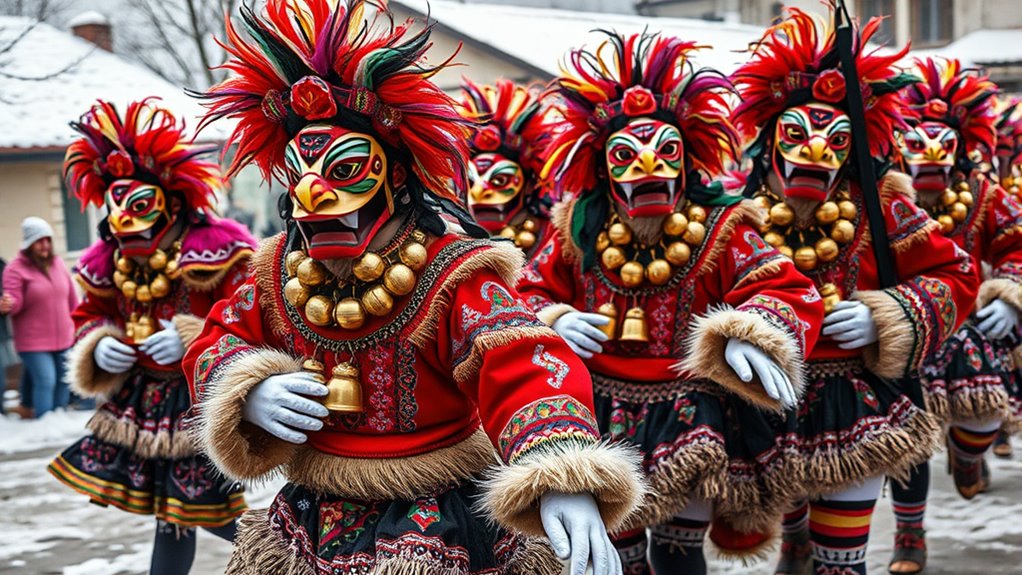
Kukeri are vibrant, elaborate masked dancers who perform traditional rituals across Bulgaria, especially during the New Year and before Lent. When you witness these lively processions, you’ll notice that their traditional costumes are intricate and colorful, crafted with layers of fabric, fur, beads, and bells. These costumes are more than just clothing; they’re symbols of cultural heritage, designed to embody the mythical monsters that chase away evil spirits and winter’s cold grip. Each costume is unique, often handmade by local artisans, and reflects regional styles and traditions. As you observe the Kukeri, you’ll see the masks—often grotesque, exaggerated, and awe-inspiring—crafted from wood, leather, or papier-mâché, painted with bold colors to evoke fear and awe simultaneously. The use of traditional craftsmanship ensures that each mask and costume remains a unique piece of cultural expression passed down through generations.
Participating in these seasonal rituals, Kukeri perform dances and rituals intended to awaken nature’s fertility and bring good fortune for the coming year. You’ll find that these celebrations are deeply rooted in Bulgaria’s history and community, serving as a way for villagers to connect with their ancestors and reinforce social bonds. The rituals are performed at dawn or dusk, with Kukeri marching through villages, performing choreographed dances that mimic animalistic movements or mimic the monster figures of old legends. These acts are believed to scare away winter’s darkness and welcome the warmth and renewal of spring.
When you’re part of a Kukeri procession, you’ll notice the sound of jingling bells attached to the costumes, creating a lively, rhythmic backdrop that energizes the crowd. The rituals are often accompanied by traditional folk music, with drums and bagpipes adding to the festive atmosphere. The costumes and masks aren’t just for show—they serve a purpose. The intimidating appearance of the Kukeri is meant to frighten malevolent spirits and dispel bad luck, ensuring a prosperous year ahead. This act of transformation through costumes and masks embodies the core of Bulgaria’s seasonal rituals, blending myth, community, and tradition.
Frequently Asked Questions
How Are Kukeri Costumes Traditionally Made?
You see, kukeri costumes are traditionally made using intricate mask making techniques and diverse costume materials. You start by shaping masks from wood or papier-mâché, then paint them vividly. For the costumes, you use thick, colorful fabrics, fur, and leather, often decorated with bells and embroidery. These handcrafted details bring the kukeri to life, helping them chase away winter spirits and celebrate the coming of spring with lively, elaborate appearances.
What Is the History Behind Kukeri Rituals?
You learn that Kukeri rituals have ancient roots, symbolizing spring fertility and prosperity. Historically, communities performed these ceremonies to ward off evil spirits and guarantee a good harvest. The masks and costumes embody mythical symbolism, representing monsters that chase away winter’s gloom. These traditions have been passed down through generations, blending pagan beliefs with local customs, creating a vibrant celebration of renewal and hope in Bulgarian culture.
Are Kukeri Festivals Celebrated Outside Bulgaria?
Yes, you can find Kukeri outside Bulgaria through international kukeri festivals. These festivals celebrate Bulgarian traditions worldwide, allowing you to experience the vibrant costumes and lively dances. Many communities and cultural organizations host events to showcase these masked monsters, helping preserve the tradition and share it globally. Attending international kukeri festivals gives you a unique chance to connect with Bulgarian culture and witness the lively spirit of these ancient rituals firsthand.
How Do Kukeri Dances Influence Local Communities Today?
Kukeri dances are a powerful force that transform communities, forging bonds stronger than steel. You’ll see them ignite a sense of community bonding and cultural preservation, keeping ancient traditions alive. These vibrant rituals inspire pride, unite generations, and attract visitors from around the world. By participating or watching, you become part of a living heritage that cheers winter’s departure and celebrates Bulgaria’s rich history, making each festival unforgettable.
What Are the Specific Animals Associated With Kukeri Masks?
You’ll notice that animals like lions, bulls, and goats are commonly associated with kukeri masks. These animals symbolize strength, fertility, and protection, playing a key role in the animal symbolism tradition. Skilled mask craftsmanship brings these animal features to life, enhancing the masks’ power to ward off evil spirits. When you see these masks, you’re witnessing a vibrant blend of cultural symbolism and expert artistry that keeps traditions alive.
Conclusion
As you witness the vibrant kukeri dances, it’s almost as if tradition itself chases away winter’s chill. You realize that these masked monsters aren’t just symbols—they’re a heartfelt wish for health, prosperity, and renewal. It’s a beautiful coincidence how, in Bulgaria’s age-old customs, the line between myth and reality blurs, reminding you that hope and community can turn even the coldest days into something warm and alive.