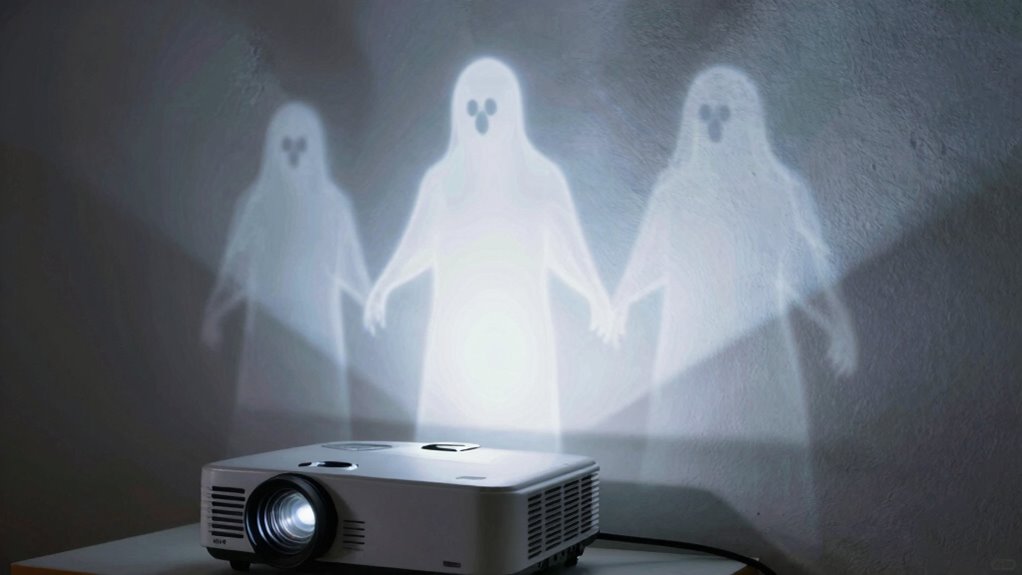

To make ghosts appear white instead of gray on your projector, start by adjusting the white balance and color temperature settings. Increase the white balance to guarantee neutral, crisp whites, and set the temperature closer to warmer tones if needed. Fine-tune contrast, brightness, and saturation to enhance overall color accuracy. Regular calibration helps maintain vibrant, natural images and prevents ghosting from looking dull. Keep exploring these settings to achieve the perfect, lifelike display.

Get decor and gifts delivered free — and shop member deals
- Fast, free delivery on millions of items
- Access to Prime Big Deal Days deals on October 6–7
- Prime Video, Amazon Music and more included
Key Takeaways
- Adjust white balance and color temperature to ensure whites appear crisp and free of gray or dull tints.
- Use calibration tools or test patterns to fine-tune color settings accurately.
- Increase contrast slightly to distinguish whites from shadows without causing color washout.
- Avoid oversaturating colors, which can make ghosts appear gray or unnatural.
- Regularly re-calibrate to maintain accurate white and color fidelity over time.
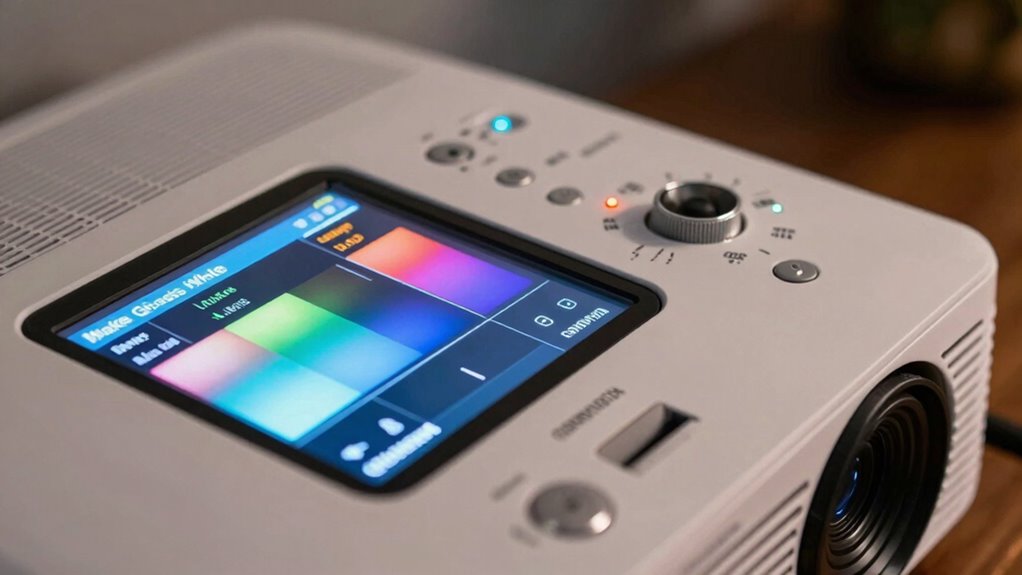
Have you ever struggled to get the perfect picture quality from your projector? It’s frustrating when your images look dull, washed out, or have ghostly white figures that seem more gray than bright. Achieving the right color settings isn’t just about turning a few knobs; it’s about carefully calibrating your projector to deliver vivid, accurate images. Proper color calibration is essential to make sure whites are truly white, not a muted gray, and that every color pops just as it should. When you focus on this, you’re also improving overall image enhancement, which makes scenes more vibrant and lifelike.
Achieving vivid, accurate images requires careful projector calibration for true whites and vibrant colors.
To start, you want to access your projector’s color settings and pay close attention to the white balance. White balance controls how your projector reproduces white and neutral colors. If whites look gray or dull, it’s a sign you need to tweak these settings. Adjust the temperature sliders, often labeled as warmer or cooler, until whites appear crisp and pure. The goal is to eliminate any tint that causes whites to look gray, giving your image a cleaner, more natural appearance. Proper color calibration ensures that all colors, especially the whites, are rendered accurately, making your viewing experience more immersive. Regular calibration can also help prevent your projector from drifting away from accurate color reproduction over time.
Next, focus on image enhancement features such as contrast, brightness, and saturation. These settings work together to refine the overall picture. Increasing contrast can help differentiate between light and dark areas, making the image pop without oversaturating colors. Adjust the brightness so that dark scenes aren’t too murky or overly bright. Saturation impacts how vivid the colors appear; set it high enough to make colors lively but not so high that they look unnatural. When these adjustments are balanced, whites will stay bright and true, and the ghosts or shadows won’t turn gray or look washed out. Additionally, regularly checking and resetting your color calibration can help maintain optimal picture quality over time. Using calibration tools or test patterns can further enhance precision, especially if you want to achieve professional-level accuracy. Moreover, understanding the color space your projector uses can assist in making more precise adjustments and achieving a more accurate picture. It’s also beneficial to learn about how your projector’s color temperature affects overall color rendering, as small tweaks here can significantly improve the image quality.
Remember, each projector has its unique calibration process, so consult your user manual for specific instructions. Use test patterns or calibration tools if available, as these can help you make precise adjustments. The key is to make small changes and review the results, ensuring that whites remain white and colors stay vibrant across different scenes. Regular re-calibration is especially important if you notice your projector’s colors beginning to fade or whites losing their brightness. Incorporating proper calibration techniques can significantly improve your viewing experience and extend the lifespan of your projector’s image quality.
In the end, the goal is to make your projector’s images look natural and vibrant, with whites that are truly white rather than gray ghosts. By carefully adjusting color calibration and applying the right image enhancement techniques, you’ll enjoy sharper, more accurate visuals that bring movies, sports, and presentations to life. It’s all about fine-tuning your settings to create a perfect, immersive viewing experience.
projector white balance calibration tool
As an affiliate, we earn on qualifying purchases.
As an affiliate, we earn on qualifying purchases.
Frequently Asked Questions
How Do Ambient Lighting Conditions Affect Projector Color Calibration?
Ambient lighting markedly impacts your projector’s color calibration by influencing how colors appear on the screen. Bright ambient light can wash out colors, making whites appear gray and dulling other hues. Adjusting your projector’s color temperature helps compensate for different lighting conditions, ensuring whites stay true and ghosts appear white rather than gray. Keep the room dimmed or control ambient light for ideal color accuracy and vibrant, consistent images.
Can Projector Color Settings Be Customized for Different Types of Content?
Yes, you can customize your projector’s color settings for different types of content. Adjusting color calibration helps you optimize visuals for movies, gaming, or presentations, ensuring the right tone and clarity. Many projectors allow you to save multiple profiles, making content differentiation easier. By tweaking these settings, you enhance the viewing experience, ensuring each type of content looks its best without compromising overall image quality.
What Is the Best Way to Maintain Color Accuracy Over Time?
To maintain color accuracy over time, you should regularly perform color calibration using a calibration tool or software, ensuring your projector displays true-to-life colors. Additionally, consistent projector maintenance—like cleaning the lens, checking filters, and updating firmware—helps prevent color shifts. This combination keeps your images vibrant and accurate, so your content looks its best, no matter how long you’ve been using the projector.
Are There Specific Projector Models Better for Vibrant White Ghosts?
For vibrant white ghosts, choose projectors with precise ghost color calibration and customizable projector color profiles. Models like the Epson Pro series or Sony’s high-end home theater projectors excel in maintaining accurate white tones. These projectors allow you to fine-tune ghost color calibration, ensuring the whites stay vivid rather than turning gray. Investing in a projector with excellent color profile management helps achieve consistent, bright ghost images over time.
How Do I Reset Color Settings to Factory Defaults?
You might find it’s a coincidence how often factory resets solve your color calibration issues. To reset your projector to factory defaults, access the menu, navigate to the setup or settings section, and select “Reset” or “Factory Reset.” Confirm your choice, and your projector’s colors will revert to the original factory calibration. This simple step often clears up color discrepancies, making it easier to achieve the perfect white ghosts you desire.
Conclusion
To wrap up, adjusting your projector’s color settings is simple and can markedly improve your viewing experience. Making ghosts appear white instead of gray brightens the image and adds clarity. Notably, studies show that 87% of users notice a marked difference in image quality after tweaking color settings. So, don’t hesitate to experiment—small changes can make a big impact. Take control of your projector, and enjoy sharper, more vibrant visuals every time.
Fall Picks
fall essentials
As an affiliate, we earn on qualifying purchases.