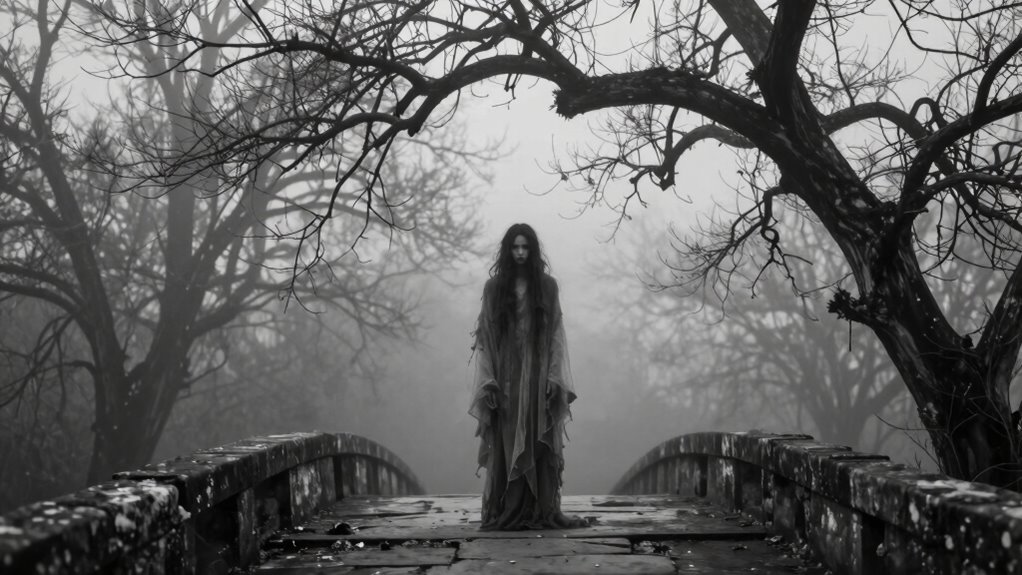

You might think La Llorona’s story started with colonial legends, but her roots go way deeper. She originates from ancient indigenous beliefs about water spirits and death, predating European influences. These spirits represented life, water, and the afterlife, blending with Spanish stories to create her layered myth. Her story embodies universal fears of loss and punishment, showing how old traditions shape modern legends. Keep exploring to discover even more surprising origins behind her haunting tale.
Key Takeaways
- La Llorona’s origins trace back to pre-Columbian water and death spirits in indigenous South American and Mesoamerican mythologies.
- Her legend blends indigenous beliefs with Spanish colonial stories, creating layered narratives over centuries.
- Early references depict her as a chthonic spirit linked to water and the underworld, predating modern versions.
- Colonial narratives transformed her into a moral warning, reinforcing societal norms and collective fears.
- Her myth reflects ancient archetypes of loss, betrayal, and supernatural punishment, making her story older than many realize.
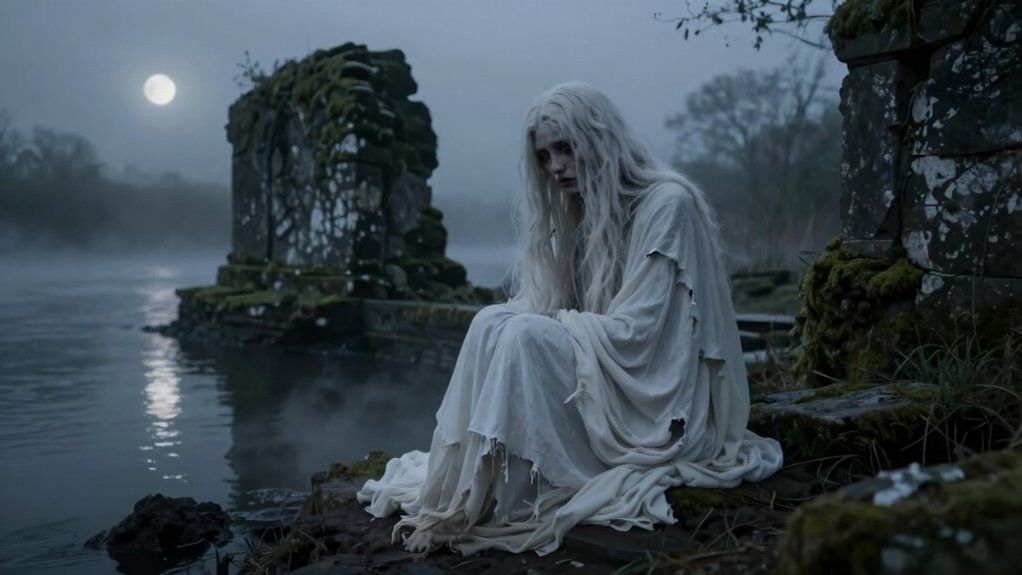
Many believe La Llorona is just a spooky legend, but her true origins are rooted in centuries-old stories that reflect real cultural fears and tragedies. As you explore her history, you’ll discover that her story varies across different regions, revealing rich cultural variations that shape her myth. In Mexico, she’s known as “La Maldita,” a tragic figure who mourns her lost children, embodying the profound grief and guilt that many communities associate with maternal loss. In Central America and parts of the southwestern United States, her story takes on different nuances, but the core themes of sorrow, regret, and punishment remain consistent. These cultural variations highlight how communities adapt her legend to mirror their own fears and values, reinforcing her as a symbol of moral lessons or social warnings. Throughout her evolution, her story also reflects societal anxieties about morality, obedience, and the supernatural. Her mythological influences stretch far beyond mere storytelling; they are woven into the fabric of various ancient beliefs. For example, some interpret La Llorona as a chthonic spirit, a ghostly manifestation linked to the underworld, representing the consequences of moral failings or unnatural deaths. Others see her as a manifestation of archetypal fears—embodying the terror of losing loved ones or the consequences of betrayal. The legend’s roots can be traced back to pre-Columbian times when indigenous cultures revered spirits of water and death, blending their mythologies with Spanish colonial stories. This fusion created a layered myth that resonates deeply within Latin American cultural consciousness, illustrating how mythological influences shape her story over generations. mythological influences have played a crucial role in shaping her enduring symbolism across centuries, especially through the incorporation of indigenous water spirits and colonial narratives. Additionally, her story often serves as a moral lesson, reinforcing societal norms and expectations. Many scholars believe her story also functions as a cultural warning, illustrating how folklore can serve to reinforce social cohesion and moral boundaries. As you *explore* deeper, you realize that La Llorona’s legend is also a reflection of societal anxieties. In many versions, she’s a warning to children about obedience or a reminder of the dangers lurking in the dark. Her sorrowful cries serve as a haunting reminder of the consequences of neglect or moral failure. Over the centuries, her story has evolved, yet her essence remains rooted in universal fears—loss, punishment, and the supernatural. Her myth continues to be a powerful cultural symbol, shaped by a blend of diverse influences and traditions that make her story timeless. Understanding her origins offers a glimpse into how stories adapt across cultures, serving as mirrors to our deepest fears and moral lessons.
La Llorona folklore book
As an affiliate, we earn on qualifying purchases.
As an affiliate, we earn on qualifying purchases.
Frequently Asked Questions
Are There Similar Legends of Crying Women in Other Cultures?
Yes, many cultures have legends of crying women, reflecting shared themes across folklore origins. In Greek mythology, Echo mourns her lost love, while in Japanese folklore, the Jorogumo is a weeping spider spirit. These cultural variations highlight how stories of sorrowful women serve to warn or explain natural phenomena. You’ll find that such legends resonate worldwide, emphasizing universal themes of grief, loss, and supernatural justice that transcend borders.
How Has La Llorona’s Story Evolved Over Centuries?
You’re diving into a story that’s evolved like a game of telephone, blending cultural variations and mythological parallels over centuries. La Llorona’s tale has shifted from tragic ghost stories to moral lessons, adapting to societal values. As it traveled through generations, the story grew richer, incorporating new symbols and meanings, yet the core remains a haunting reminder of loss and regret—showing how legends evolve while holding onto their roots.
What Are the Psychological Explanations for La Llorona Sightings?
You might interpret La Llorona sightings through psychological lenses like sleep paralysis, which causes vivid hallucinations and feelings of dread, making you see her ghostly figure. Additionally, these stories persist because they’re part of collective memory, passed down through generations, reinforcing fear and cultural identity. Your mind, influenced by fear and cultural stories, creates these haunting visions, especially during vulnerable states like sleep or heightened emotional stress.
Is La Llorona Linked to Any Historical Events or Figures?
You might see La Llorona as a myth rooted in cultural symbolism, but her story is linked to historical events and figures. For example, her legend echoes the tragic tales of women betrayed or lost in real tragedies, like the Spanish colonial era’s conflicts. These stories symbolize grief and loss, connecting her mythical origins to collective memory and historical trauma, making her a haunting reminder of past injustices.
How Has La Llorona Influenced Modern Horror Stories?
La Llorona influences modern horror stories by serving as a powerful cultural symbolism of guilt, loss, and supernatural punishment. You see her haunting tales shape narrative evolution, inspiring movies, books, and urban legends that tap into deep fears. Her ghostly figure reminds you of the enduring power of folklore, evolving over time to reflect societal anxieties and cultural values, making her a timeless and versatile figure in horror storytelling.
indigenous water spirits mythology
As an affiliate, we earn on qualifying purchases.
As an affiliate, we earn on qualifying purchases.
Conclusion
As you walk through the shadows of La Llorona’s story, remember she’s not just a ghostly figure, but a mirror reflecting centuries of sorrow and longing. Like a river’s endless course, her origins flow deep into history’s bedrock, shaping her into a timeless symbol of loss. Her tears, a silent echo of humanity’s universal grief, remind us that some stories, like rivers, never truly end—they simply continue, whispering beneath the surface for those willing to listen.
Mexican legends book
As an affiliate, we earn on qualifying purchases.
As an affiliate, we earn on qualifying purchases.
supernatural folklore stories
As an affiliate, we earn on qualifying purchases.
As an affiliate, we earn on qualifying purchases.