
Movies often ignore the rich history behind owl legends, which go beyond being just mysterious or ominous creatures. Across cultures, owls symbolize wisdom, protection, transformation, and even connection to the spirit world. Ancient stories show they’re guardians of secrets and carriers of deep knowledge, not just symbols of death or bad luck. If you keep exploring, you’ll discover the full, fascinating layers of owl symbolism hidden in these traditions.

Get decor and gifts delivered free with Prime
- Fast, free delivery on millions of items
- Prime Video, Amazon Music and more included
- Member-only deals all year
Key Takeaways
- Movies often reduce owls to mysterious or ominous symbols, ignoring their rich cultural roles as protectors and wisdom bearers.
- Cinematic portrayals frequently omit the historical nuances of owl symbolism, such as their association with sacred knowledge.
- Films tend to focus on owls’ appearance rather than their cultural significance across diverse traditions.
- The evolution of owl symbolism—from wisdom to omens—is rarely acknowledged in popular media.
- Legends depict owls as carriers of transformation and guardians, aspects often overlooked in movies’ simplified narratives.
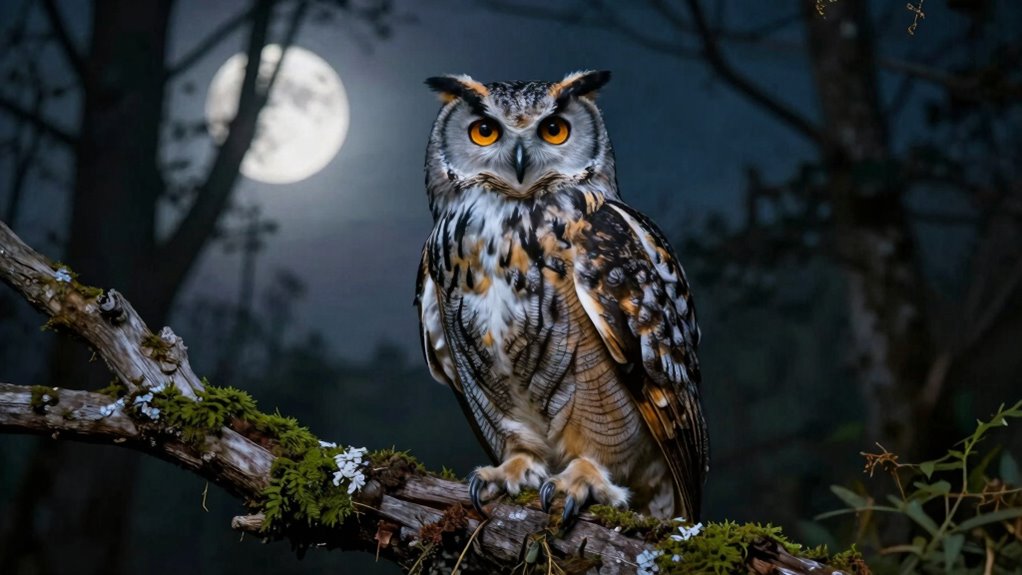
Throughout history, owls have been shrouded in mystery and myth, inspiring legends across cultures around the world. When you think about these nocturnal birds, it’s easy to imagine them as symbols steeped in mythical symbolism—representing wisdom, mystery, or even death. These layered meanings have shaped cultural representations that stretch back thousands of years. You might see owls depicted in ancient Greek art as symbols of Athena’s wisdom, or in Native American stories as messengers between the living and the spirit world. In many traditions, they’re seen as guardians of secrets, bearers of knowledge that’s hidden from ordinary sight. Yet, movies often simplify or romanticize these associations, leaving out the deeper, more complex symbolism that truly surrounds owls.
In popular films, owls are frequently portrayed as mystical or ominous creatures, but rarely do they capture the full scope of their cultural significance. You’re shown an owl as a wise guide or a foreboding omen, but what’s often missing is the layered history behind these images. For instance, in ancient Celtic traditions, owls were seen as protectors of sacred knowledge, not just symbols of death or bad luck. Their silent flight and penetrating gaze evoke respect and awe, which many filmmakers overlook when they reduce owls to mere plot devices. Instead of exploring their cultural representations, movies tend to focus on their mysterious appearance, neglecting the rich stories and symbolism that have grown around them across different societies. Recognizing Cultural symbolism surrounding owls reveals a complex history of respect and reverence that movies seldom explore. This cultural significance demonstrates how deeply ingrained these perceptions are across various traditions.
Moreover, the mythical symbolism of owls isn’t static. It evolves with cultural context, shifting from wisdom to omens depending on the region and era. When you see an owl in a film, it’s often depicted as a creature on the edge of the supernatural, but those portrayals rarely acknowledge the nuanced cultural beliefs that have shaped perceptions of owls for centuries. These birds have been seen as protectors, guides, or symbols of transformation, not just symbols of death or darkness. The symbolic evolution of owls demonstrates how their meanings have adapted through different historical periods and societies. By leaving out these nuanced cultural representations, movies miss an opportunity to deepen your understanding of what owls truly stand for across diverse traditions. Mythical symbolism surrounding owls reveals a complex history of respect and reverence that movies seldom explore. Understanding these layered meanings highlights how their symbolism resonates differently depending on cultural context and time.
In essence, the legends of owls are far richer than most films suggest. You’re encouraged to look beyond the screen and explore how different cultures have woven these birds into their mythologies, revealing a tapestry of symbolism that spans wisdom, mystery, protection, and transformation. Recognizing the full depth of these cultural representations allows you to appreciate owls not just as cinematic symbols, but as carriers of ancient stories and profound meanings handed down through generations.
owl symbolism and mythology book
As an affiliate, we earn on qualifying purchases.
As an affiliate, we earn on qualifying purchases.
Frequently Asked Questions
Are Owl Legends Found in Cultures Outside of Western Traditions?
Yes, owl legends are found in cultures outside of Western traditions. In many societies, owls symbolize wisdom, mystery, or protection through ancient symbolism. These cultures often see owls as mythical creatures with spiritual significance, representing the supernatural or guiding souls. For example, in Indigenous Australian and African mythologies, owls play essential roles, highlighting their universal importance across diverse cultures and emphasizing their place in ancient storytelling and symbolism.
Do Owls Symbolize Different Things in Various Mythologies?
Think of owls as ancient symbols that carry diverse meanings across cultures. In Greek mythology, they symbolize wisdom, while in Native American traditions, they often represent protection or death. You’ll find that cultural interpretations shape how societies view owls—sometimes as guides, other times as omens. These varied symbols reveal how deeply ancient symbolism influences modern perceptions, making owls fascinating creatures with layered, often contrasting, cultural significance.
How Do Owl Legends Influence Modern Conservation Efforts?
You see, owl legends influence modern conservation by highlighting their mysterious nocturnal behaviors and urban adaptations. These stories foster a sense of wonder and respect, motivating you to protect their habitats. When you learn about owls thriving in cities and their nighttime activities, you’re more likely to support conservation efforts. Their symbolism inspires community projects and awareness campaigns, ensuring these remarkable birds continue to adapt and flourish in our changing world.
Are There Any Real-Life Owl Behaviors Linked to Legends?
Yes, some real-life owl behaviors link to legends, especially their mysterious nocturnal habits and hunting adaptations. You’ll notice that owls are often associated with wisdom and mystery because they hunt silently at night, thanks to their specialized feathers and silent flight. These hunting adaptations, like excellent night vision and keen hearing, inspire legends and myths, emphasizing their elusive nature. This connection helps deepen your appreciation for their real-life behaviors.
What Are Some Common Misconceptions About Owls in Legends?
You might think owls are always symbols of death or bad luck, but that’s a misconception fueled by mystical symbolism in legends. In reality, owls represent wisdom and nocturnal mysteries. They’re not omens but fascinating creatures that thrive in darkness. Legends often exaggerate their traits, so remember that owls are more about mystery and knowledge than superstition, challenging those common misconceptions about their role in folklore.
Conclusion
You’ve seen how owl legends whisper truths hidden beneath the shadows of movies. They’re the silent guardians, the ancient storytellers cloaked in mystery, often overlooked on the bright stage of Hollywood. Like wise old night heralds, they remind us that some truths are best left in the darkness, waiting patiently for curious eyes to uncover. So next time you watch a film, listen closely—those silent wings might be carrying secrets only the stars dare to whisper.
Columbus Day / Indigenous Peoples' Day Picks
long weekend sales
As an affiliate, we earn on qualifying purchases.