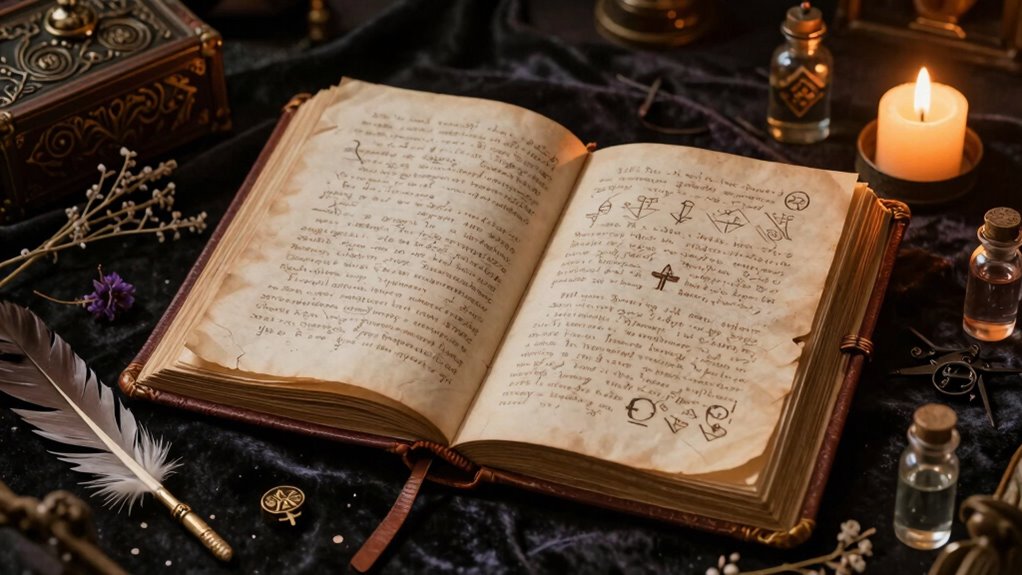

You see grimoires as spooky symbols because they represent ancient secrets, mystical symbols, and supernatural powers. Over centuries, they shifted from secret spellbooks to icons of forbidden knowledge, gaining fame through tales of magic and heresy. Today, they’re popular Halloween decorations, evoking mystery, magic, and adventure. These symbols remind us of a time when magic was feared and revered. If you explore further, you’ll uncover how their mystique continues to captivate us today.
Key Takeaways
- Grimoires’ mysterious symbols and arcane knowledge made them perfect symbols for Halloween’s supernatural themes.
- Their association with witchcraft and forbidden magic fueled their role as icons of danger and secrecy.
- Over time, they shifted from mystical texts to decorative props symbolizing magic and the occult.
- Their visual elements, like pentagrams and mystical symbols, evoke ancient wisdom and hidden powers during Halloween.
- Modern culture popularized grimoires through movies and decorations, reinforcing their mystical allure for Halloween celebrations.
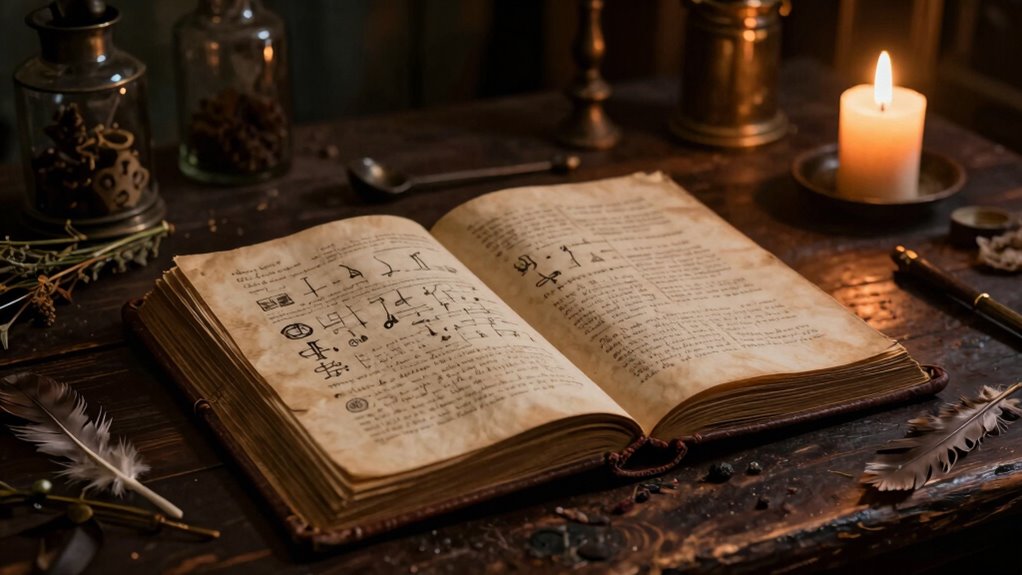
Have you ever wondered why grimoires have become such iconic symbols during Halloween? These ancient spellbooks, filled with mystical symbols and arcane knowledge, have transformed from serious tools of magic into popular cultural icons. Historically, grimoires were considered powerful texts that held secrets to summoning spirits, healing, or cursing. They were kept hidden, often written in coded languages or complex symbols to protect their knowledge from unworthy eyes. These mystical symbols, carefully inscribed within their pages, signified a connection to supernatural forces and spiritual realms. To the untrained eye, they looked mysterious and intimidating—perfect for sparking fear or awe.
Ancient spellbooks with mystical symbols evoke fear, awe, and a connection to supernatural realms—perfect icons for Halloween’s mysterious allure.
Over centuries, these ancient spellbooks gained a reputation beyond their original purpose. As stories and legends grew around them, they became symbols of forbidden knowledge and secret power. During the Middle Ages and the Renaissance, grimoires were associated with witchcraft and heresy, fueling fears of black magic. People believed they possessed dangerous secrets, capable of summoning demons or controlling the unseen world. This aura of danger and mystery made them perfect icons for Halloween, a holiday rooted in themes of the supernatural, the uncanny, and the unknown. Additionally, their association with occult symbolism enhances their role as captivating Halloween imagery. The use of symbolic imagery in art and decoration further solidified their status as evocative symbols of mystical power. Moreover, their appearance often incorporates ritualistic elements, which deepen the sense of ancient mysticism.
In modern times, grimoires have shed much of their original mystique but kept their symbolic power. They’re now more often seen in movies, costumes, and decorations—sometimes as old, leather-bound books with mystical symbols etched onto their covers. This shift reflects our cultural fascination with magic, the mystical, and the occult. Halloween, with its emphasis on ghosts, witches, and spirits, naturally adopted these symbols. The image of a grimoire, with its strange runes and arcane illustrations, evokes a sense of mystery and adventure, inviting us to explore the supernatural world. It’s no longer just about actual magic but about storytelling, fantasy, and the thrill of the unknown.
You might notice how grimoires are used as props or decorations during Halloween parties, often adorned with stars, moons, pentagrams, or other mystical symbols. These images tap into the long history of magic and secret knowledge, giving a sense of authenticity and enchantment. They serve as visual cues that hint at hidden powers and ancient wisdom, making Halloween feel more immersive and mysterious. Additionally, the association with supernatural forces and the occult heightens their allure as symbols of mystery and magic. While most of us don’t believe in the literal magic contained within ancient spellbooks, their symbolic power persists. They remind us of a time when knowledge was guarded fiercely and magic was both feared and revered—yet today, they’re simply symbols of the mysterious, the magical, and the fun of the holiday.

HINDORO Hocus Pocus Book Of Spells, Grimoire Blank Spell Books, Prop Halloween Decorations Decor, Book Of Shadows With Lock, Witchy Hocus Pocus Gifts For Men And Women Spellbook Evil Eye Leather Bound Journal, Grimoire Witch Best Christmas Gifts
- Unique Magic Eye Design: Antique style with mystical stone detail
- Versatile Writing Compatibility: Use with pens, brushes, and colors
- Secure Leather Bound Cover: Sturdy, stitched binding with lock
As an affiliate, we earn on qualifying purchases.
As an affiliate, we earn on qualifying purchases.
Frequently Asked Questions
When Did Grimoires First Appear in Historical Records?
You’ll find grimoires first appear in historical records around the 15th to 16th centuries, though the concept of mystical manuscripts dates back earlier. These ancient texts contain spells, incantations, and magical knowledge. Originally, they served as practical guides for practitioners of magic and mysticism. Over time, grimoires gained cultural significance, transforming from serious mystical manuscripts into symbols of Halloween, blending folklore, superstition, and popular imagination.
Are All Grimoires Associated With Witchcraft or Magic?
Not all grimoires are linked to witchcraft or magic; many are practical texts on medicine, astrology, or religious rites. You should know that historical misconceptions often associate grimoires solely with dark magic, but modern misconceptions sometimes romanticize them. These ancient books served diverse purposes across cultures, showing that their significance isn’t limited to mysticism. Instead, they reflect a broader history of knowledge, experimentation, and spiritual practice.
How Did Grimoires Become Popular in Modern Halloween Culture?
You see grimoires in Halloween culture because their dark, mysterious nature sparks curiosity and fear. Their cultural symbolism of secret knowledge and forbidden magic appeals to modern reinterpretations of the supernatural. By blending history with fiction, grimoires become iconic symbols of witchcraft and mysticism in costumes, decorations, and stories. This juxtaposition of ancient mystique and contemporary pop culture transforms grimoires into enthralling Halloween icons that intrigue and inspire.
What Are Some Famous Historical Grimoires?
You’ll find that famous historical grimoires like the Key of Solomon, the Lesser Key of Solomon, and the Picatrix have deep historical origins rooted in medieval and ancient magic practices. These texts originally served as manuals for summoning spirits and rituals. Today, modern interpretations often romanticize or mythologize their contents, blending historical facts with fictionalized elements, which helps explain their enduring mystique and popularity in Halloween culture.
Do Grimoires Have Any Real Spiritual or Magical Significance Today?
Imagine you find an ancient spiritual text tucked away, and it sparks your curiosity about modern magical practices. Grimoires do hold some real spiritual significance today for enthusiasts who believe in their mystical power, but evidence remains anecdotal. Many see them as symbols or tools for meditation and intention-setting rather than literal spellbooks. While not universally accepted, they continue to influence modern spiritual explorations and personal rituals.
Conclusion
Today, grimoires have transformed into Halloween icons, like mysterious treasures in the dark. But remember, their true essence once held the power of ancient knowledge and magic—secrets bound in pages and ink. As you carve your pumpkins or dress in spooky costumes, think of grimoires as the shadowy roots of Halloween’s mystique. They’re a reminder that beneath the fun and frights, there’s a history woven into every spell and story, waiting to be uncovered.