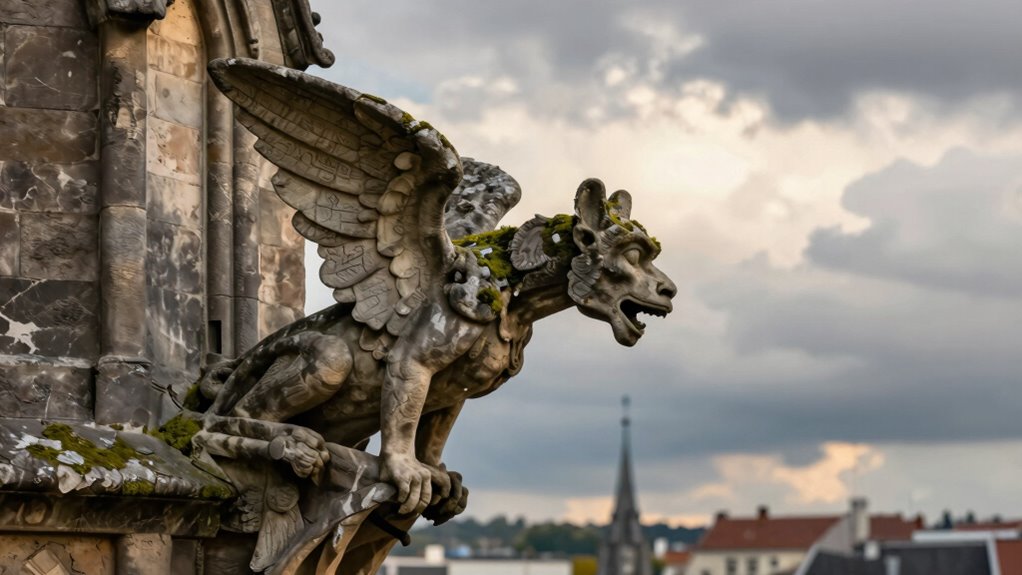

The real origin of gargoyles goes back much earlier than medieval times, blending practical and mythological roles. Originally, ancient civilizations like Egyptians and Greeks carved stone figures for protection, often representing gods or mythological beasts. During the medieval era, these figures evolved into functional water spouts on Gothic cathedrals, symbolizing spiritual guardianship against evil spirits. If you want to uncover more about their fascinating history and symbolic meaning, keep exploring this intriguing story.
Key Takeaways
- Gargoyles originated in ancient civilizations like Egypt and Greece as protective carved figures, predating medieval architecture.
- Their practical function of channeling rainwater dates back to early architectural practices in antiquity.
- Mythological and symbolic motifs used in gargoyles reflect long-standing cultural beliefs about warding off evil.
- The tradition of using carved protective figures persisted through various cultures, linking ancient origins to medieval times.
- Gargoyles symbolize the universal human desire for spiritual protection, blending utility with mythological significance.
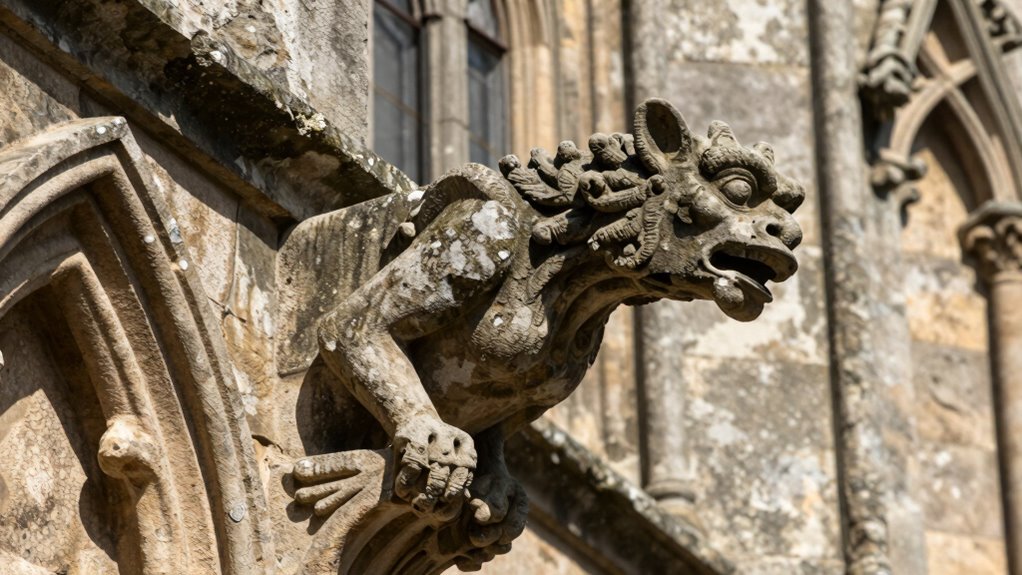
Gargoyles have long stood atop cathedrals and castles, but their origins trace back to ancient times when they served both practical and symbolic purposes. During the medieval era, especially within medieval architecture, these stone figures weren’t just decorative; they played a crucial role in the design of religious structures. Their primary function was to direct rainwater away from the building’s walls through carved channels, helping preserve the integrity of stone and mortar. This practical aspect is what initially gave rise to their presence on Gothic cathedrals, where large, intricate roofs and high walls demanded effective water drainage. Yet, beyond their utility, gargoyles also carried mythological symbolism, reflecting the fears, beliefs, and stories of the people who built them.
Gargoyles blend practical water drainage with mythological symbolism to protect and embody medieval fears and beliefs.
You might notice that many gargoyles resemble monstrous creatures, demons, or mythical beasts. This isn’t accidental. These designs were crafted to evoke mythological symbolism, serving as visual guardians for the sacred spaces beneath. They embodied the idea that evil spirits and malevolent forces could be kept at bay through frightening imagery. By scaring away these negative entities, gargoyles helped protect the spiritual sanctity of the church and its congregation. The mythological symbolism embedded in their forms reinforced the spiritual battles between good and evil, a recurring theme in medieval religious life.
You might also find that the origins of gargoyles extend even further back than the medieval period. Ancient civilizations, such as the Egyptians and Greeks, used carved stone figures and sculptures for similar purposes. These early examples often combined practical functions with mythological symbolism, serving as protectors against evil spirits or as representations of gods and mythic creatures. The idea of using carved figures to ward off harm or to embody spiritual power traveled through time, evolving into the gargoyles we see adorning medieval cathedrals. Interestingly, the practice of incorporating mythological symbolism into architecture to serve protective purposes has persisted across different cultures and eras. Additionally, the use of protective imagery in architecture underscores a shared human desire to ward off harm through symbolism. This shared cultural motif highlights how architecture can be a reflection of universal spiritual beliefs.
When you examine a gargoyle closely, you’ll notice how its mythological symbolism ties into the broader context of medieval architecture. These figures weren’t just about aesthetics; they reflected a worldview where spiritual protection, myth, and practical design intersected. They stand as enduring symbols of a time when architecture was more than just construction—it was a visual language conveying fears, hopes, and beliefs. Understanding this helps you see gargoyles not only as decorative elements but as rich, symbolic guardians rooted in a long history that predates even the medieval era.
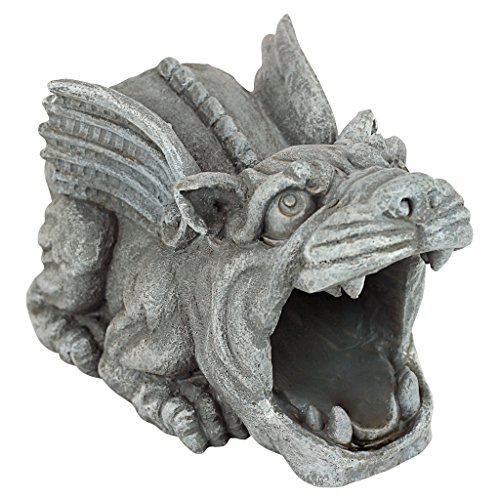
Design Toscano Roland the Gothic Gargoyle Gutter Guardian Rain Downspout Extension Outdoor Statue, 10 Inch Long, Cast Stone Resin, Grey Stone Finish
- Unique Gargoyle Rain Diverter: Medieval castle-inspired design
- Functional and Humorous Decor: Protects foundation with character
- Durable Cast Stone Resin: UV resistant, high-quality construction
As an affiliate, we earn on qualifying purchases.
As an affiliate, we earn on qualifying purchases.
Frequently Asked Questions
Are Gargoyles Found in Cultures Outside of Europe?
Yes, you can find gargoyle-like figures outside of Europe. In many cultures, ancient symbolism involves protective or spiritual statues similar to gargoyles. For example, Asian cultures feature guardian lion statues, while African and Middle Eastern societies have carved masks and figures serving protective roles. These cultural variations show that the idea of intimidating or symbolic guardians isn’t exclusive to Europe; it’s a global phenomenon rooted in ancient symbolism.
How Did Gargoyles Evolve Into Decorative Sculptures?
Gargoyles evolved from simple water spouts into jaw-dropping works of art, transforming medieval symbolism into architectural aesthetics that still dazzle today. You might think they’re just creepy decorations, but they served a vital purpose—channeling water away from buildings. Over time, artisans turned these functional structures into elaborate sculptures, blending myth, protection, and beauty. So, what started as practical tools became legendary symbols etched into history’s grandest cathedrals.
Do Gargoyles Have Any Symbolic Meaning Beyond Protection?
You’ll find that gargoyles symbolically serve as mythical guardians, protecting buildings and their inhabitants from spiritual harm. Beyond protection, they embody spiritual guardianship, representing the battle between good and evil. Their fierce, often grotesque faces evoke primal fears, channeling mythical symbolism to ward off evil spirits. In this way, gargoyles transcend mere decoration, acting as powerful symbols of spiritual protection and the enduring battle against darkness.
Were Gargoyles Used for Any Practical Purposes Besides Drainage?
Gargoyles served practical purposes beyond just drainage. You see, medieval water spouts, like gargoyles, helped channel rainwater away from building walls, protecting the structure. At the same time, they acted as striking architectural ornamentation, adding a dramatic, often frightening, element to Gothic cathedrals. So, these sculptures combined functionality with artistic expression, making them both useful and visually impactful features of medieval architecture.
How Did the Design of Gargoyles Influence Modern Architecture?
Imagine stepping into a building where stone monsters seem to guard your safety—gargoyle symbolism still influences modern design. Their fierce forms inspire architectural integration, blending function with art. Today, architects borrow from their dramatic shapes to create striking facades, where sculptures serve both as decorative elements and as symbols of protection. This legacy turns ancient guardians into modern icons, making buildings feel alive with history and storytelling.
Conclusion
Now that you know the true story behind gargoyles, you see they’re more than just spooky decorations—they’re guardians rooted in history. Their origins stretch back centuries, embodying protection and symbolism far older than many realize. Remember, “A picture is worth a thousand words,” and in this case, those stone figures speak volumes about human history and belief. So next time you see a gargoyle, appreciate its ancient purpose as a silent protector watching over us.