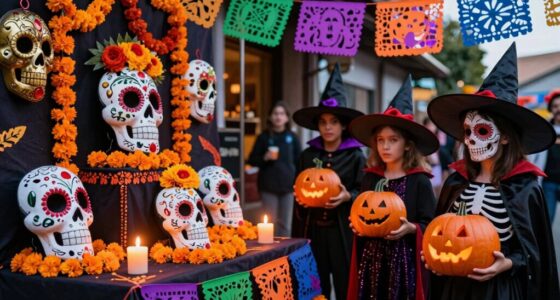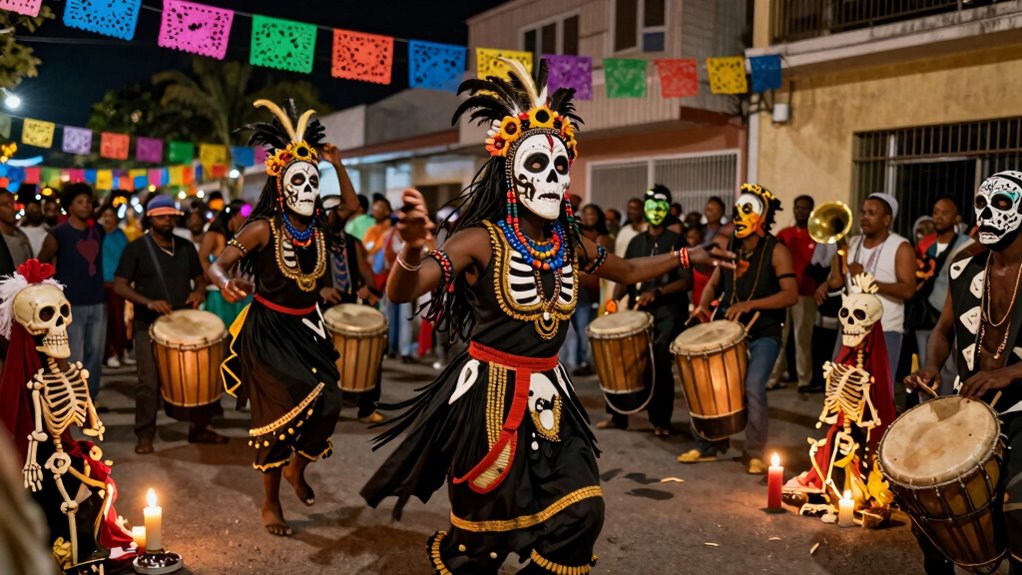

Fèt Gede is a lively Haitian festival held every July that celebrates spirits, ancestors, and life beyond death. You’ll see vibrant costumes, skull masks, drums, and energetic dances that honor Haitian traditions and spiritual connections. The festival blends music, rituals, and offerings to reinforce community bonds and cultural identity. It’s a powerful way to remember those who came before and embrace life’s resilience. Keep exploring to uncover more about Haiti’s unique spiritual and cultural journey.

Get decor and gifts delivered free with Prime
- Fast, free delivery on millions of items
- Prime Video, Amazon Music and more included
- Member-only deals all year
Key Takeaways
- Fèt Gede is an annual July festival in Haiti honoring ancestors through vibrant music, costumes, and Voodoo rituals.
- The festival emphasizes spiritual connection, celebrating life beyond death and maintaining cultural identity.
- Participants wear skull masks, beads, and charms, performing rituals like drumming, singing, and offerings.
- It fosters community unity, respect, and collective memory through colorful parades and shared traditions.
- More than a celebration, Fèt Gede reflects Haiti’s spiritual soul and resilience, keeping ancestral spirits alive.
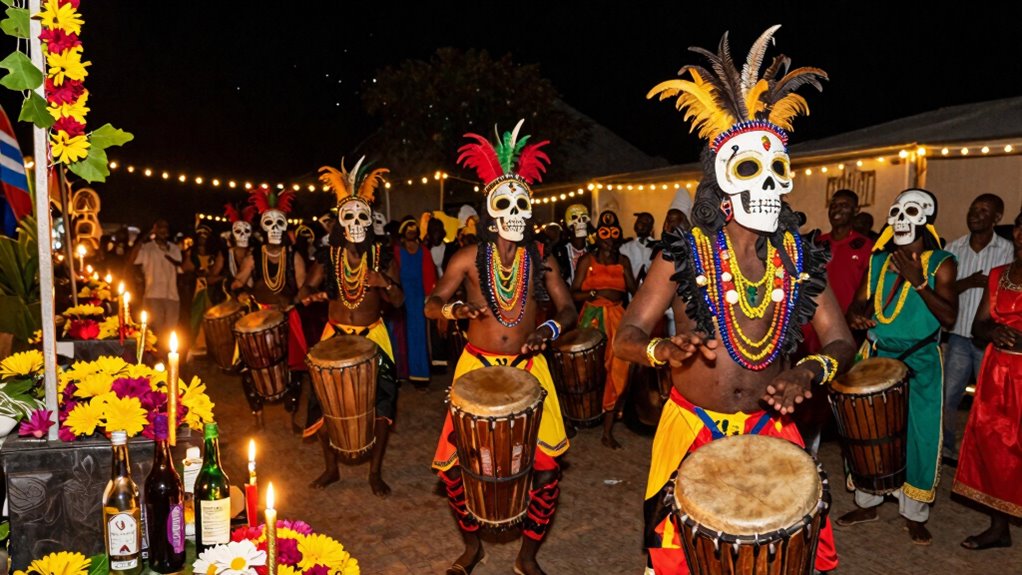
Have you ever wondered how Haitians honor their ancestors and celebrate life beyond death? During Fèt Gede, this curiosity becomes a vivid reality. The festival, held every year in July, is a powerful expression of Haitian spirituality, blending vibrant music, colorful costumes, and deep-rooted traditions. At its heart are Voodoo rituals, which serve as an essential link between the living and the spirits. These rituals aren’t just acts of worship; they carry profound cultural significance that reflects Haiti’s history, resilience, and respect for the spiritual world. When you witness Fèt Gede, you see how Haitians honor their ancestors by inviting spirits to join the festivities, ensuring their memory remains alive and revered.
Fèt Gede honors ancestors through vibrant Voodoo rituals, celebrating life beyond death with music, costumes, and spiritual reverence.
Voodoo rituals during Fèt Gede are both elaborate and meaningful. Participants often dress in skull masks, black and purple clothing, and adorn themselves with beads and charms, all symbolizing the spirits they seek to connect with. These rituals involve drumming, singing, dancing, and offerings of food and drink to the spirits. The atmosphere is electric, charged with reverence and joy, as the community comes together to celebrate those who have passed away. The ceremonies often incorporate spiritual symbolism, which helps deepen the connection between the physical and spiritual realms. These ceremonies are not only spiritual acts but also a way for Haitians to reinforce their cultural identity and collective history. They serve as a reminder that death is not an end but a continuation of life, with spirits watching over the living. Additionally, the cultural significance of Fèt Gede underscores its role in maintaining Haitian traditions and identity across generations. The festival also emphasizes the importance of ancestral reverence, which is central to Haitian spiritual practices and community cohesion. Recognizing the importance of rituals and symbolism in shaping cultural memory, Fèt Gede ensures that these vital elements are passed down and cherished. Understanding the spiritual communication involved in these rituals provides insight into how Haitians believe in maintaining a dialogue with the spirit world.
The cultural significance of Fèt Gede extends beyond its spiritual components. It’s a communal event that fosters unity, respect, and remembrance. As you watch the colorful parades and hear the rhythmic beats, you realize that this festival is a living testament to Haiti’s rich cultural tapestry. People of all ages participate, sharing stories, dances, and songs that have been passed down through generations. It’s a celebration of life, a tribute to the ancestors, and a reaffirmation of hope and resilience in the face of adversity. Fèt Gede embodies the Haitian belief that honoring those who came before us keeps their spirits alive and strengthens the bonds within the community.
In essence, Fèt Gede is more than just a festival; it’s a vivid expression of Haiti’s spiritual and cultural soul. Through Voodoo rituals, the Haitian people honor their ancestors with deep respect, transforming death into a celebration of life. It’s a powerful reminder that, in Haiti, the spirit world remains close, vibrant, and ever-present in everyday life.
Haitian skull masks for cultural festivals
As an affiliate, we earn on qualifying purchases.
As an affiliate, we earn on qualifying purchases.
Frequently Asked Questions
How Long Does Fèt Gede Celebrations Typically Last?
Fèt Gede celebrations typically last for about three days, reflecting its historical origins rooted in honoring spirits and ancestors. During this time, you’ll experience vibrant community gatherings filled with music, dance, and rituals. The festivities usually start on August 1st and continue through August 2nd and 3rd, allowing participants to deeply connect with traditions, pay respect to spirits, and celebrate Haitian culture through lively, communal events.
Are There Specific Foods Associated With Fèt Gede?
During Fèt Gede, you’ll find specific foods symbolizing respect and ancestral offerings. You might enjoy spicy griot, representing fiery spirits, or sweet rum-soaked fruits, symbolizing spiritual cleansing. These dishes honor the spirits and serve as offerings, creating a rhythm of respect and remembrance. As you partake, remember that each bite connects you to ancestors, blending flavors and spirits in a dance of tradition and reverence.
Can Tourists Participate in Fèt Gede Rituals?
Tourists can participate in fèt Gede rituals, but it’s vital to do so with respectful engagement. You should observe local customs carefully, follow guides’ instructions, and ask for permission before joining specific activities. Showing genuine respect for the spirits and traditions guarantees a meaningful experience. Remember, your participation should honor the event’s spiritual significance, so approach it with humility and a willingness to learn from those who have practiced these rituals for generations.
What Are the Traditional Colors Worn During Fèt Gede?
During Fèt Gede, you’ll see traditional colors like purple, black, and red, symbolizing Voodoo spirits and respect for ancestors. Imagine wearing these hues as armor, honoring unseen forces. Cultural attire plays a crucial role, with vibrant garments that honor Voodoo symbolism. When you wear purple and black, you’re actively participating in the spiritual dialogue, bridging worlds with each colorful, meaningful gesture.
How Do Haitians Prepare Spiritually for Fèt Gede?
You prepare spiritually for Fèt Gede by honoring ancestral reverence and making spiritual offerings. You might light candles, pray, or leave food and drinks for the spirits, showing respect and inviting their presence. Reflect on your ancestors’ lives, express gratitude, and seek their guidance. These rituals help you connect with the spirits, creating a meaningful bond during this vibrant celebration of life, death, and memory.
Conclusion
As you witness Fèt Gede’s vibrant celebrations, you realize it’s more than just a festival—it’s a powerful connection to Haiti’s spirits and history. The rhythmic drums and flickering candles hint at secrets yet to be revealed, leaving you wondering what stories lie behind each mask and prayer. Will you return next year to access even deeper mysteries? The spirit of Gede calls you, inviting you to experience the unknown—are you ready to answer?
Evergreen bestsellers Picks
bestsellers
As an affiliate, we earn on qualifying purchases.