To stop guessing about storage bins, start with a sizing guide tailored to your needs. Measure your space carefully and consider what you’ll store—larger bins for bulky items or smaller ones for organized groups. Think about durability, especially if you’ll use them outdoors or in tough areas. Matching bin sizes with your space and contents saves time and money. If you want a clear plan for choosing the right fit, keep going for helpful tips.

Get decor and gifts delivered free with Prime
- Fast, free delivery on millions of items
- Prime Video, Amazon Music and more included
- Member-only deals all year
Key Takeaways
- Measure your storage space accurately to select bins that fit and maximize available area.
- Match bin size to item volume and weight to prevent overcrowding and damage.
- Consider stackability and compatibility for organized, stable storage systems.
- Choose appropriately sized bins for easy access, labeling, and efficient categorization.
- Prioritize durable materials for long-term use and cost savings over time.
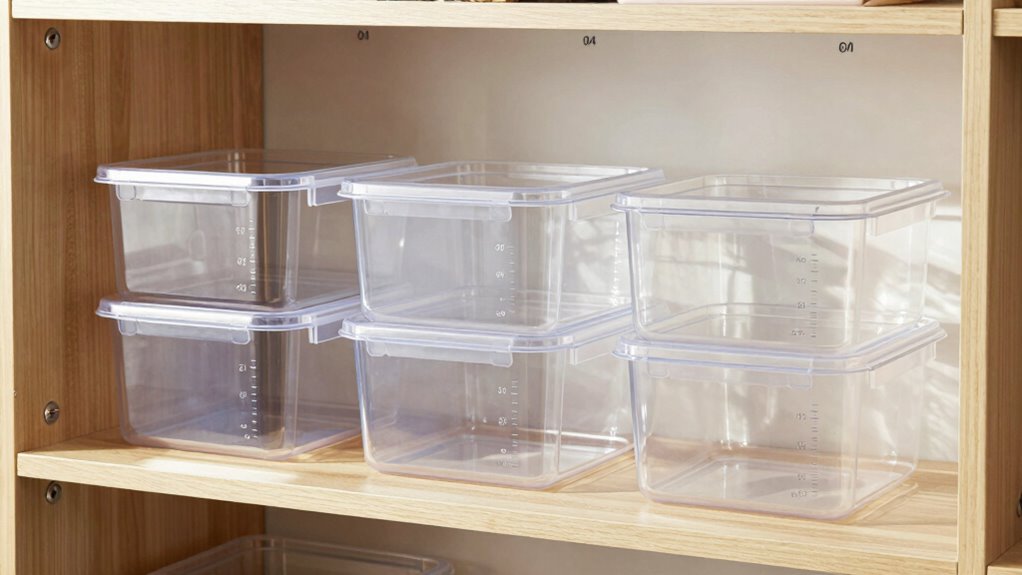
Are you unsure how to choose the right storage bins for your space? Picking the perfect bins isn’t just about size; it’s about understanding material durability and making smart cost comparisons. When you focus on material durability, you ensure your investment lasts longer, especially if you plan to store heavy or frequently used items. Plastic bins made from high-quality, thick polypropylene tend to be more durable than cheaper, lightweight options. They resist cracks, dents, and moisture, making them a reliable choice for garages, basements, or outdoor storage. On the other hand, if you’re storing lightweight items or need temporary solutions, lighter materials like thin plastic or fabric might suffice. Considering material durability helps you avoid the cost of replacing bins frequently, ultimately saving money in the long run. Additionally, it’s important to understand material properties when selecting storage bins to ensure they meet your specific storage needs.
Speaking of costs, a thorough cost comparison is crucial before you buy. Cheaper storage bins might seem appealing initially, but they often don’t hold up over time, leading to more frequent replacements and higher expenses. Higher-quality bins may cost more upfront, but their durability reduces the need for constant replacement. When comparing costs, look at the price per use, factoring in how often you’ll access or move the bins. Also, consider additional features like lids, handles, or stackability, which can influence the overall value. Sometimes investing a little more upfront pays off through better longevity and ease of use.
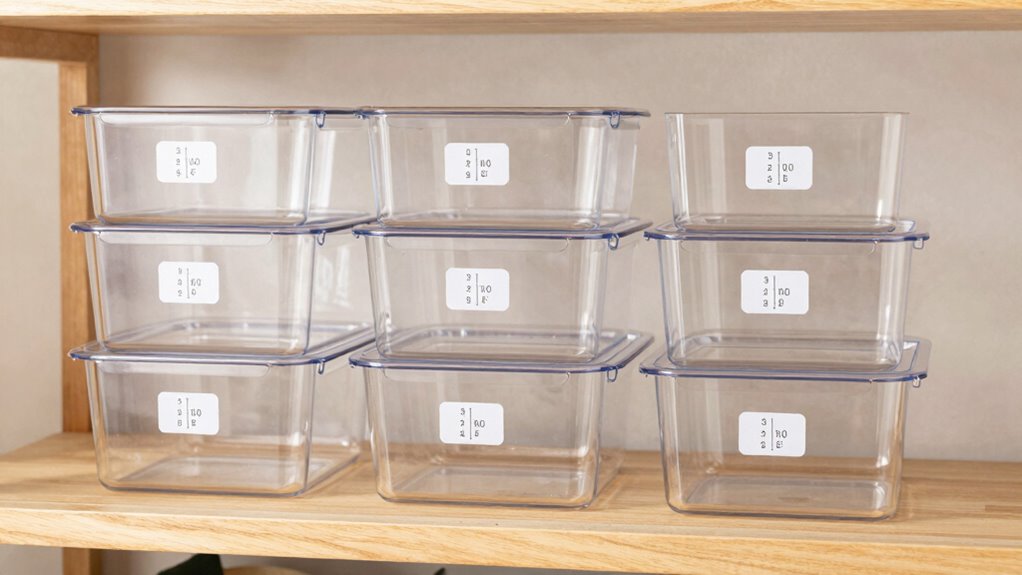
Beyond material and cost, you should also think about the size of the bins in relation to your space and needs. Bigger isn’t always better—oversized bins take up unnecessary space and can make organization harder. Smaller bins are perfect for grouping similar items and making them easy to find, especially if you plan to label or categorize. Measure your storage area carefully, and think about how you’ll access items regularly. If you plan to stack bins, ensure they’re designed for stability and that their sizes complement each other. This way, you create a system that’s both functional and space-efficient.
Ultimately, choosing the right storage bins comes down to understanding your specific storage needs, the durability of the materials, and making a smart cost comparison. By considering these factors, you avoid wasting money on bins that don’t last or don’t fit your space. Instead, you’ll build an organized, durable storage solution that saves you time, effort, and money over the long term.
large plastic storage bins with lids
As an affiliate, we earn on qualifying purchases.
As an affiliate, we earn on qualifying purchases.
Frequently Asked Questions
How Do I Measure Irregularly Shaped Items for Storage?
To measure irregularly shaped items for storage, you should measure the longest, widest, and tallest points to get accurate dimensions. Use a flexible measuring tape to follow curves and contours. For better fit, consider custom storage solutions that accommodate unique shapes. This approach guarantees your items are stored securely, and you avoid wasted space or damage, making your storage more efficient and tailored to your specific needs.
What Materials Are Best for Heavy-Duty Storage Bins?
You might think plastic is enough, but heavy-duty storage bins demand more. Steel and high-density polyethylene (HDPE) are the best materials because of their superior material durability and high weight capacity. Steel offers exceptional strength, perfect for very heavy items, while HDPE provides a lightweight yet sturdy option. Both resist cracking, warping, and damage, ensuring your stored belongings stay safe and secure over time.
How Often Should I Reassess My Storage Needs?
You should reassess your storage needs at least every six months or whenever your space utilization changes substantially. Regular evaluations help optimize storage and improve space utilization, preventing clutter and making retrieval easier. By staying proactive, you guarantee your storage solutions remain efficient and adaptable. This way, you can identify when to upgrade or reorganize bins, keeping your space functional and organized without guesswork.
Can I Use the Same Bin Size for Different Items?
Don’t put all your eggs in one basket, they say, and that’s true with storage containers too. You can’t always use the same bin dimensions for different items because each item’s size and fragility vary. A storage container that’s perfect for books might be too small for bulky blankets. Always match your bin dimensions to the specific items, ensuring they’re well-protected and easy to access.
Are There Size Guides for Fragile or Delicate Items?
Yes, there are size guides for fragile or delicate items. When packing these, use fragile packaging that provides extra padding and support. Choose storage bins that are slightly larger than the items to allow for protective materials, ensuring delicate handling. These guides help you select the right size, preventing damage during transit or storage. Proper sizing and packaging create a safer environment for your fragile belongings, reducing the risk of breakage.
Conclusion
Think of choosing storage bins like selecting pieces for a grand puzzle. When each piece fits perfectly—not too tight, not too loose—the whole picture becomes clearer and easier to appreciate. By following this sizing guide, you’re crafting a well-ordered mosaic, where every item finds its rightful place. So, don’t leave your storage to chance. With the right fit, your space transforms into a masterpiece of organization, inviting calm and clarity into your daily life.
Halloween Picks
halloween
As an affiliate, we earn on qualifying purchases.