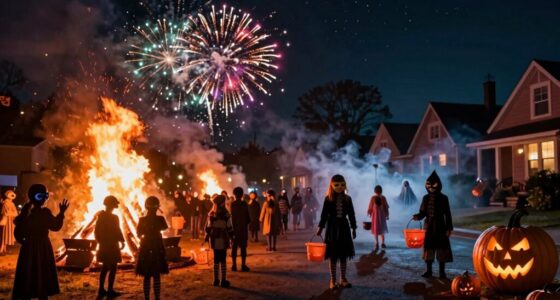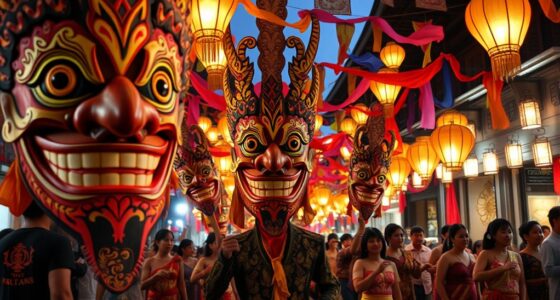
While Chuseok and Halloween are different celebrations, both focus on honoring ancestors and connecting with the spiritual domain. During Chuseok, families perform ancestral rites, offer food, and pray for blessings, emphasizing family bonds. Halloween, rooted in Celtic traditions, involved costumes and offerings to ward off spirits. Despite their differences, both festivals help us remember those who came before and maintain cultural traditions—if you stay tuned, you’ll discover more interesting ways these celebrations honor the past.

Get decor and gifts delivered free with Prime
- Fast, free delivery on millions of items
- Prime Video, Amazon Music and more included
- Member-only deals all year
Key Takeaways
- Both Chuseok and Halloween honor ancestors and spirits, serving as spiritual bridges between the living and the dead.
- Chuseok’s ancestral rites (*jesa*) involve offerings and prayers, similar to Halloween’s historical rituals of leaving offerings.
- Halloween costumes historically protected against spirits, while Chuseok emphasizes maintaining family bonds and honoring lineage.
- Both celebrations reinforce cultural identity by transmitting traditions across generations.
- Their shared themes highlight humanity’s desire to connect with and protect spirits or ancestors.
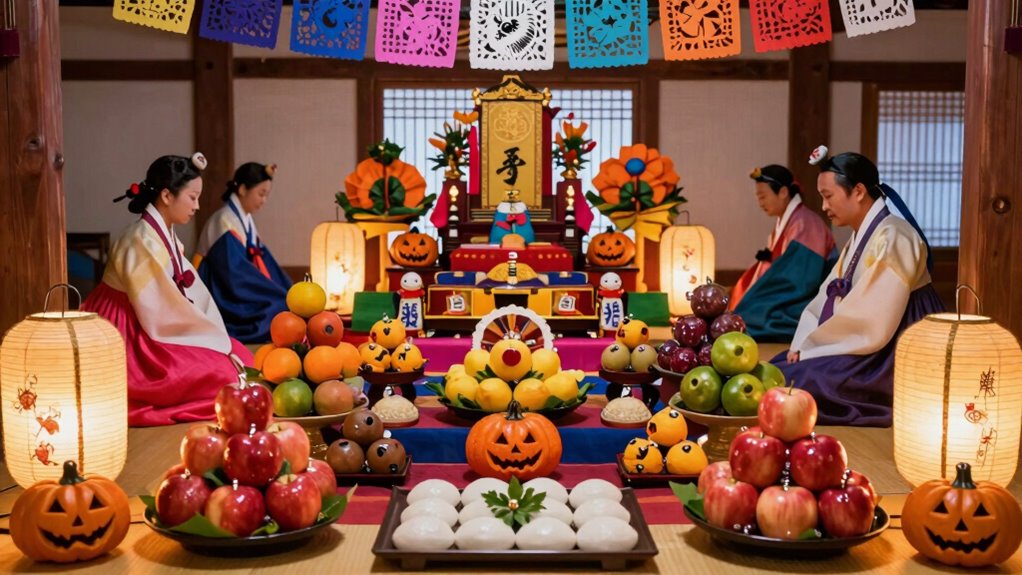
Have you ever wondered how two different cultural celebrations—Chuseok in Korea and Halloween in the West—share similarities despite their unique origins? At first glance, they seem worlds apart: one honors harvest and ancestors, the other celebrates spooky spirits and costumes. But dig a little deeper, and you’ll see common threads woven through their traditions, especially in how they connect the living with those who came before.
During Chuseok, Koreans perform ancestral rites called Korean ancestral rites, or *jesa*. These rituals revolve around paying respect to ancestors by offering food, bowing, and praying for blessings. It’s a deeply personal, family-centered observance rooted in honoring lineage and maintaining family bonds. Similarly, Halloween’s roots are tied to ancient Celtic practices like Samhain, where people believed the boundary between the living and spirits was thin. They would leave offerings and light bonfires to appease wandering spirits, fostering a connection across generations of the living and the dead.
Chuseok’s ancestral rites honor lineage through offerings, prayers, and family bonds, echoing ancient Celtic practices of connecting with spirits.
While Chuseok’s focus is on family and ancestors, Halloween’s history of costumes also reflects its desire to ward off spirits or disguise oneself from supernatural forces. The Halloween costume history reveals how people once dressed as ghouls, witches, or demons to scare away evil spirits during Samhain. Over time, these costumes evolved into playful disguises used for fun and entertainment, but the underlying idea of transformation and protection remains. Both celebrations, in their own ways, serve as a bridge between worlds—whether through solemn ancestor rites or playful costumes meant to ward off spirits.
You might notice that Halloween costumes today are often colorful and exaggerated, yet their origins trace back to ancient fears and rituals. In Korea, the act of paying homage during Chuseok is similarly rooted in tradition but expressed through respectful offerings and rituals. Interestingly, both celebrations demonstrate how cultural practices serve to reinforce social bonds and shared beliefs across generations. These customs also reflect a universal human desire to preserve memory and honor the past, regardless of the cultural context. The rituals and customs associated with these festivals also help communities strengthen their cultural identity and transmit values to future generations. Both practices highlight a desire to honor those who came before you—be it through reverence or disguise. These customs remind us that, across cultures, people seek connection, understanding, and protection from the unknown.
As an affiliate, we earn on qualifying purchases.
Frequently Asked Questions
How Do Families Prepare for Ancestral Rites During Chuseok?
During Chuseok, you prepare for ancestral rites by setting up an ancestral altar with fresh flowers, candles, and incense. You arrange memorial offerings like traditional foods, fruits, and rice wine on the altar to honor your ancestors. Families clean the altar and make sure everything is respectful and neat, creating a serene space for prayer and remembrance. This thoughtful preparation helps you connect with your ancestors and show gratitude.
Are There Specific Foods Unique to Chuseok Celebrations?
During Chuseok, you’ll enjoy traditional rice cakes called songpyeon, which are small, half-moon-shaped treats filled with sweet fillings. You’ll also feast on harvest festival foods like jeon (pancakes), jeotgal (fermented seafood), and freshly harvested fruits and vegetables. These foods symbolize gratitude for the harvest and honor ancestors. Sharing these special dishes with family reinforces tradition and celebrates Korea’s rich cultural heritage.
How Do Children Participate in Chuseok Traditions?
Children are the heartbeats of Chuseok, actively engaging in traditional games like yutnori and jegi chagi, which keep cultural significance alive. They participate by helping prepare food, offering flowers, and paying respects at ancestral rites. Their laughter echoes through festivities, transforming the celebration into a vibrant tapestry of history and joy. This involvement nurtures a deep connection to their heritage, making Chuseok a shared experience that bridges generations.
What Are Common Misunderstandings About Chuseok?
You might think Chuseok is just like Halloween, but that’s a common festival misconception. Cultural misconceptions often lead people to overlook its deep ancestor veneration and traditional rituals. Many assume it’s solely about feasting or gift exchanges, missing its spiritual significance. It’s more about honoring ancestors, paying respects at graves, and celebrating harvests. Recognizing these differences helps you appreciate Chuseok’s rich history beyond surface-level festivities.
How Has Modern Technology Influenced Ancestral Memorial Practices?
Modern technology has transformed ancestral memorial practices by introducing digital memorials and online rituals. You can now visit virtual shrines or participate in ancestor remembrance ceremonies from your home, making these traditions more accessible. Social media also allows you to share memories and honor loved ones publicly. This shift helps keep traditions alive while adapting to contemporary life, ensuring that respect for ancestors continues in a digital age.
Conclusion
While Chuseok and Halloween both celebrate cultural traditions, they each hold unique significance—one honoring ancestors and harvest, the other embracing spooky festivities. As you reflect on these customs, do you notice how traditions shape our understanding of history and community? Embracing these diverse practices can deepen your appreciation for different cultures. After all, isn’t it fascinating how rituals, old and new, connect us to our roots and each other?
Halloween Picks
halloween
As an affiliate, we earn on qualifying purchases.