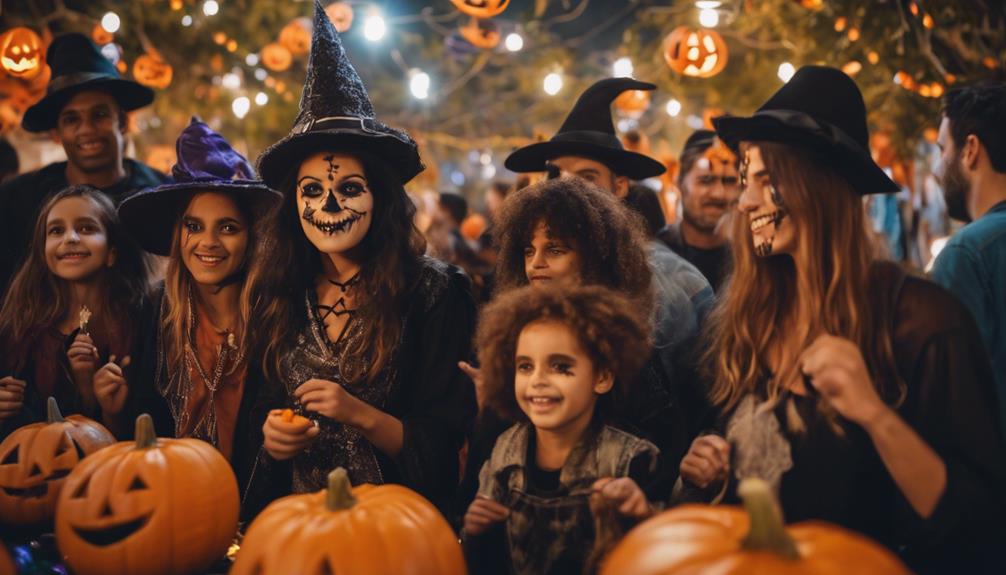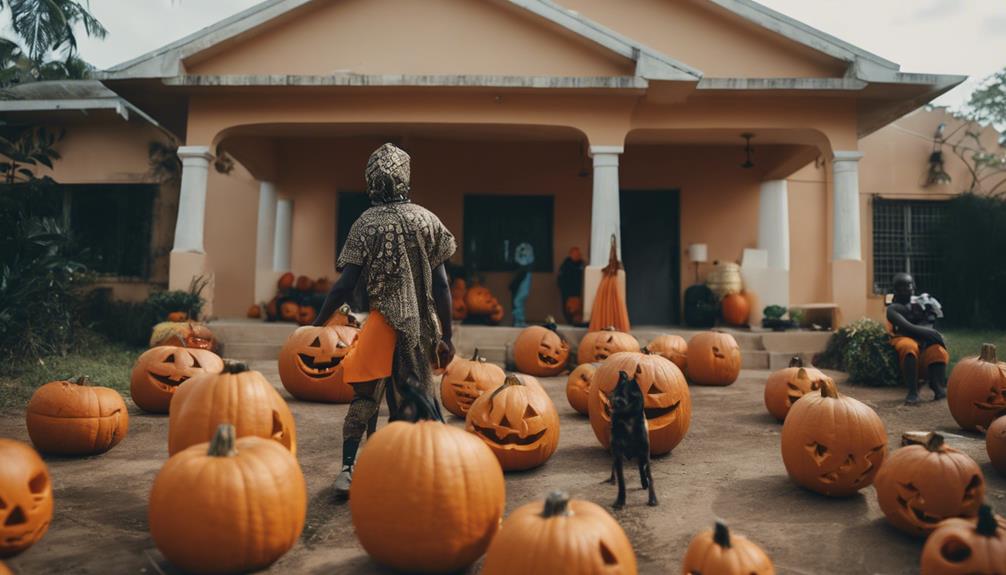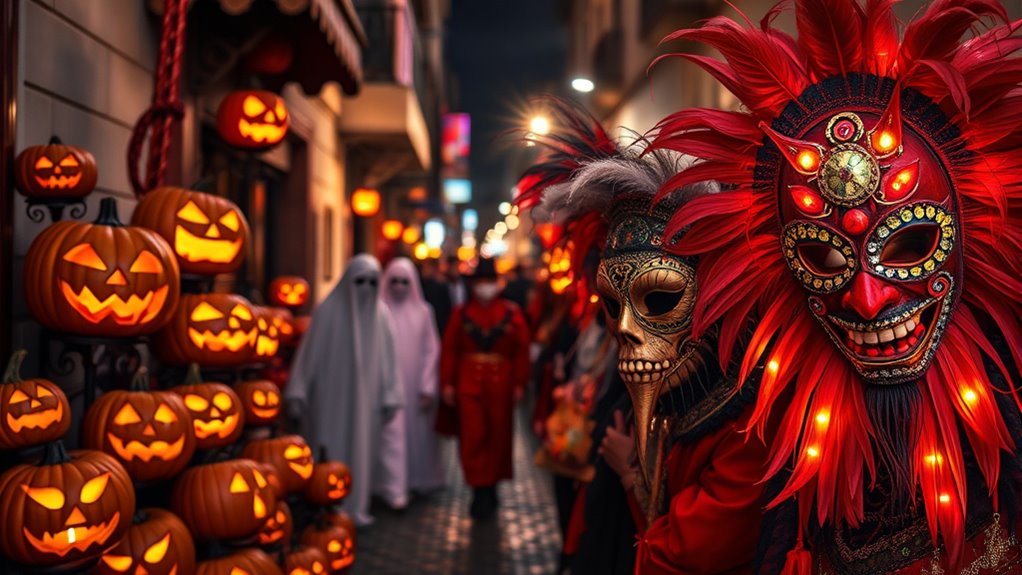

In Greece, Halloween is a newer trend influenced by Western customs, focusing on costumes inspired by movies and spooky themes. In contrast, Apokries is a traditional carnival rooted in ancient Greek culture, featuring handcrafted masks, vibrant costumes, and humorous satire. While Halloween emphasizes individual expression and entertainment, Apokries celebrates Greek heritage, mythology, and community fun. Exploring both reveals their unique connections and cultural meanings—stay with us to uncover more about these fascinating celebrations.
Key Takeaways
- Halloween in Greece is a recent, Western-influenced celebration focusing on spooky costumes and entertainment.
- Apokries is an ancient Greek carnival emphasizing elaborate masks, costumes, and cultural storytelling.
- Halloween costumes are often influenced by pop culture and are commercially produced, while Apokries costumes are handcrafted and symbolic.
- Halloween centers on fun and horror themes, whereas Apokries celebrates Greek mythology, humor, and community traditions.
- Halloween’s popularity in Greece has grown through globalization, contrasting with Apokries’ deep historical and cultural roots.
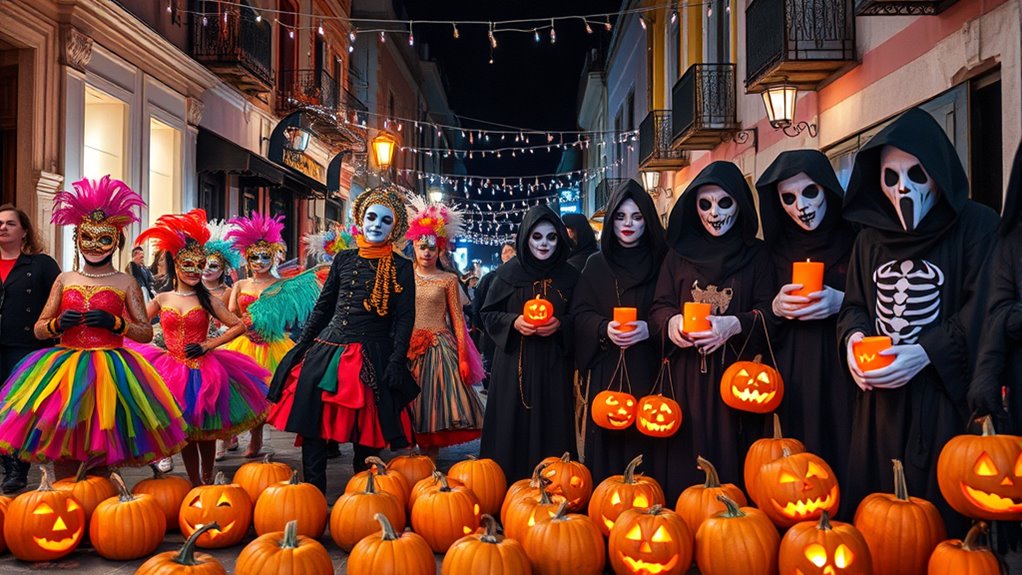
Greece’s vibrant cultural landscape offers a fascinating contrast between Halloween and the traditional Apokries Carnival, which has been celebrated for centuries. As you explore these festivities, you’ll notice that their origins and the way people dress up highlight the deep-rooted history of Greek celebrations versus the more modern, commercialized Halloween. When it comes to costume choices, Halloween tends to be more about personal preference, often inspired by movies, pop culture, or spooky themes. You might see people dressed as ghosts, vampires, or popular characters, emphasizing individual expression. Its celebration origins trace back to Celtic and Western traditions, emphasizing themes of the supernatural and the harvest season, which have been adapted worldwide. Halloween is relatively new to Greece but has gained popularity through globalization, social media, and exposure to Western customs.
In contrast, Apokries Carnival’s costume choices are rooted in centuries of tradition, reflecting Greek history, mythology, and local customs. During Apokries, you’ll see elaborate masks, vibrant costumes, and historical outfits that tell stories from Greek folklore and classical mythology. The celebration origins of Apokries date back to ancient Greece, where it was linked to Dionysian festivals celebrating wine, theater, and fertility. Over time, it evolved into a lively pre-Lenten carnival, emphasizing humor, satire, and community participation. The costumes during Apokries are often handcrafted, incorporating symbolic elements meant to ward off evil spirits or honor cultural heroes. You might find yourself marveling at the creativity and craftsmanship involved, as these costumes are not only festive but also carry cultural significance. Additionally, the cultural heritage of Greece plays a vital role in shaping the themes and styles of Apokries costumes, making each outfit a storytelling piece.
While Halloween’s costume choices tend to be more about individual creativity and pop culture references, Apokries costumes are deeply tied to tradition and storytelling. The origins of Halloween are rooted in Western harvest festivals and supernatural beliefs, whereas Apokries stems from ancient Greek religious rites and seasonal celebrations. Halloween tends to focus on spooky, scary, or funny themes, often emphasizing fun and entertainment, while Apokries is about embracing humor, satire, and cultural identity. As you participate in either celebration, you’ll see that Halloween’s influence is more commercialized and global, while Apokries remains a proud reflection of Greek heritage and history. Both festivities offer unique ways to dress up and celebrate, but understanding their origins gives you a deeper appreciation for the rich cultural differences that make Greece’s traditions so enthralling.
Frequently Asked Questions
How Do Children Participate Differently in Halloween and Apokries?
You notice that children participate differently in Halloween and Apokries. During Halloween, kids love choosing spooky or fun costumes and go door-to-door for trick-or-treating, collecting candies from neighbors. In contrast, during Apokries, children wear colorful, traditional costumes and join lively parades or parties, often playing games and dancing instead of trick-or-treating. Both celebrations let children enjoy dressing up, but the customs and atmosphere vary greatly.
Are There Regional Variations of Apokries Across Greece?
You’ll find regional variations of Apokries across Greece, reflecting its rich festival diversity. In some areas, like Western Macedonia, the celebrations are more lively, with traditional dances and costumes rooted in local customs. Meanwhile, in places like Crete, the festivities might include unique local foods and customs. These regional customs highlight Greece’s diverse cultural heritage, making Apokries a vibrant, varied celebration that changes from one region to another.
What Are the Origins of Halloween Celebrations in Greece?
You might wonder about Halloween’s origins in Greece. Its celebrations stem from ancient origins, blending cultural influences from Celtic and Western traditions, which have evolved over time. While Halloween isn’t traditional in Greece, you can see its impact through modern costumes and festivities influenced by global media. Today, Greeks embrace Halloween for fun, but its roots are deeply linked to ancient customs that celebrate spirits and the changing seasons.
How Have Modern Influences Changed Traditional Apokries Festivities?
Imagine a vibrant tapestry, each thread representing tradition and change. Modern influences like media have woven new patterns into Apokries festivities, blending old customs with contemporary culture. You might notice costume trends inspired by movies or social media challenges, showcasing cultural adaptation. These influences enrich the celebration, but also risk diluting its original essence. As a participant, you experience how tradition evolves, shaped by the globalized world around you.
Are There Specific Foods Associated With Each Celebration?
You’ll notice that traditional party foods and regional delicacies define each celebration. During Apokries, you enjoy hearty dishes like souvlaki, baklava, and loukoumades, reflecting local flavors. Halloween, on the other hand, features themed treats like candies and pumpkin-shaped sweets. These foods highlight the cultural significance of each event, with Apokries emphasizing regional delicacies and Halloween focusing on spooky, fun snacks that create a festive atmosphere.
Conclusion
So, whether you prefer the playful, pumpkin-filled parties of Halloween or the lively, long-standing lore of Apokries, Greece offers a vibrant variety of festivities. Both bring boldness, bravery, and a burst of cultural brilliance, blending modern madness with meaningful traditions. Embrace the exciting essence of each event, experiencing Greece’s grand gestures of celebration. Immerse yourself in the dynamic distinction, and don’t miss the magic, memories, and merriment that make Greece’s festivities truly unforgettable.