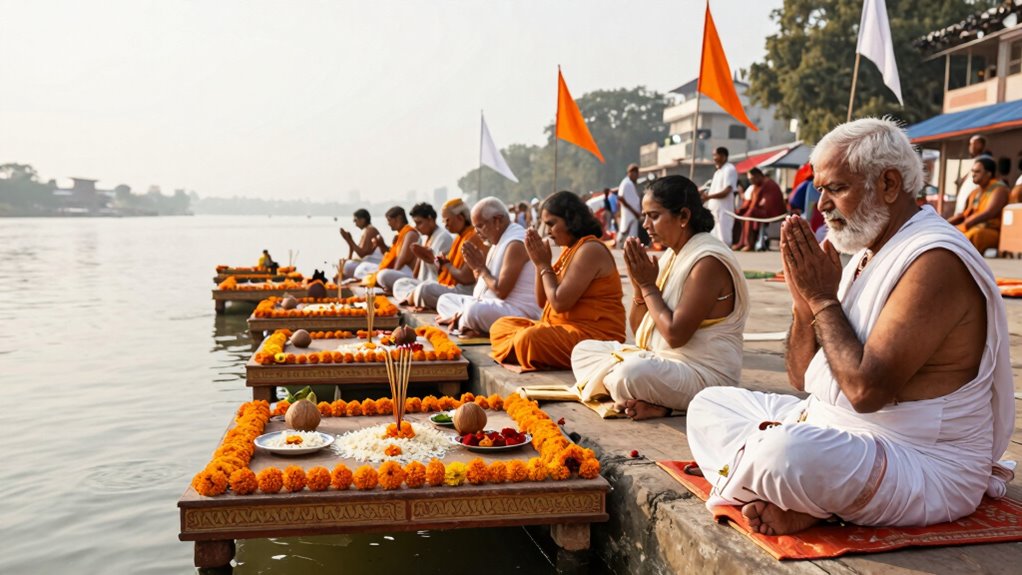

Pitru Paksha is a sacred time in India when you perform rituals to honor your ancestors. During this period, you offer water, sesame seeds, and special dishes at holy sites or your home to seek their blessings and keep their spirits at peace. It’s a time to show respect, reflect, and strengthen family bonds. By observing these traditions, you connect with your heritage and tradition. If you want to understand more, keep exploring this meaningful journey.
Key Takeaways
- Pitru Paksha is a Hindu tradition dedicated to honoring ancestors through prayers and offerings.
- It occurs during a specific lunar fortnight, considered spiritually significant for ancestor rituals.
- Rituals include offerings like water, sesame seeds, and special dishes at home or holy sites.
- The period fosters family bonds, gratitude, humility, and spiritual purification.
- Celebrating Pitru Paksha preserves cultural heritage and maintains connection with ancestors across generations.

Have you ever wondered why families across India observe specific rituals during certain times of the year? It’s because these periods, like Pitru Paksha, hold deep cultural importance rooted in tradition and respect for ancestors. During this time, families perform ritual practices meant to honor their forebears, ensuring their spirits are at peace. These rituals aren’t just acts of remembrance; they connect you to your roots and reinforce the bond between the living and the dead. The timing of Pitru Paksha, which usually falls in the Hindu lunar calendar’s fortnight, is carefully observed with specific customs meant to invoke blessings and express gratitude.
Pitru Paksha honors ancestors, strengthening bonds between the living and the departed through sacred rituals and traditions.
The cultural importance of Pitru Paksha is immense. It’s believed that during this period, the spirits of the departed return to the earthly domain. Your family’s ritual practices during these days are designed to provide spiritual nourishment to these ancestors. These acts of worship and offerings symbolize respect, love, and the acknowledgment of your ancestors’ role in shaping your life. It’s a time to reflect on your lineage, honor family traditions, and seek their blessings for prosperity and well-being. Many families prepare special dishes, perform Tarpan (offering of water and sesame seeds), and visit holy sites or family graves to carry out these rites. These ritual practices are often passed down through generations, forming an essential part of your cultural identity. Recognizing the timing of Pitru Paksha in the lunar calendar helps ensure these rites are performed at the most auspicious moments, strengthening their spiritual significance. Understanding the cultural significance of ancestor worship can help deepen your appreciation of these traditions and their role in maintaining familial bonds.
You might notice that during Pitru Paksha, people abstain from certain festivities and focus instead on prayer and charitable acts. This period emphasizes humility, self-reflection, and the importance of paying homage to your ancestors. The rituals are simple yet profound, often performed at home or in temples, with offerings made to ancestors’ images or memorials. These customs serve to purify the soul, foster familial bonds, and remind you of your duty to honor those who came before you. Engaging in these rituals can also serve as a spiritual cleansing that aligns with the reflective nature of this period. Participating actively in these rituals helps you stay connected to your heritage and uphold the values that define your community. Understanding cultural practices related to ancestor worship can deepen your appreciation of these traditions and their significance in contemporary society.
In essence, Pitru Paksha isn’t just a set of rituals; it’s a meaningful expression of cultural significance that nurtures spiritual and familial ties. It’s a reminder that honoring your ancestors is a timeless practice, shaping your identity and guiding your life’s path. By engaging in these ritual practices, you continue a sacred tradition, keeping alive the memory and legacy of your forebears for generations to come.

Namaste Beads Handicrafts Handmade Copper Mandala Offering Set – Hand Carved Silver & Gold Plated Buddhist Ritual Mandala Set for Meditation, Shrine & Ceremonies (Small/Medium/Big)
- Authentic Hand-Carved Mandala: Handmade Tibetan mandala with silver & gold plating
- Sacred Buddhist Ritual Tool: Used in offerings to accumulate merit and wisdom
- Premium Silver & Gold Plated Copper: Decorative copper with elegant silver and gold finish
As an affiliate, we earn on qualifying purchases.
As an affiliate, we earn on qualifying purchases.
Frequently Asked Questions
How Long Does Pitru Paksha Last Each Year?
You’ll find that Pitru Paksha lasts for 16 days each year, during which you perform ancestor offerings and follow specific ritual timings. This period is dedicated to honoring your ancestors, and it’s essential to stick to the traditional schedule for rituals. The 16-day span allows you to pay homage properly, ensuring your offerings are timely and meaningful. Make sure to observe the precise ritual timings for each day to honor your ancestors correctly.
Can Non-Hindus Participate in Pitru Paksha Rituals?
Yes, non-Hindus can participate in Pitru Paksha rituals, especially when there’s a spirit of interfaith participation and ritual inclusivity. If you’re invited or feel a personal connection, you can join respectfully, understanding the significance behind the rituals. It’s important to approach with humility and awareness of the traditions, honoring the cultural context. Your participation can foster unity and respect across different faiths during this meaningful season.
Are There Specific Foods Recommended During Pitru Paksha?
During Pitru Paksha, you’re recommended to offer simple, vegetarian food offerings like rice, sesame seeds, and ghee, emphasizing purity and respect. Imagine preparing a humble offering of rice and coconut, symbolizing devotion and gratitude for ancestors. These foods hold ritual significance, representing sustenance and the cycle of life. Sticking to these traditional items helps honor your ancestors meaningfully, fostering spiritual connection and reverence during this sacred period.
Is Pitru Paksha Observed Differently Across Indian Regions?
Yes, Pitru Paksha is observed differently across Indian regions due to regional customs and ritual variations. In some areas, you might find specific offerings or prayers unique to local traditions, while others emphasize certain rituals or foods. These differences reflect local culture and beliefs, making each region’s observance unique. You should respect these variations, as they enrich the overall significance of Pitru Paksha and help honor ancestors in diverse ways.
What Are the Spiritual Benefits of Performing Pitru Paksha Rituals?
Performing Pitru Paksha rituals is like planting seeds of ancestor reverence, nurturing your spiritual garden. You gain spiritual renewal by honoring your ancestors, which helps release their spirits and brings peace to your heart. This act deepens your connection with past generations, fostering a sense of gratitude and harmony. As a result, you feel more spiritually aligned, uplifted, and refreshed, strengthening your inner peace and divine bond.
Conclusion
So, as you go about your busy life, remember Pitru Paksha is here to remind you to honor your ancestors—because, after all, who wouldn’t want a little divine brownie points? Ironically, while you might be busy ignoring your roots, these rituals give you a sweet excuse to pause and pay respects. So, embrace the season, and maybe, just maybe, your ancestors will keep sending good vibes… or at least a gentle nudge.