
To prevent overloading one outlet, spread your lighting devices across multiple circuits or outlets, and avoid plugging too many high-wattage fixtures into a single socket. Use extension cords and surge protectors wisely, making sure they are rated for your devices’ power needs. Always check your circuit breakers and look for signs of overload like flickering lights. Continuing with this knowledge will help you better understand safe power distribution practices for your home.

Get decor and gifts delivered free — and shop member deals
- Fast, free delivery on millions of items
- Access to Prime Big Deal Days deals on October 6–7
- Prime Video, Amazon Music and more included
Key Takeaways
- Distribute lighting loads across multiple outlets and circuits to prevent overloading a single outlet.
- Use dedicated circuits for high-wattage lighting fixtures to avoid exceeding outlet capacity.
- Regularly check circuit breaker ratings and ensure they match the load demands of your lighting setup.
- Avoid daisy-chaining multiple extension cords or surge protectors from one outlet.
- Consult a licensed electrician to evaluate your wiring system and upgrade if necessary.
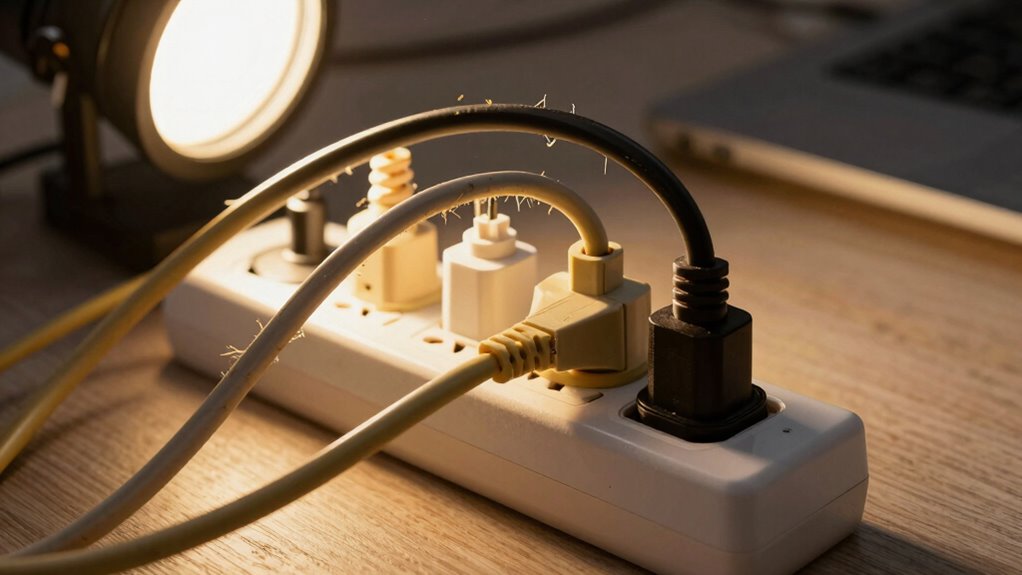
Ever wondered how your lighting systems receive reliable power? The answer lies in proper power distribution, which guarantees your lights work consistently without risking electrical hazards. One common mistake people make is overloading a single outlet, which can lead to circuit overloads, tripped breakers, or even fires. To prevent this, understanding circuit safety and following electrical codes are essential steps. Electrical codes are established standards designed to keep your home and electrical systems safe, and they specify how circuits should be installed, rated, and protected against overloads. Ignoring these regulations can create dangerous situations, especially if you frequently plug multiple devices into one outlet.
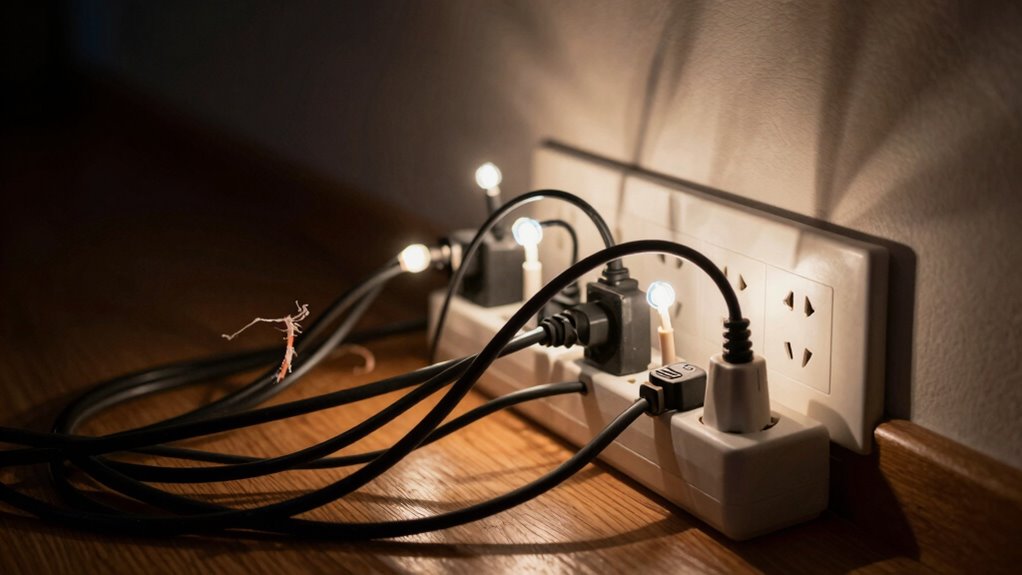
When you overload an outlet, you’re pushing the circuit beyond its designed capacity. This can cause the wiring to heat up, increasing the risk of damage or fire. To avoid this, never connect multiple high-wattage devices—like lamps, heaters, or large appliances—into a single outlet or power strip. Instead, distribute the load across multiple circuits or outlets. Proper power distribution also involves understanding your home’s wiring capacity and circuit capacity, which is crucial for ensuring safety. Modern electrical systems often include circuit breakers that trip when they detect an overload, acting as a safeguard to protect your wiring and prevent potential hazards. Regularly checking your circuit breakers and ensuring they are functioning properly is a good habit. Additionally, knowing how to identify signs of an overloaded circuit can help you prevent emergencies before they escalate.
Proper power distribution also involves understanding your home’s wiring capacity. If you’re adding new lighting fixtures or outlets, consider whether the existing circuits can handle the additional load. Remember that electrical codes are established standards that specify how circuits should be installed and rated, ensuring long-term safety and compliance. When in doubt, consult a licensed electrician who can evaluate your system and make necessary upgrades to meet electrical codes. They can install dedicated circuits for high-demand devices or improve existing wiring, ensuring everything operates safely and efficiently. Remember, just because an outlet has multiple sockets doesn’t mean you should use all of them at once. Overloading circuits can be subtle—sometimes, a flickering light or a tripped breaker is your only warning sign.
Incorporating surge protectors and using appropriately rated extension cords can also help manage power distribution safely. Never bypass safety features or use damaged cords, as these shortcuts bypass circuit safety measures designed to protect you. Also, recognizing overloaded circuits early can prevent serious electrical issues. By respecting electrical codes and understanding how to distribute power properly among your lighting fixtures, you minimize risks and ensure your lighting system remains reliable. Proper power management isn’t just about convenience; it’s about safeguarding your home and loved ones from preventable electrical hazards.
power strip with surge protector
As an affiliate, we earn on qualifying purchases.
As an affiliate, we earn on qualifying purchases.
Frequently Asked Questions
Can Extension Cords Help Distribute Power Safely?
Extension cords can help distribute power, but only if you follow safety guidelines. You should avoid overloading them, as this can cause overheating or fires. Using a high-quality power strip with overload protection is safer than multiple extension cords connected together. Always check extension cords for damage, keep them away from water, and don’t plug too many devices into one cord. Proper extension cord safety and careful power strip usage protect your home and lighting setup.
What Are the Signs of an Overloaded Outlet?
Think of your outlet as a highway’s capacity. When overloaded, it’s like a traffic jam—flickering lights, burning smells, or warm outlets signal trouble. You might notice constant breaker trips or outlets that feel hot to touch. These signs indicate your electrical load exceeds the circuit capacity, risking damage or fire. Always check your circuit’s limits before plugging in multiple devices to prevent overloads and keep your home safe.
How Many Devices Can Safely Connect to One Outlet?
You should connect no more than two to three devices to a standard outlet, considering its circuit capacity and power management. Overloading can cause overheating and tripped breakers. To stay safe, check the wattage of each device and make sure the total doesn’t exceed the outlet’s limit, typically 15 or 20 amps. Using power strips with built-in overload protection can help manage multiple devices safely without risking overload.
Are Surge Protectors Effective for Lighting Circuits?
Surge protectors can be effective for lighting circuits, but you need to take into account their limitations and compatibility. Not all surge protectors are designed for high-power lighting loads, so check their surge suppression capacity and make sure they’re compatible with your lighting circuit’s wattage. Keep in mind surge protector limitations—overloading them can reduce effectiveness or cause damage. Use a surge protector rated for your circuit’s power to best protect your lighting.
What Safety Precautions Should I Take When Adding Outlets?
When adding outlets, you should guarantee your electrical wiring is up to code and consult a professional if unsure. Always turn off the circuit breaker before working, use proper tools, and avoid overloading circuits. Check that your circuit breakers can handle the added outlets without tripping. Proper grounding and using quality materials are essential for safety. Regularly inspect your wiring for wear or damage to prevent electrical hazards.
Conclusion
To keep your lighting setup safe and effective, distribute power evenly, avoid overloading outlets, and use multiple circuits when needed. Balance your connections, prevent overheating, and guarantee consistent performance. Embrace organized wiring, prioritize safety, and maintain a clear plan for your power needs. By doing so, you create a reliable environment where your lights shine brightly without risk, turning your space into a well-lit, worry-free haven.
Halloween Picks
halloween
As an affiliate, we earn on qualifying purchases.