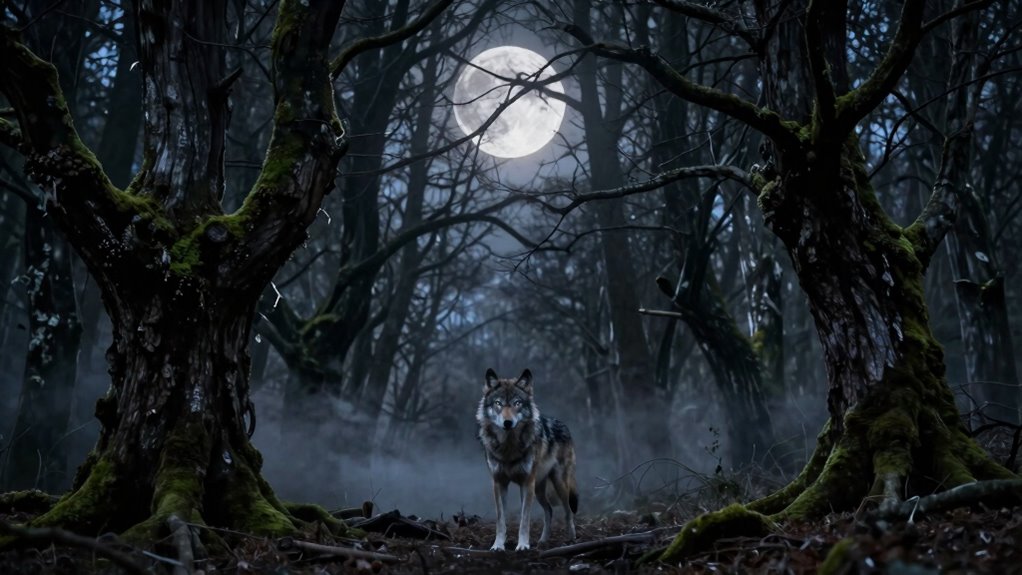
The belief that a full moon causes madness and unpredictable behavior is a longstanding myth rooted in folklore and cultural stories, not scientific fact. While the moon’s brightness can disrupt sleep and influence mood temporarily, there’s no solid evidence linking it to increased violence or mental health issues. Many behaviors attributed to the full moon are more about perception and bias than real effects. To uncover the truth behind these tales, keep exploring the history and science behind lunar legends.
Key Takeaways
- Folklore links full moons to madness, transformation, and supernatural activity, but these stories are rooted in cultural narratives rather than facts.
- The perceived increase in strange behaviors during a full moon often results from psychological effects like sleep disruption and confirmation bias.
- Scientific studies show minimal or no direct influence of the full moon on human behavior, attributing changes mainly to physical and psychological factors.
- Cultural beliefs and stories about “moon madness” have persisted because they reflect human fears and fascination with the unknown.
- Recognizing the psychological and physical effects of moonlight helps dispel myths, revealing that full moon effects are largely perceptual and cultural.
Have you ever wondered why full moons are linked to strange behaviors and supernatural tales? It’s a question that has fascinated people for centuries. Many believe that the full moon’s glow influences human behavior, but the truth is more complex. Psychological effects play a significant role in how we perceive these changes. When the full moon appears, it often triggers heightened emotions and behaviors, not necessarily because of any mystical power, but because of our own minds. The moon’s brightness can disrupt sleep patterns, leading to increased irritability or restlessness. Sleep deprivation alone can cause mood swings, reduced cognitive function, and even hallucinations in some cases. So, what we experience during a full moon might be a combination of physical effects and our expectations. Additionally, moonlight’s impact on sleep can intensify these psychological responses, further amplifying perceived behavioral changes.
Cultural beliefs deepen this connection. Throughout history, many societies have associated the full moon with madness, transformation, and supernatural activity. These stories are often reinforced by folklore that portrays the full moon as a time when people lose control, turn into wolves, or become prone to violence. In fact, these myths have persisted because they fit into larger narratives about human nature and the unknown. Over centuries, cultures have passed down tales that link lunar phases to mental health and supernatural phenomena, shaping collective perceptions. When you hear stories about “werewolves” or “lunacy,” they’re rooted in these long-standing cultural narratives about the moon’s influence.
Throughout history, cultures have linked lunar phases to madness, transformation, and supernatural tales.
Your cultural background may also influence how you interpret behaviors during a full moon. If you grew up hearing that the full moon causes chaos, you might be more likely to notice or attribute unusual behavior to it. Conversely, others might dismiss these ideas entirely. Still, scientific studies have shown that the effects of a full moon on behavior are minimal at best. Most of what we see as “moon madness” can be explained through psychological effects like confirmation bias—where we notice behaviors that fit our expectations—and sleep disturbances caused by increased light.
In reality, the full moon’s role in human behavior isn’t as mystical as folklore suggests. It’s a mix of psychological effects, cultural beliefs, and natural physical influences. Recognizing this helps you see that the stories of madness associated with the full moon are more about human perception and tradition than about any supernatural force. So next time you hear about “full moon madness,” remember that it’s rooted in centuries of belief, reinforced by our minds, and the natural effects of a bright, full moon illuminating the night sky.
Frequently Asked Questions
Does Scientific Evidence Support the Existence of “Full Moon Madness”?
Scientific evidence doesn’t support the idea of “full moon madness.” You might believe in moon myths, but research shows lunar psychology doesn’t cause increased erratic behavior during full moons. Studies find no consistent link between moon phases and human actions, so it’s likely a myth. Instead, your perceptions often stem from cultural beliefs rather than actual lunar effects, highlighting how folklore influences your understanding of the full moon.
How Do Cultural Differences Influence Beliefs About Full Moon Effects?
Seventy percent of cultures worldwide incorporate lunar symbolism into their rituals, shaping beliefs about moon effects. Your perception of full moon influence varies widely, influenced by cultural rituals and traditions. In some societies, the moon symbolizes fertility or spiritual power, reinforcing the idea of full moon madness. These cultural differences lead you to interpret lunar events uniquely, often blending folklore with spiritual or societal significance, rather than scientific explanations.
Are There Specific Mental Health Conditions Linked to Lunar Cycles?
You might believe there’s a link between lunar cycles and mental health conditions, but psychological myths often exaggerate this idea. Scientific studies haven’t proven consistent connections between lunar phases and conditions like depression or anxiety. Don’t fall for mental health myths that suggest full moons directly impact your well-being. Focus on evidence-based treatments and support systems instead of relying on myths that lack scientific backing.
Can Full Moon Phases Impact Animal Behavior Similarly to Humans?
Yes, the lunar influence can impact animal behavior similarly to humans. During full moon phases, you might notice animals becoming more active, aggressive, or restless. Nocturnal creatures, like wolves or owls, often respond to the moon’s cycle, leading to increased activity or altered hunting patterns. This connection suggests that lunar influence extends beyond folklore, affecting animal behavior in natural ways that you can observe in the wild or nearby habitats.
What Historical Events Have Been Attributed to Full Moon Phenomena?
You might notice that history attributes events like lunar eclipse myths and tidal wave legends to full moon phenomena. People believed full moons could trigger strange behaviors or natural disasters, fueling stories about lunar influence. For example, some thought lunar eclipses foretold doom or chaos, while tidal wave legends linked moon phases to devastating floods. These tales reflect how ancient cultures saw the moon as a powerful, unpredictable force shaping their world.
Conclusion
As you can see, the idea of ‘full moon madness’ is more a gentle whisper of old stories than a loud reality. While the moon’s glow sparks curiosity and imagination, it’s best to enjoy its beauty without expecting any wild surprises. Embrace the mystique and let the moon’s soft light inspire calm, wonder, and a little bit of magic in your nights. After all, sometimes the quietest moments hold the most enchanting secrets.