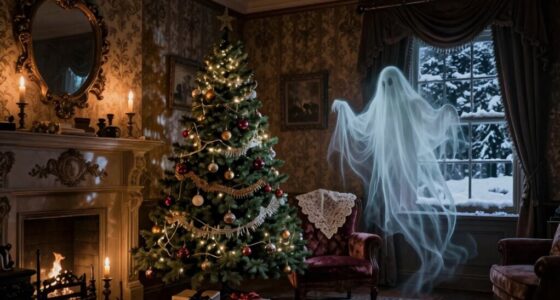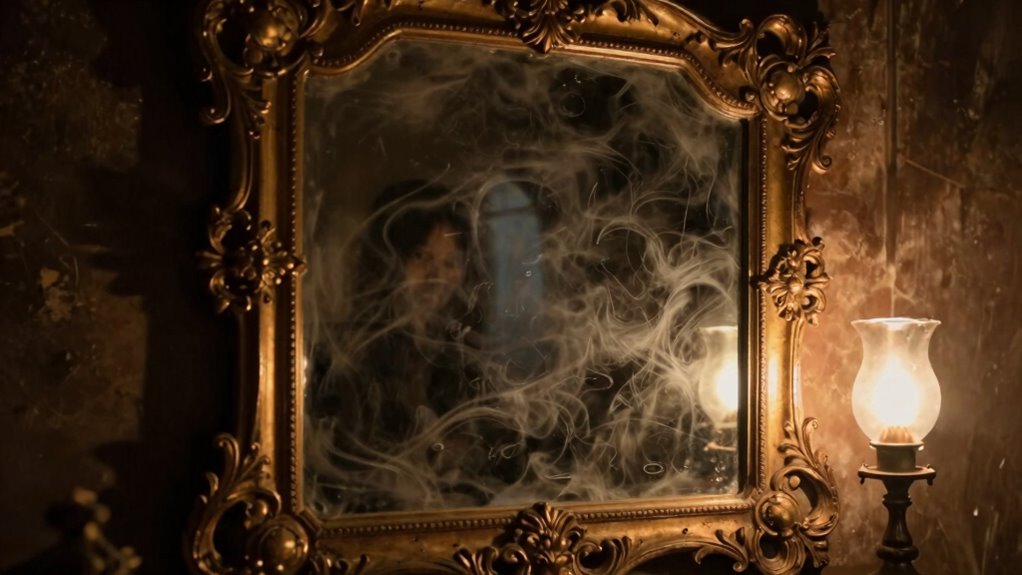

Haunted mirrors have long fascinated us, blending folklore and cultural beliefs that suggest they might be portals to spirits or alternate worlds. Many stories claim they trap or communicate with spirits, while skeptics see optical illusions or psychological factors at play. Cultural traditions warn that breaking a mirror can release curses or vengeful ghosts. If you’re curious about the real stories and secrets behind these eerie reflections, there’s more to uncover below.
Key Takeaways
- Haunted mirrors are rooted in cultural legends that often depict them as portals for spirits or gateways to other realms.
- Folklore suggests that damaged or cursed mirrors can trap spirits or release vengeful entities, fueling their haunted reputation.
- Scientific explanations attribute paranormal sightings to optical illusions, psychological factors, and environmental influences.
- Stories of haunted mirrors have persisted across cultures, blending myth, personal experience, and historical beliefs.
- Modern interpretations continue to portray mirrors as objects with mystical or supernatural significance, despite lacking scientific evidence.
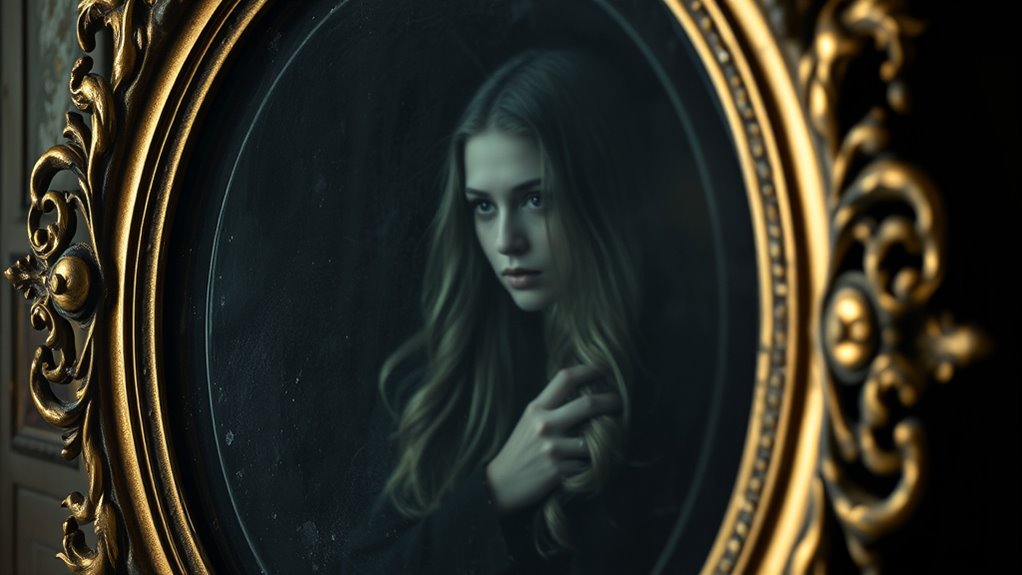
Have you ever wondered if haunted mirrors are just spooky stories or if there’s some truth behind them? Mirror legends have circulated for centuries, fueling tales of paranormal reflections that seem to go beyond ordinary perception. These stories often describe mirrors that do more than simply reflect your image—they seem to show glimpses into another dimension or reveal something about the person staring into them. Some legends claim that haunted mirrors can trap spirits, act as portals to the afterlife, or even manipulate the viewer’s reality. Such tales make you question whether these objects are simply household items or vessels for something more sinister.
Throughout history, cultures across the world have recorded stories about haunted or cursed mirrors. In some traditions, mirrors are believed to hold the soul of the person who owns them, which can lead to paranormal reflections if the mirror becomes damaged or cursed. Others suggest that spirits can communicate through reflections, making mirrors a conduit for messages from beyond. These legends often describe strange phenomena: seeing a figure in the mirror that isn’t there, hearing whispers, or experiencing a shift in the reflection that doesn’t match your movements. These stories aren’t just superstitions; they tap into a deep-rooted fear that mirrors might be more than mere glass and silver. Additionally, the reliance on cloud technology in modern times has made some wonder if digital or technological influences could somehow play a role in these supernatural tales.
Many cultures believe mirrors can trap spirits or reveal unseen worlds beyond their surface.
You might wonder if there’s any scientific basis for these tales. Skeptics argue that what we perceive as paranormal reflections can often be explained by optical illusions, psychological factors, or the mind’s tendency to fill in gaps when faced with ambiguous images. Sometimes, flickering lights or shadows cast by nearby objects can create the illusion of moving figures or ghostly appearances. Yet, despite these rational explanations, countless people claim to have experienced unexplainable phenomena while gazing into certain mirrors. This blend of folklore and personal experience keeps the legend alive.
The idea that mirrors can act as portals or trap spirits is a powerful theme in haunted mirror stories. Some believe that breaking a mirror can unleash vengeful spirits, while others think a mirror’s history or the manner in which it was acquired influences its haunted reputation. Paranormal reflections are often cited as evidence that these objects hold more than their surface appearance—they’re gateways to mysterious worlds or residual energies. Whether you believe in these legends or see them as cultural stories, one thing’s clear: haunted mirrors continue to captivate our imagination, blurring the line between myth and reality.
Frequently Asked Questions
Are Haunted Mirrors Dangerous to Look Into?
Looking into haunted mirrors can be risky, as folklore origins suggest they’re linked to supernatural sightings and spirits. Some believe they can trap your soul or show you frightening visions, which might cause emotional distress or paranoia. While there’s no scientific proof, it’s best to avoid staring into mirrors that are rumored to be haunted. Trust your instincts—if something feels off, it’s safer to step away and not tempt fate with supernatural domains.
Can Haunted Mirrors Be Removed or Destroyed?
Yes, haunted mirrors can be removed or destroyed, but it’s best to start with mirror cleansing to clear any negative energy or spirits. You can use sage, holy water, or other spiritual protection methods to purify the mirror. If needed, physically destroying it—like breaking the glass—can eliminate the connection. Always follow your intuition and consider consulting a spiritual expert to guarantee proper removal and protection.
What Are the Origins of Mirror-Related Folklore?
You might wonder about the origins of mirror-related folklore, which stem from deep mirror symbolism across cultures. Historically, mirrors were believed to reflect more than just images—they held spiritual significance, representing gateways to other worlds or souls. Folklore origins trace back to ancient civilizations like the Egyptians and Chinese, where mirrors were thought to trap spirits or reveal hidden truths, fueling myths about haunted or enchanted mirrors.
Are There Scientific Explanations for Haunted Mirror Phenomena?
You might think haunted mirrors are pure magic, but science suggests otherwise. Psychological effects, like fear and expectation, can make you see things that aren’t really there. Optical illusions also play tricks on your eyes, turning ordinary reflections into ghostly apparitions. These natural phenomena, combined with your mind’s tendency to fill in gaps, explain many haunted mirror experiences without supernatural causes, turning fear into fascinating science.
How Can I Tell if My Mirror Is Truly Haunted?
You can’t definitively tell if your mirror is haunted, but you might notice strange occurrences like unexplained reflections or whispering voices, which tie into mirror legends and reflection myths. Pay attention to persistent anomalies that can’t be explained by lighting or drafts. Remember, many mirror legends are rooted in folklore, so skepticism helps. If you’re truly concerned, consulting a paranormal expert or psychologist can provide clarity.
Conclusion
So, next time you gaze into a mirror and wonder if it’s haunted, remember that most stories are just folklore, not fact. Haunted mirrors have fascinated minds for centuries, from Victorian ghost stories to modern urban legends. Just like a good séance or a crystal ball, they tap into our love for mystery and the unknown. Rest assured, in this age of smartphones and selfies, a mirror’s true power is simply reflecting your own face, no ghostly surprises needed.