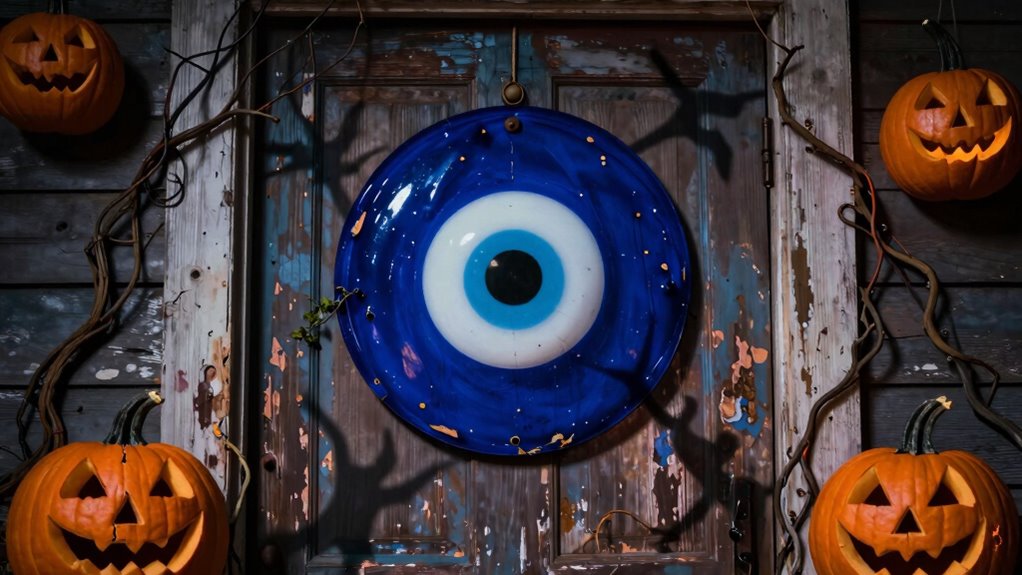

The evil eye appears in Halloween imagery because it’s rooted in ancient symbols of protection against malevolent forces. This symbol, known for its intense stare and mystical power, has spread across cultures and became a talisman to ward off harm. Its spooky, supernatural aura fits perfectly with Halloween’s themes of spirits and magic. If you keep exploring, you’ll uncover even more fascinating stories behind how this ancient symbol became part of modern spooky traditions.

Get decor and gifts delivered free with Prime
- Fast, free delivery on millions of items
- Prime Video, Amazon Music and more included
- Member-only deals all year
Key Takeaways
- The evil eye symbolizes protection against malevolent forces, aligning with Halloween’s themes of spirits and supernatural defense.
- Its intense stare and mystical aura evoke spooky, magical imagery used in Halloween decorations and costumes.
- The symbol’s roots in ancient cultures as a ward against harm tie into Halloween’s historical focus on protection rituals.
- Its widespread cultural significance makes it a powerful, recognizable icon for Halloween’s spooky and mystical atmosphere.
- The evil eye’s connection to supernatural beliefs enhances its role in Halloween’s celebration of magic, spirits, and the unseen.
Halloween imagery often features symbols meant to ward off evil, and one of the most intriguing is the evil eye. This symbol, with its piercing gaze and vivid colors, has a long history rooted in ancient beliefs. You might wonder why such an eye appears in spooky decorations and costumes, but its presence carries deep cultural symbolism. The evil eye is believed to possess protective qualities, acting as a shield against malevolent forces. In ancient times, people used amulets shaped like eyes—called ancient amulets—to ward off harmful spells and envious gazes. These objects weren’t just decorative; they held powerful significance, serving as tangible defenses against negative energies.
The tradition of using amulets for protection is widespread across many cultures. In Mediterranean and Middle Eastern societies, the evil eye amulet—often called a “nazar”—is a common sight, believed to reflect malicious intent back to the sender. People would hang these amulets in homes, wear them as jewelry, or incorporate them into everyday objects. Over centuries, this belief evolved and spread, becoming part of cultural symbolism that transcended borders. It’s no surprise, then, that the evil eye has found its way into Halloween imagery, given the holiday’s fascination with supernatural and protective symbols. The eye’s intense stare and mystical aura evoke a sense of power, making it perfect for spooky decorations meant to ward off evil spirits. The symbolic importance of the evil eye has persisted across generations, maintaining its relevance in modern folklore. Additionally, the cultural symbolism associated with the evil eye enhances its role in Halloween’s visual language, connecting ancient traditions with contemporary festivities.
When you see the evil eye in Halloween costumes, decorations, or artwork, it’s more than just a creepy symbol. It’s a nod to ancient protective rituals, a visual reminder of humanity’s long-standing desire to keep darkness at bay. The use of the evil eye connects Halloween to a broader tradition of cultural symbolism and superstition. It’s a reminder that for many, symbols like the evil eye aren’t just Halloween motifs—they’re rooted in centuries of belief in unseen forces and protective charms. This history adds depth to the imagery, transforming simple decorations into symbols with powerful, protective meanings. The evil eye’s significance is also linked to the widespread belief in supernatural forces, which have played a vital role in shaping cultural traditions around protection and warding off harm. So, when you spot the evil eye during Halloween, you’re witnessing a visual tradition that’s survived millennia—an ancient amulet’s enduring influence wrapped in today’s spooky festivities.
As an affiliate, we earn on qualifying purchases.
Frequently Asked Questions
How Did the Evil Eye Symbol Originate Historically?
You learn that the evil eye symbol originated from ancient amulet origins, designed to ward off jealousy and malevolent gazes. Over time, its cultural symbolism evolved across civilizations like Greece, Turkey, and the Middle East, where people believed it protected against harm. Today, you see it in Halloween imagery because of its rich history and spooky association with warding off evil spirits, making it a powerful, timeless symbol.
Are There Specific Cultures That Associate the Evil Eye With Halloween?
You’ll find that some cultures, like Mediterranean and Middle Eastern traditions, associate the evil eye with Halloween imagery, blending cultural interpretations with modern symbolism. The evil eye’s symbolic significance as protection against harmful intentions makes it a fitting motif for Halloween, which celebrates warding off evil spirits. This cultural crossover emphasizes protection, superstition, and the mystical, making the evil eye a powerful, recognizable symbol during Halloween festivities.
Can Evil Eye Symbols Be Found in Modern Halloween Decorations?
Yes, evil eye symbols can be found in modern Halloween decorations. You might see them on ornaments, banners, or masks, blending ancient folklore with contemporary symbolism. This fusion reflects how Halloween often draws from diverse traditions, including those involving protective symbols like the evil eye. You’ll notice how these symbols add a mystical, protective touch to festive decor, connecting old-world beliefs with today’s spooky celebration.
What Are the Psychological Effects of Evil Eye Imagery?
You feel a shiver when you see evil eye imagery, as it acts like a mirror reflecting superstitious beliefs that protect or threaten. Its piercing gaze triggers subconscious fears and anxieties, making you wary of unseen forces. This powerful visual symbolism can evoke feelings of unease or comfort, depending on your beliefs. Ultimately, the evil eye’s haunting presence taps into primal instincts, influencing your subconscious mind more than you realize.
Is the Evil Eye Considered a Protective or Malevolent Symbol?
You’ll find that the evil eye is mainly seen as a protective symbol in many cultures, thanks to superstitious beliefs that it wards off malevolent energies. However, in some traditions, it can also represent malevolence or envy. Its cultural symbolism varies widely, but overall, many view it as a powerful talisman to keep negative influences away—either as a shield or, less commonly, as a reminder of harmful envy.
Conclusion
As you carve your pumpkin, remember the evil eye’s journey from ancient superstitions to Halloween’s spooky symbols. Like a watchful guardian, it’s there to ward off negativity and protect you from unseen forces. Imagine it as a tiny, glowing eye in the darkness, silently guarding your home. Embrace its wild backstory, knowing that behind every spooky symbol is a centuries-old hope to keep evil at bay—making your Halloween not just fun, but a bit safer too.
Halloween Picks
halloween
As an affiliate, we earn on qualifying purchases.