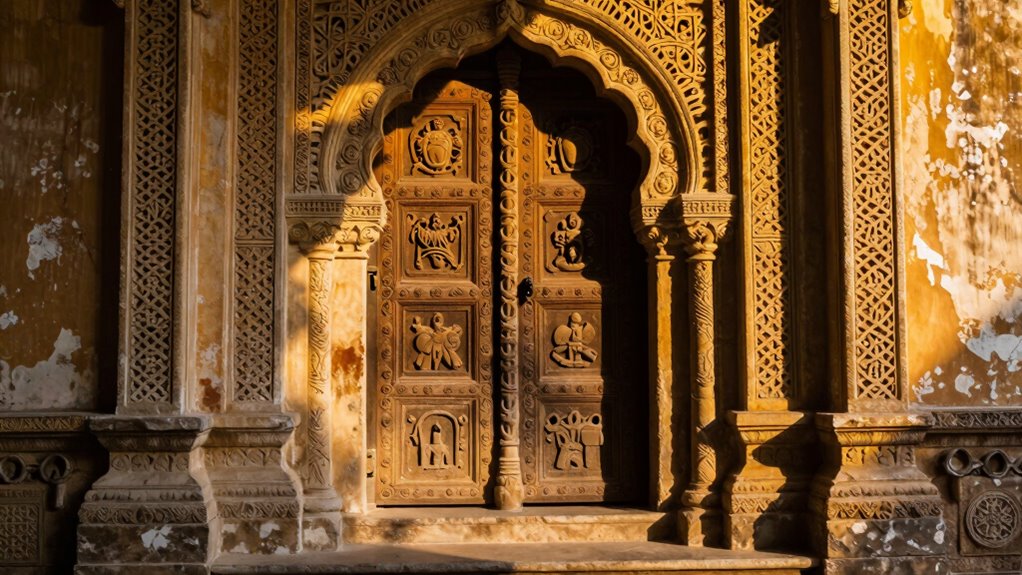

In folklore, thresholds aren’t just doorways—they symbolize major moments of change and transformation in your life. Crossing a threshold marks you leaving the familiar behind and stepping into the unknown, often representing personal growth, new beginnings, or facing fears. These symbolic borders remind you that growth involves challenges but also offers new opportunities. If you want to discover more about how these powerful symbols shape stories and your own journey, continue exploring their deeper meanings.

Get decor and gifts delivered free with Prime
- Fast, free delivery on millions of items
- Prime Video, Amazon Music and more included
- Member-only deals all year
Key Takeaways
- Thresholds symbolize transitions between the known and the unknown, representing personal growth and spiritual enlightenment.
- They serve as liminal spaces in folklore, marking crucial moments of change, challenge, or transformation.
- Crossing a threshold often signifies leaving old identities behind and embracing new phases or destinies.
- Doorways in myths symbolize gateways to new opportunities, risks, or divine realms.
- Psychologically, thresholds emphasize the importance of facing fears and stepping into change for personal development.
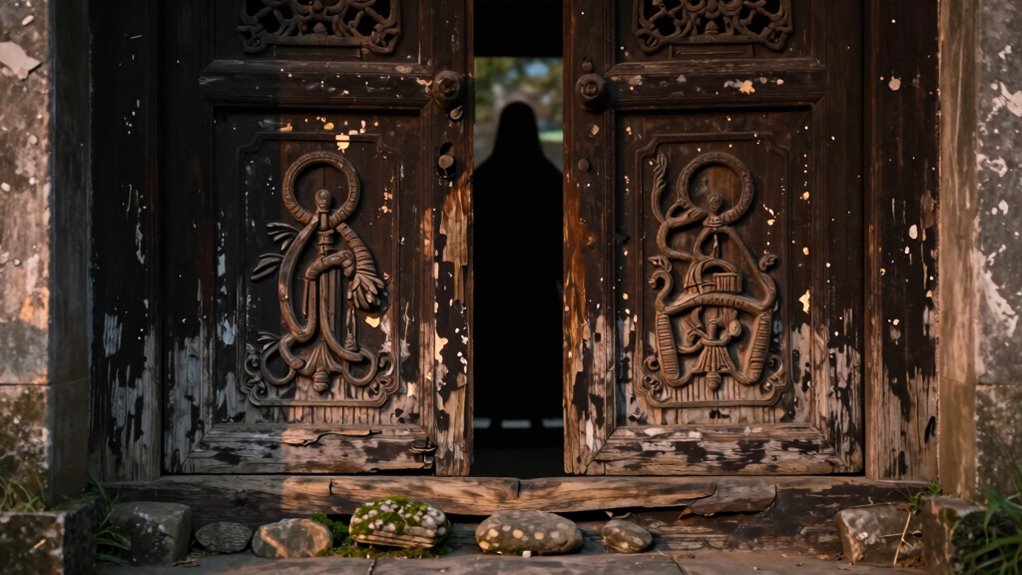
Have you ever noticed how doorways and borders seem to carry more than just physical significance? They’re not merely openings or barriers; they embody deeper meanings rooted in folklore and human psychology. This is where doorway symbolism comes into play, representing passages, thresholds, and the crossing of boundaries—both literal and metaphorical. This symbolic importance is often reinforced by cultural rituals and beliefs that emphasize respect for these transitional spaces. When you step through a door, you’re not just moving from one space to another; you’re entering a sphere of change, growth, or even danger. Folklore often highlights these moments, emphasizing that crossing boundaries isn’t always simple or safe. It’s a passage into the unknown, filled with potential or peril, depending on the context.
Throughout history, cultures have used thresholds as powerful symbols. They mark the boundary between the familiar and the unfamiliar, the mundane and the sacred. For example, in many traditions, a doorway is considered a liminal space—a place where the ordinary world intersects with the spiritual domain. Crossing boundaries at these points often signifies a rite of passage, a moment when the individual leaves behind their old identity and steps into a new one. Think of stories where characters must pass through a portal or a gate to achieve enlightenment or to confront their fears. These thresholds are more than physical barriers; they’re symbolic gateways that represent personal transformation. Recognizing the significance of liminal spaces in folklore helps us understand the deeper meanings behind these symbolic crossings, especially how they relate to the concept of transitional phases in cultural narratives. Additionally, understanding the psychological impact of these crossings can shed light on how humans interpret change and growth on a personal level.
In folklore, crossing boundaries often involves facing tests or challenges. The act of crossing a threshold can symbolize leaving behind innocence, ignorance, or limitations. It signifies entering a new phase where different rules apply, and new possibilities unfold. Many fairy tales and myths describe characters who must go through a doorway or cross a boundary to reach their destiny, emphasizing that such moments are pivotal. These stories serve as metaphors for real life, reminding you that stepping beyond comfort zones or familiar routines is necessary for growth. The symbolism of thresholds encourages you to embrace change and see crossing boundaries as an essential part of life’s journey.
Ultimately, doorway symbolism and crossing boundaries in folklore reveal that thresholds are more than physical structures—they’re powerful symbols of transition and transformation. Every time you encounter a doorway or border, you’re reminded of the potential for new beginnings and the importance of facing the unknown. Folklore teaches that crossing boundaries isn’t just about physical movement; it’s about personal evolution, embracing change, and stepping into new possibilities. The next time you pass through a doorway, think of it as more than just an entry point—see it as a symbolic step into a new chapter of your life.
As an affiliate, we earn on qualifying purchases.
Frequently Asked Questions
How Do Thresholds Symbolize Transition in Different Cultures?
You see thresholds as symbols of change because doorway symbolism often represents boundary crossing. In many cultures, stepping over a threshold marks a shift—like entering a new life stage or sacred space. It’s a powerful metaphor for moving from one domain to another, symbolizing growth, transformation, and new beginnings. Whether in rituals or stories, thresholds serve as meaningful markers of crossing boundaries and embracing change.
Are Thresholds Considered Portals to Other Worlds?
Yes, thresholds are often seen as supernatural gateways that serve as portals to other worlds. You might imagine them as spiritual crossings, where the boundary between the known and the unknown becomes thin. In folklore, crossing a threshold symbolizes entering a different domain, whether it’s the spirit world or a mystical dimension. So, for many, thresholds represent more than just doorways—they’re sacred points of passage and transformation.
What Is the Historical Origin of Threshold Symbolism?
Think of thresholds as gateways in ancient household rituals, marking spiritual boundaries that separate the mundane from the sacred. Historically, they symbolize crossing into different worlds or states of being. Cultures across time used thresholds to protect sacred spaces, ward off evil spirits, and invite blessings. This symbolism reflects a universal human desire to recognize and respect the crossing points in life, linking the physical and spiritual domains.
Do Thresholds Have Protective or Harmful Connotations?
Thresholds often carry protective connotations, rooted in doorway symbolism and threshold superstitions that ward off evil spirits. You might notice that many cultures believe crossing a threshold can bring good luck or prevent harm, making it a powerful barrier. However, some superstitions suggest thresholds can also be harmful if not respected, like leaving a home vulnerable to negative influences. Overall, thresholds serve as a symbolic boundary between safety and danger.
How Are Thresholds Used in Modern Folklore Practices?
In modern folklore practices, you use thresholds in household rituals and modern superstitions to ward off evil spirits and invite good luck. For example, you might knock on a doorframe or leave salt at the threshold to protect your home. These customs continue to influence daily life, blending tradition with contemporary beliefs, and help create a sense of security by symbolically marking the boundary between the outside world and your personal space.
Conclusion
So, next time you cross a threshold, remember it’s more than just a doorway—it’s a symbol of change, protection, and mystery. These ancient beliefs remind us that stepping into the unknown is both a risk and an opportunity. Do you feel the weight of history beneath your feet? Embrace the symbolism, and let each threshold be a reminder of the magic and meaning waiting just beyond the door.
Halloween Picks
halloween
As an affiliate, we earn on qualifying purchases.