
Many movies about werewolves skip over the deep cultural and symbolic roots behind the legends. You might think it’s just horror and monsters, but the stories actually connect to ancient beliefs about the moon’s phases controlling transformation and human nature. These legends reflect fears of primal instincts coming loose and losing control. If you want to understand the true meaning behind the myth, discover how lunar cycles shaped these stories and why they continue to captivate us.

Get decor and gifts delivered free with Prime
- Fast, free delivery on millions of items
- Prime Video, Amazon Music and more included
- Member-only deals all year
Key Takeaways
- Movies often ignore the cultural and historical significance of lunar phases in shaping werewolf legends.
- The full moon’s symbolic meaning reflects primal fears and the boundary between human and beast.
- Folklore links transformation to specific moon phases, not just cinematic triggers.
- Werewolf stories symbolize external forces influencing human behavior, often tied to lunar cycles.
- Films tend to overlook the myth’s deeper roots in cultural fears and natural mysteries.
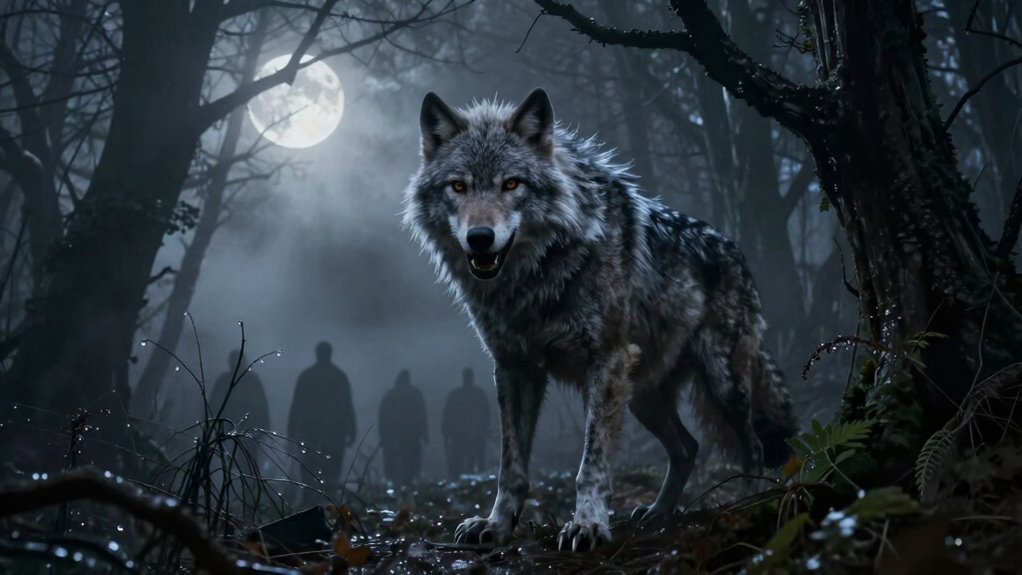
Have you ever wondered why stories of werewolves have fascinated cultures for centuries? It’s because these legends tap into deep-rooted fears and mysteries surrounding transformation, the unknown, and nature’s power. In many tales, werewolves aren’t just monsters but symbols of human primal instincts lurking beneath civilization’s veneer. What you might not realize, though, is how much of this myth is rooted in centuries-old lycanthropy folklore and how essential the moon’s phases are to these stories. Movies often gloss over these details, but understanding them reveals a richer, more complex history.
Lycanthropy folklore, the ancient belief that humans could transform into wolves, spans cultures from Europe to Asia. These stories often served as cautionary tales or explanations for unexplainable behaviors—sudden violence, madness, or nocturnal wanderings. Historically, accusations of lycanthropy could lead to persecution, as people believed they were possessed or cursed. The folklore emphasizes that the transformation isn’t random; it’s tied to specific conditions, particularly the moon’s cycles. In many legends, a person’s ability to turn into a wolf is directly influenced by the moon phases, especially the full moon. This connection isn’t arbitrary; it reflects a widespread cultural understanding that lunar cycles govern natural and supernatural phenomena. Lunar cycles have long been associated with various cultural and spiritual beliefs, highlighting their significance in understanding natural events.
Lycanthropy myths link human transformation to moon cycles, reflecting ancient beliefs in lunar influence over natural and supernatural events.
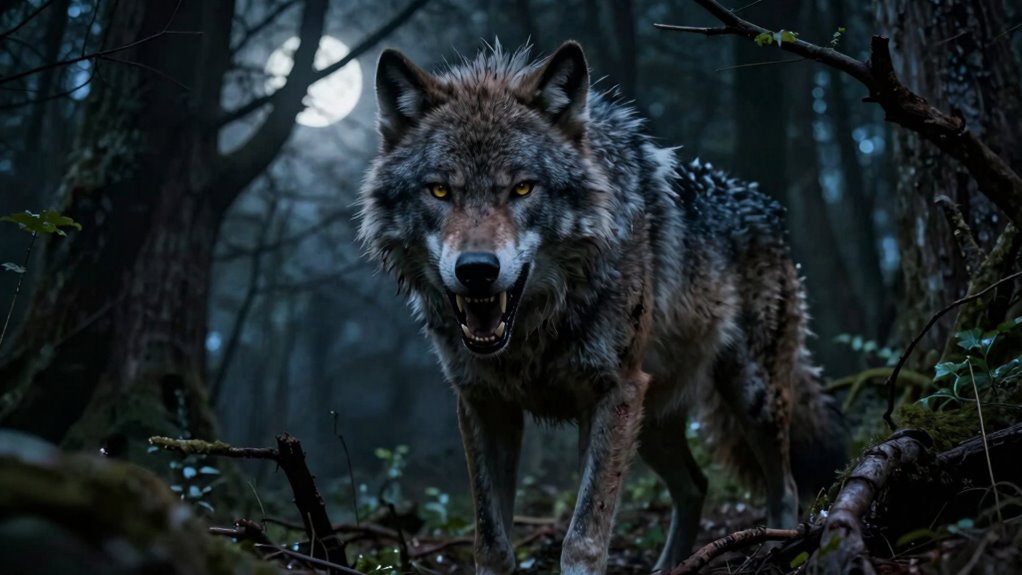
What movies tend to overlook is how profoundly the moon phases significance affects the werewolf mythos. The full moon isn’t just a cinematic trope; it’s a symbol rooted in folklore that suggests a celestial trigger for transformation. During a full moon, the lines between human and beast blur, and the creature’s violent urges take hold. This lunar connection underscores a belief that human nature is fragile and easily swayed by external forces—nature’s cycles, in this case. It also hints at a deeper truth: that these legends are about more than just horror. They echo human fears of losing control, of the primal instincts lurking within us, waiting for the right moment to surface. Additionally, the recurring motif of moon phases demonstrates how ancient peoples looked to the sky for guidance and understanding of natural phenomena, reinforcing the cultural significance of lunar cycles in folklore and daily life. Recognizing the symbolic role of the moon in these stories helps deepen our understanding of their cultural roots.
While movies may focus on the beastly aspect—claws, fangs, and relentless hunger—they rarely explore into the cultural and psychological significance of the moon’s influence. The lunar cycle’s importance in lycanthropy folklore hints at a time when people looked to the heavens for understanding, framing the transformation as both a literal and metaphorical event. It’s this layered symbolism that makes werewolves compelling beyond their terrifying appearance. Recognizing the role of moon phases and folklore helps you see these stories not just as horror tales but as reflections of human history, fears, and the mysterious forces of nature that continue to captivate us.
As an affiliate, we earn on qualifying purchases.
Frequently Asked Questions
Are There Real Historical Cases of Werewolf Sightings?
Yes, there are historical cases of werewolf sightings rooted in ancient folklore and mythological creatures. Throughout history, people have reported encounters with beings resembling werewolves, often during times of social unrest or mass hysteria. While these stories may be exaggerated or misunderstood, they reflect deep-seated fears and beliefs in mythological creatures. Many of these sightings were documented in medieval Europe, blending superstition with real events.
How Do Different Cultures Interpret Werewolf Legends?
Different cultures interpret werewolf legends through unique lenses shaped by cultural symbolism and mythological origins. In European folklore, they symbolize fears of transformation and loss of control. Native American stories often view them as spiritual guardians or tricksters, emphasizing balance and nature. In Asian cultures, shapeshifting beings embody spiritual transformation and moral lessons. These varied interpretations reflect each culture’s beliefs, fears, and values, enriching the complex tapestry of werewolf mythology worldwide.
What Are Common Symbols Associated With Werewolf Myths?
You’ll notice that symbols like the full moon are key in werewolf myths, representing transformation and chaos. Lycanthropy symbolism often includes claws, fangs, and wolf-like footprints, emphasizing primal instincts. The moon phase significance is vital; a full moon triggers the change, reinforcing themes of mystery and power. These symbols highlight the connection between the supernatural and natural worlds, illustrating humanity’s fascination with transformation and the unknown.
How Have Werewolf Legends Influenced Modern Folklore?
Werewolf legends have profoundly shaped modern folklore, transforming ancient fears into enthralling stories. You see, lycanthropy rituals and folklore adaptations have made werewolves symbols of primal instincts and hidden dangers. These legends influence everything from Halloween costumes to literature, creating a mythic landscape that blurs the line between human and beast. You can’t deny how these stories, filled with transformation and mystery, continue to thrill and warn us about our own wild sides.
Are There Any Scientific Explanations for Werewolf Stories?
There aren’t scientific explanations for werewolf stories, but some theories suggest lycanthropy psychology plays a role, where individuals believe they can transform into wolves. Additionally, genetic mutation might explain rare conditions like hypertrichosis, causing excessive hair growth that resembles a wolf-like appearance. These biological and psychological factors could have inspired legends, but no concrete scientific evidence confirms the existence of werewolves.
Conclusion
As the moon dips below the horizon, the true story of werewolves remains shrouded in shadow, whispering secrets that movies gloss over. Behind the flickering screen, these legends breathe with a life of their own—haunted tales etched into the fabric of night, where beast and human blur into a tapestry of primal fears. Remember, what you see is just the surface; the real story lurks beneath, waiting patiently in the darkness’s silent embrace.
Halloween Picks
halloween
As an affiliate, we earn on qualifying purchases.