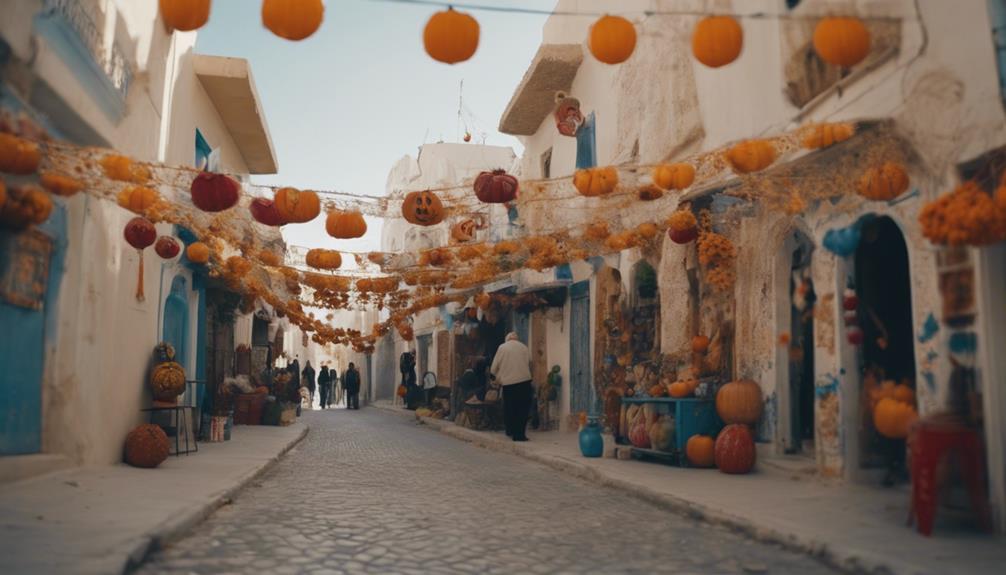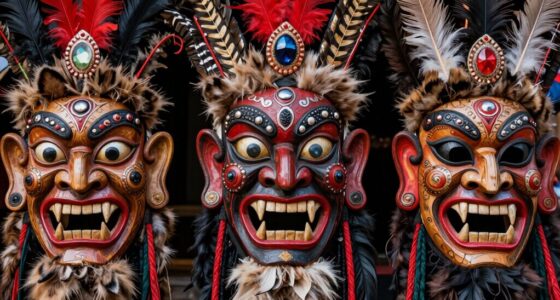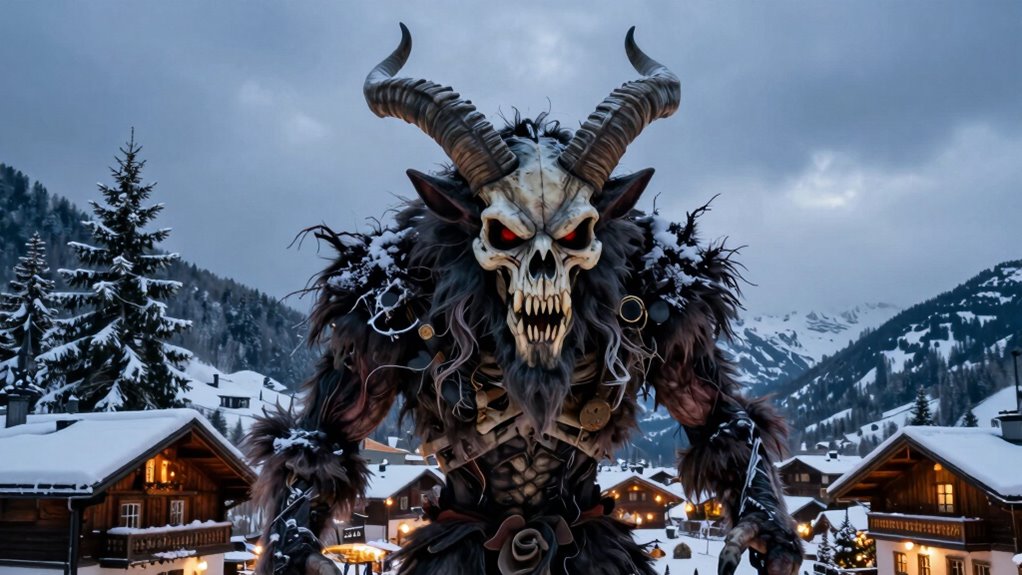

In the Alps, Krampus turns Christmas into a terrifying event by blending ancient pagan spirits with Christian traditions. You’ll see parades with people dressed as horns, fur, and frightening masks, acting as a dark contrast to Santa. These customs serve to remind everyone of moral lessons, punishing naughty children and celebrating regional heritage. If you keep exploring, you’ll discover how this haunting figure remains a powerful symbol of cultural identity and festive tradition in the Alps.

Get decor and gifts delivered free — and shop member deals
- Fast, free delivery on millions of items
- Access to Prime Big Deal Days deals on October 6–7
- Prime Video, Amazon Music and more included
Key Takeaways
- Krampus is rooted in pre-Christian Alpine traditions, blending pagan and Christian beliefs to serve as a winter folklore figure.
- He acts as a frightening counterpart to Santa, punishing naughty children and reinforcing moral behavior through fear.
- Festivals featuring Krampus parades and costumes preserve regional history and serve as cultural identity symbols.
- Modern celebrations are lively community events that attract tourists and keep ancient customs alive.
- Krampus embodies the darker side of winter folklore, creating a haunting, festive atmosphere unique to the Alps.
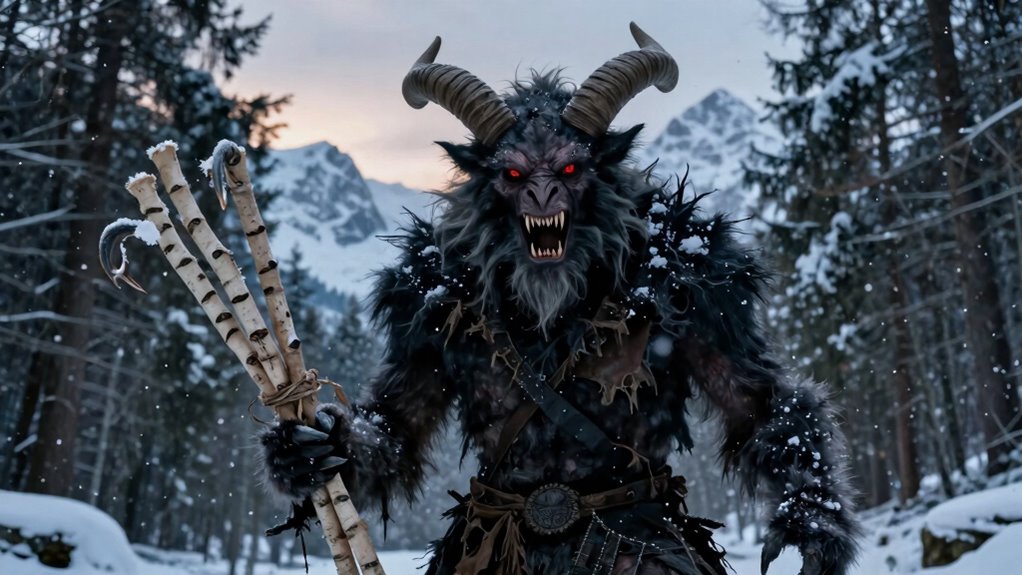
Have you ever wondered about the origins of Krampus, the eerie figure lurking in holiday folklore? If you’re familiar with Christmas traditions, you’ve probably heard of Santa Claus, but Krampus offers a dark twist, rooted in centuries-old beliefs and local customs. As a mythical creature, Krampus embodies the more sinister side of winter, serving as a stark contrast to the joyful, generous spirit of the season. His story is deeply intertwined with cultural festivities in the Alps, where towns celebrate with unique rituals that date back generations. These festivities often include lively parades featuring people dressed as Krampus, creating a striking visual of the creature’s terrifying presence.
Krampus’s origins trace back to pre-Christian Alpine traditions, blending pagan beliefs with Christian influences over centuries. Mythical creatures like Krampus were believed to be spirits or demons that reminded people of the consequences of misbehavior. During the winter season, communities would hold celebrations where Krampus would emerge as a frightening counterpart to Santa Claus, who rewarded good children. While Santa brought gifts and cheer, Krampus was tasked with punishing the naughty. This duality reinforced moral lessons, emphasizing the importance of good behavior through a mixture of fear and reward. Over time, these stories and customs evolved into lively festivals, especially in Austria, Germany, and surrounding regions, where people don elaborate costumes, donning horns, fur, and terrifying masks to embody the creature. These traditions have helped preserve regional customs and keep the folklore alive in modern times. Interestingly, many of these customs are also passed down through oral storytelling, maintaining the authenticity and cultural significance of the celebrations. Additionally, the rituals surrounding Krampus serve as a cultural preservation that keeps the regional history vibrant and relevant today.
Krampus, a pagan spirit and Christian demon, punishes naughty children during Alpine winter festivals.
The cultural festivities surrounding Krampus aren’t just about scare tactics; they serve as a community bonding experience that keeps ancient traditions alive. These events often involve parades, music, and storytelling, creating an immersive atmosphere that celebrates regional heritage. For locals, Krampus is more than just a myth; he’s a symbol of their history and identity. The traditions also act as a reminder to children about the importance of good conduct, albeit in a theatrical and slightly frightening way. Visitors from around the world are drawn to these festivities, eager to witness the spectacle of people dressed as terrifying mythical creatures, dancing and shouting through the snow-covered streets.
In essence, Krampus’s story reflects a deep-rooted cultural history that goes beyond simple folklore. It’s a vivid reminder of how ancient beliefs and community celebrations shape modern traditions. These festivities often serve to reinforce regional identity and preserve the cultural heritage that has been passed down through generations. The terrifying figure, once part of a moral lesson, now stands as a symbol of regional pride and cultural storytelling, making the holiday season in the Alps uniquely haunting and fascinating.
As an affiliate, we earn on qualifying purchases.
Frequently Asked Questions
How Did Krampus Originate Historically in Alpine Culture?
You should know that Krampus’s historical origins trace back to Alpine folklore, where he emerged as a creature to scare naughty children during the Christmas season. Historically, he was linked to pagan rituals and early European traditions, blending influences from Germanic and Christian beliefs. Over time, Krampus became a symbol of the dual nature of Christmas — both joyful and sinister — reflecting the region’s rich cultural history.
Are There Modern Krampus Festivals Outside the Alps?
Yes, there are modern celebrations and international adaptations of Krampus festivals outside the Alps. You might find Krampus events in countries like the United States, Australia, and parts of Europe, where enthusiasts organize parades, costume contests, and community gatherings. These events aim to honor the traditional folklore while blending it with contemporary festivities, making Krampus a fun, spooky Christmas tradition that crosses borders and introduces the myth to new audiences worldwide.
What Materials Are Traditionally Used to Make Krampus Costumes?
You’ll find that traditional Krampus costumes are crafted from a mix of materials rooted in mythic origins and skilled costume craftsmanship. People often use shaggy sheepskin or faux fur for the body, paired with carved wooden masks to evoke the creature’s terrifying face. Horns are typically made from real or crafted materials like antler or molded resin, creating an authentic, menacing look that stays true to the dark folklore and tradition.
How Do Children in the Alps Prepare for Krampus Season?
You prepare for Krampus season by participating in holiday traditions that build childhood anticipation, like decorating, singing, and telling stories about Krampus. Kids often attend parades or events where they see Krampus costumes and learn about the legend. Some children even leave out treats or small gifts for Krampus, just as they do for Santa, blending excitement and tradition during this spooky yet festive time.
Are There Similar Mythical Creatures in Other European Regions?
You’ll find similar mythical creatures across European regions, where shadows of Nordic folklore and Santa myths linger. In Italy, the terrifying Befana delivers gifts, while in Spain, the Caga Tió tree and the monstrous Tío de Nadal add eerie charm to Christmas. These figures, like Krampus, embody a mix of mischief and morality, reminding you that European holiday traditions often blend joyful celebration with haunting legends.
Conclusion
So, as you’ve seen, Krampus isn’t just a spooky legend—he’s a reminder that even the darkest stories have roots in tradition. Maybe it’s no coincidence that, just as Christmas warms our hearts, tales of Krampus remind us of the wild, mysterious side of the holiday season. Perhaps, in some strange way, embracing both sides makes the celebration all the more real and memorable. After all, isn’t life a little like that—full of surprises?
Fall Picks
fall essentials
As an affiliate, we earn on qualifying purchases.