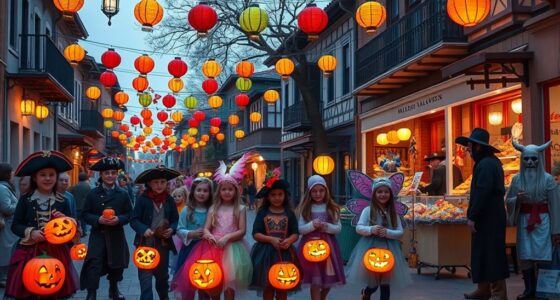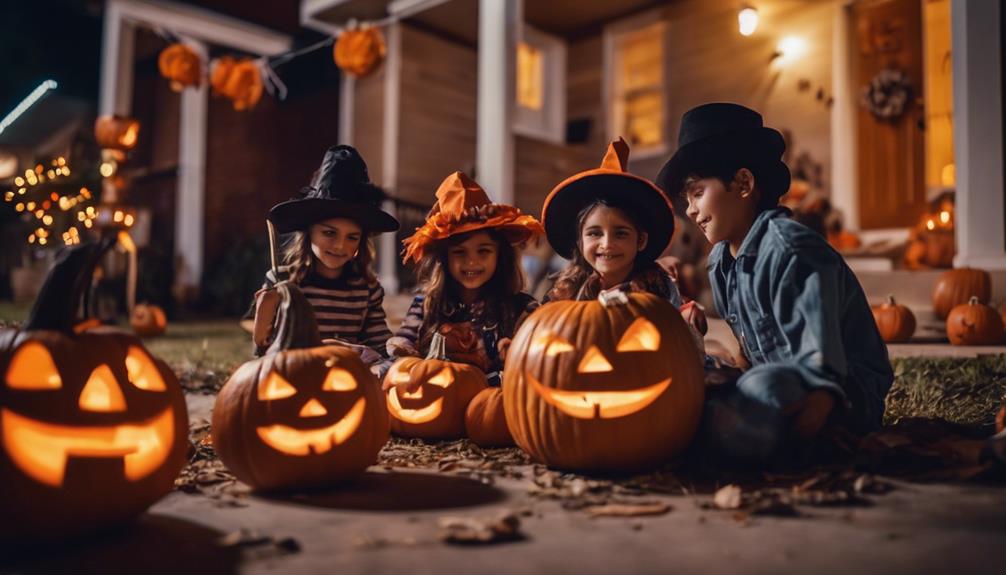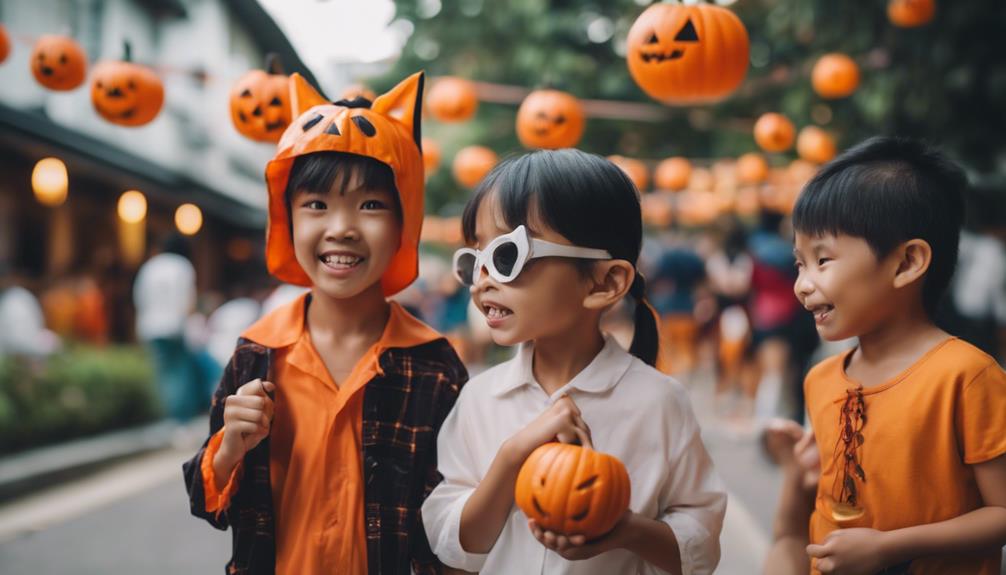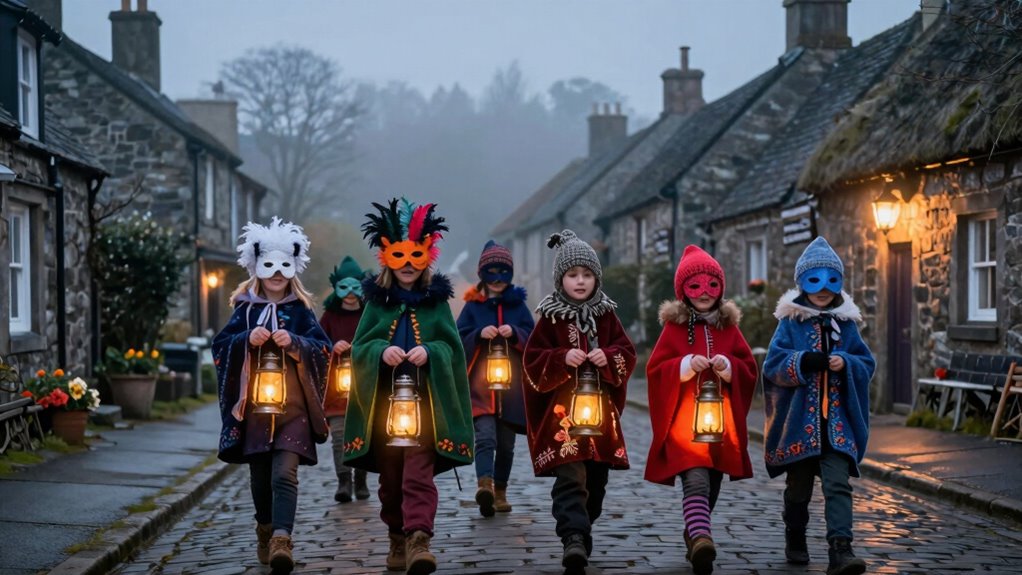

Scotland’s ‘guising’ tradition is the real precursor to trick-or-treating, dating back to Celtic and Scottish customs where costumes and masks were used to ward off evil spirits. Children usually dress in creative costumes, perform acts like singing or reciting, and interact with neighbors, strengthening community bonds. Over time, it evolved from spiritual rituals to a fun, communal celebration tied to Halloween. Keep exploring to discover more about how this tradition shapes modern festivities.

Get decor and gifts delivered free with Prime
- Fast, free delivery on millions of items
- Prime Video, Amazon Music and more included
- Member-only deals all year
Key Takeaways
- Guising originated from Celtic and Scottish rituals to ward off evil spirits, predating modern trick-or-treating.
- Children performed acts like singing or reciting in costume, emphasizing community engagement over simple candy collection.
- The tradition served as a cultural link to Scottish heritage, with costumes symbolizing historical and spiritual significance.
- Guising fostered neighborhood bonds and active participation, promoting social cohesion beyond commercial festivities.
- Today, guising remains a cherished practice that preserves Scottish customs and highlights Halloween’s cultural roots.

Have you ever wondered how Scotland’s unique Halloween tradition, known as “guising,” differs from trick-or-treating elsewhere? Unlike the more commercialized version you might see in other countries, guising has deep roots in cultural origins that stretch back centuries. It involves children dressing up in Halloween costumes, but instead of just knocking on doors for candy, they go door-to-door performing a small act—like singing a song, telling a joke, or reciting a poem—in exchange for treats. This tradition emphasizes the performative aspect, making it more interactive and rooted in community participation.
The practice of guising dates back to old Celtic and Scottish customs, where costumes and masks were used in rituals to ward off evil spirits and honor the changing seasons. Over time, these rituals blended with All Hallows’ Eve festivities, giving birth to what we now recognize as guising. The cultural origins highlight a shift from ancient spiritual practices to a more social and festive occasion, where children actively engage with neighbors rather than passively receive candy. This interactive element is what truly sets guising apart from trick-or-treating in other parts of the world.
When you participate in guising, you’re not just wearing any Halloween costumes; you’re embracing a tradition that’s infused with history. The costumes are often creative, sometimes spooky, but also playful, reflecting local customs and personal flair. These costumes serve as a visual link to Scotland’s cultural origins, connecting modern festivities with centuries-old practices. The act of dressing up isn’t just about fun—it’s a way to honor the past and keep the tradition alive. Additionally, the community-centered nature of guising helps foster stronger neighborhood bonds and a deeper appreciation for Scottish heritage. Engaging in traditional customs like guising can also help preserve these cultural practices for future generations. Recognizing the historical significance of these rituals encourages a deeper understanding of their cultural importance beyond modern celebrations. The performative aspect of guising adds an element of entertainment that encourages children and adults alike to participate enthusiastically.
In many Scottish communities, guising remains a cherished part of Halloween celebrations, with children and adults alike taking part in the merriment. The emphasis on performance and community involvement fosters a sense of togetherness that’s often missing in commercial trick-or-treating. It’s about more than just collecting candy; it’s about participating in a shared cultural experience rooted in history. So, when you see children in creative costumes singing or reciting in Scottish neighborhoods, you’re witnessing a tradition that predates modern trick-or-treating—one that’s rich in cultural origins and communal spirit.
Scottish traditional Halloween costumes
As an affiliate, we earn on qualifying purchases.
As an affiliate, we earn on qualifying purchases.
Frequently Asked Questions
How Did the Guising Tradition Originate in Scotland?
You might be surprised to learn that the guising tradition in Scotland originated from ancient Celtic festivals, where people dressed up to ward off spirits and honor the dead. Its historical roots blend pagan practices with Christian influences, giving it deep cultural significance. Over time, this tradition evolved, and children began dressing in costumes, going door-to-door for treats, laying the foundation for modern trick-or-treating traditions.
Are There Specific Costumes Traditionally Worn During Guising?
You might wonder if there are specific costumes during guising, and the answer is yes. Traditional disguises often include masks and costumes with symbolic meanings—such as spirits, supernatural beings, or local folklore figures. These costumes serve to hide identities and ward off evil spirits, adding an air of mystery. The symbolism behind these traditional disguises makes each costume more than just attire; it’s a part of the ritual’s deeper meaning.
How Has Guising Evolved Into Modern Trick-Or-Treating?
You see, guising evolved into modern trick-or-treating by blending traditional customs with contemporary festivities. The cultural significance shifted from communal storytelling and costume-wearing to children going door-to-door for treats. Today’s adaptations include themed parties, costumes, and candy, but the core idea of community participation remains. This evolution keeps the tradition lively, connecting past practices with today’s festive spirit while maintaining its cultural roots.
Do Other Countries Have Similar Guising or Disguising Customs?
Many countries have similar customs involving disguising or guising with cultural variations. In Ireland and Wales, children dress in festive attire and go door-to-door, much like Scottish guising. In Mexico, during Día de los Muertos, people wear vibrant costumes and masks to honor loved ones. These traditions share the spirit of festive attire and community celebration, highlighting how diverse cultures embrace disguising as a way to connect during special occasions.
What Are Some Traditional Scottish Foods Associated With Guising?
You’ll find Scottish festive, Guising delicacies like traditional oatcakes, sugary treacle tarts, and sticky toffee puddings. You might also enjoy shortbread cookies, fruit-filled dumplings, and spiced buns, which add warmth and sweetness to the celebration. These treats symbolize hospitality and community, enhancing the guising experience. As you partake, you embrace a rich heritage rooted in sharing hearty, comforting foods during this lively, cultural tradition.
Conclusion
So, next time you knock on a door asking for treats, remember you’re part of a centuries-old tradition that started in Scotland. Guising wasn’t just about candies; it was about costumes, disguises, and celebrating the changing seasons. Isn’t it fascinating how these customs have traveled across borders and evolved into today’s Halloween? As you enjoy your treats, you’re connected to a rich history of fun, mystery, and community—so why not embrace the tradition and keep it alive?
Halloween Picks
halloween
As an affiliate, we earn on qualifying purchases.