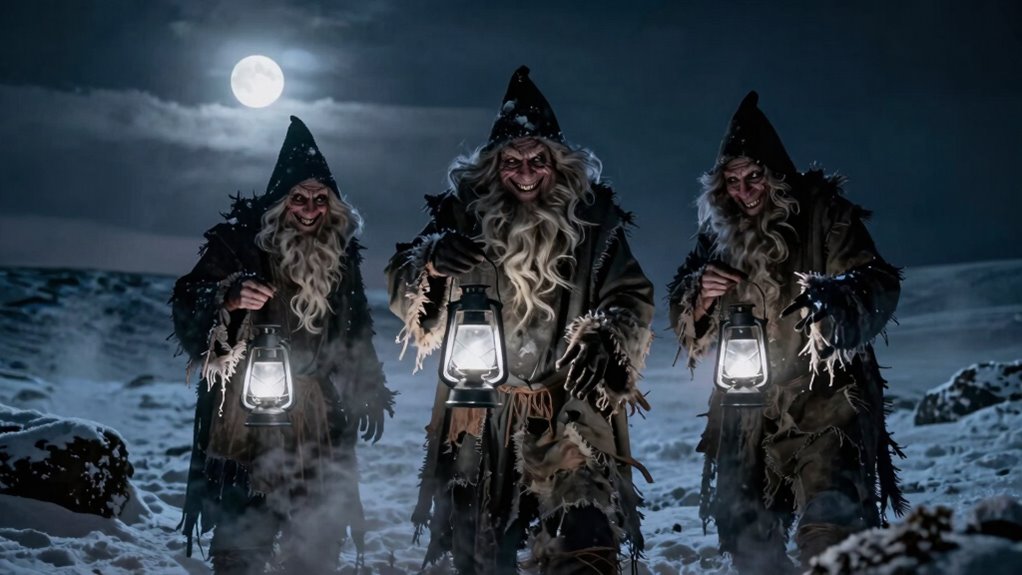

If you think about mischievous characters that fit right into Halloween, Iceland’s Yule Lads come to mind. These playful folklore figures are known for their cheeky antics, like stealing food or peeking into windows, similar to Halloween mischief-makers. Originally serving as cautionary tales, they now add humor and charm to Iceland’s holiday traditions. Curious to discover how these lively characters blend folklore with festive fun? Keep exploring to learn more about their fascinating stories.
Listen free for 30 days with Audible
Thousands of audiobooks and originals — cancel anytime.
As an affiliate, we earn on qualifying purchases.
Key Takeaways
- Yule Lads’ mischievous and humorous antics resemble Halloween pranksters, making them fitting for spooky, playful themes.
- Their playful misbehavior and trickster traits align with Halloween’s focus on mischief and trickery.
- The Yule Lads’ folklore of sneaky, naughty figures echoes Halloween traditions of ghostly and mischievous spirits.
- Their colorful personalities and humorous stories could easily be adapted into Halloween costumes or themed events.
- As cultural tricksters, Yule Lads embody the playful, spooky spirit that complements Halloween celebrations.

If you’ve ever wondered about Iceland’s unique holiday traditions, the Yule Lads are among the most fascinating. These mischievous figures stem from traditional folklore, where they’re depicted as playful, sometimes naughty, characters who visit children during the run-up to Christmas. Unlike Santa Claus, who’s generally seen as jolly and kind, the Yule Lads embody a more mischievous spirit, each with distinct quirks and pranks. Historically, stories about these characters served as a way to encourage good behavior, with children warned that the Yule Lads might leave them a rotten potato if they misbehaved. Their lore has been passed down through generations, blending storytelling with cultural values and cautionary tales. Over time, their stories have evolved, and today, they’re often portrayed with a humorous twist, emphasizing their playful, if slightly naughty, nature.
In modern adaptations, the Yule Lads have taken on a more lighthearted and family-friendly persona. You’ll find them featured in Christmas markets, children’s books, and holiday events across Iceland. Instead of the frightening or mischievous spirits of folklore, they’re now seen as amusing characters who bring a sense of fun to the season. These adaptations make them more approachable for kids, turning their antics into amusing stories rather than warnings. Many Icelandic families embrace these modern versions, decorating their homes with plush Yule Lad toys or dressing up as them for festive parades. Their images have become a staple of holiday cheer, symbolizing Iceland’s unique take on Christmas traditions. Their stories also highlight the importance of cultural heritage, ensuring that traditional folklore remains relevant in contemporary celebrations. Recognizing how these characters connect to traditional storytelling methods helps preserve their significance for future generations. Additionally, their enduring appeal demonstrates how folklore can adapt to modern contexts while maintaining its core values.
Despite their playful modern image, the Yule Lads still hold onto their folkloric roots. Each of the 13 Yule Lads has a distinct personality, from Sausage Swiper to Doorway Sniffer, and their antics are tied to everyday objects and behaviors. For example, some are known for stealing food or peeking into windows, which echoes their traditional mischief but now is more humorous than threatening. Interestingly, these stories often reflect societal values, offering insights into Icelandic culture and daily life. Their stories, both old and new, serve as a reminder of Iceland’s cultural heritage—an enduring blend of traditional folklore and contemporary celebration. The continued popularity of these characters underscores the importance of cultural storytelling in shaping community identity. The Yule Lads, with their mischievous charm, continue to captivate both locals and visitors, bridging Iceland’s past and present in a uniquely whimsical way. Moreover, folklore’s role in cultural identity plays a crucial part in maintaining the relevance of these stories across generations.
As an affiliate, we earn on qualifying purchases.
Frequently Asked Questions
Are the Yule Lads Still Part of Icelandic Christmas Traditions?
Yes, the Yule Lads are still part of Icelandic Christmas traditions. You’ll find their legends still lively in modern Yule adaptations, where families celebrate with stories of these mischievous figures. Children enthusiastically await their arrival, and locals keep the Yule Lad legends alive through festivities, gift-giving, and storytelling. These traditions continue to blend old folklore with contemporary celebrations, making them a cherished part of Iceland’s holiday season.
Do the Yule Lads Have Any Modern-Day Appearances or Adaptations?
You’ll find Yule Lads in pop culture, appearing in movies, TV shows, and even Yule Lads merchandise, showing they’re still relevant today. Some adaptations give them a modern twist, aligning them with contemporary holiday celebrations or Halloween themes. While their traditional mischievous roles remain, these modern appearances help keep the Yule Lads lively and engaging, making them a fun part of holiday traditions for new generations.
How Do Icelanders Traditionally Celebrate the Yule Lads Today?
Today, Icelanders celebrate the Yule Lads through Yule Lad costumes and themed events. You’ll see families and children dressing up, participating in parades, and enjoying Yule Lad-themed parties. Communities organize special events like storytelling and crafts, emphasizing the mischievous tradition. These celebrations preserve cultural heritage while adding a festive, playful atmosphere. You might even join in the fun, experiencing Iceland’s unique way of honoring these legendary figures during the holiday season.
Are There Any Regional Differences in Yule Lad Stories Across Iceland?
Have you ever wondered if regional folklore shapes the Yule Lads’ stories differently across Iceland? You’ll find that storytelling variations exist, with some areas emphasizing their mischievous antics more than others. In certain regions, tales focus on their humorous pranks, while in others, they’re seen as more helpful or even protective figures. These regional differences add rich layers to Iceland’s cultural tapestry, making each community’s Yule Lad stories uniquely charming.
What Are the Origins of the Yule Lads’ Names and Behaviors?
You might wonder about the Yule Lads origins and behaviors. Their names come from old Icelandic words describing their mischievous acts, like “Stubby” or “Sly.” Their behaviors reflect traditional folklore, where they sneak into homes to steal or cause trouble, especially during Christmas. These stories likely originated from ancient Icelandic beliefs to explain mischief and teach children to behave, blending humor and caution in their origins.
Conclusion
So, now you see how Iceland’s Yule Lads bring a splash of mischief and magic to the holiday season. They’re a reminder that a little playful trouble can make traditions more colorful and fun. Embrace their quirky antics, and you’ll find that sometimes, the best memories come from those mischievous moments that keep everyone on their toes. After all, it’s those little surprises that make the holiday season truly unforgettable.
NFL season / tailgating Picks
team gear
As an affiliate, we earn on qualifying purchases.